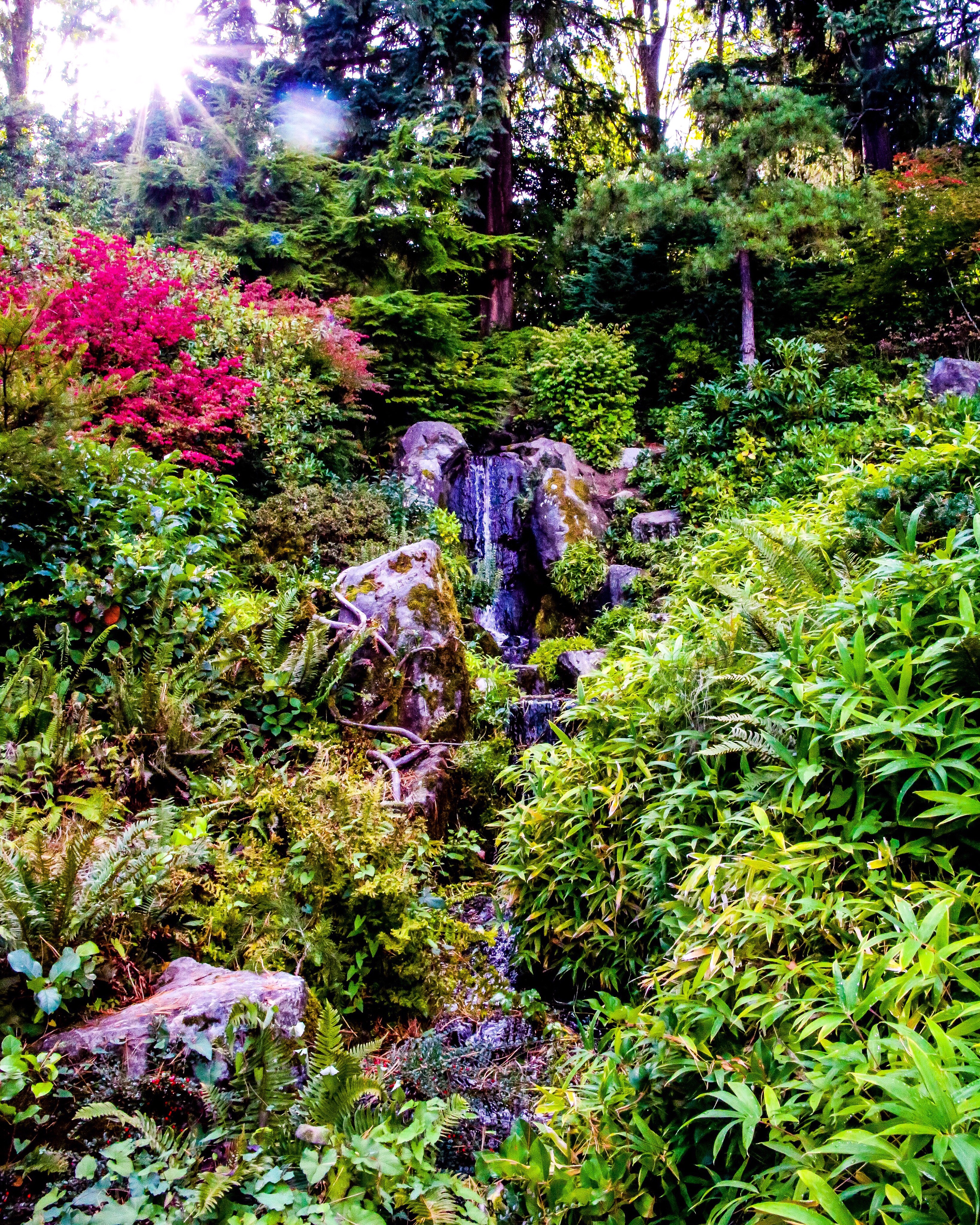
[Seattle Sights] Adventure Your Way Through the Kubota Gardens

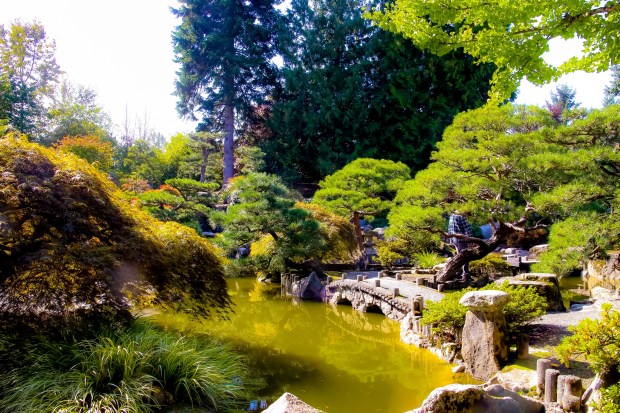
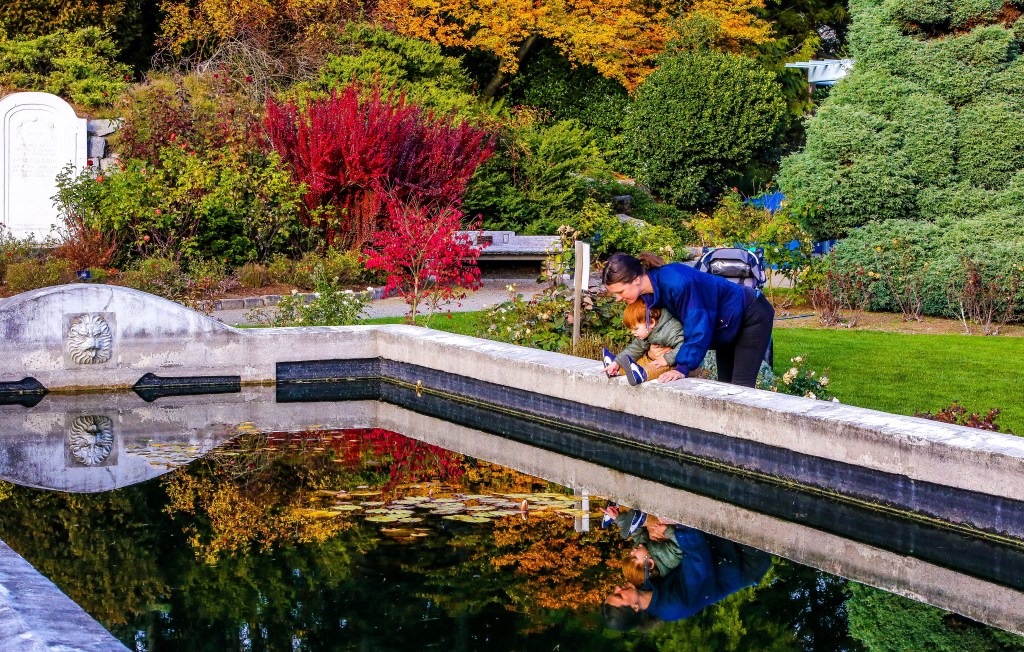
A hidden gem of the outskirts of Seattle, and Washington state at large, the Kubota Garden boasts beautiful grounds to meander through, inspiring views and incredible landscaping. Covering twenty stunning acres of land in the Rainier Beach neighborhood in South Seattle, the Kubota Garden started as a labor of love from the Fujitaro Kubota back in 1927; sixty years later, the city of Seattle adopted it into their public park system – and let me tell you, we are all infinitely better off for having such a beautiful park in our proverbial backyard.


A fun fact, and lesser known to me before my move to the Pacific Northwest – the city of Seattle has incredible ties to Japan.

Thanks to the former Prime Minister of Japan, Takeo Miki, we get to celebrate the beginnings of Spring alongside the beautiful cherry blossoms – 1000 of which were donated to the city back in 1976 to commemoration of America’s bicentennial and the long allegiance, alliance and friendship between the people of Japan and of Washington state..

Historically, Seattle is been known for hosting the second largest Japanese population on the West Coast next to San Francisco, with Los Angeles and San Jose coming in close behind.

These Japantowns (日本人街), formally known as Nihonjin-gai or informally as J-Towns, Little Tokyo or Nihonmachi ( 日本町 )were created during the Meiji period. From approximately 1870 to 1910 an outpouring of Japanese immigrants fled home to pursue better economic opportunities, initially settling along the West Coast of America and Canada.

Though at one point there were over 40 different Japantowns in California, after World War II and the unfortunate and disappointing internment of the Japanese community – only three are now left; out of the numerous Little Tokyo’s scattered along the West Coast, the only left outside of California is Seattle.

Now, back to Fujitaro Kubota – Kubota was part of the Issei immigrants; a term used to describe first generation immigrants from Japan. Though his first job was working on the railroad, Kubota forayed into his own gardening business, the Kubota Gardening Company, in 1922. By 1927, Kubota bought five acres of logged off swampland and started work on a small garden as a hobby; fast forward a hundred years later, and that small hobby has become a pinnacle of park life in the greater Seattle area. Before his passing, the Japanese government presented Kubota with the ‘Order of the Sacred Treasure’ award for his achievements within his adopted country, and for giving life to Japanese Gardens in his new homeland.
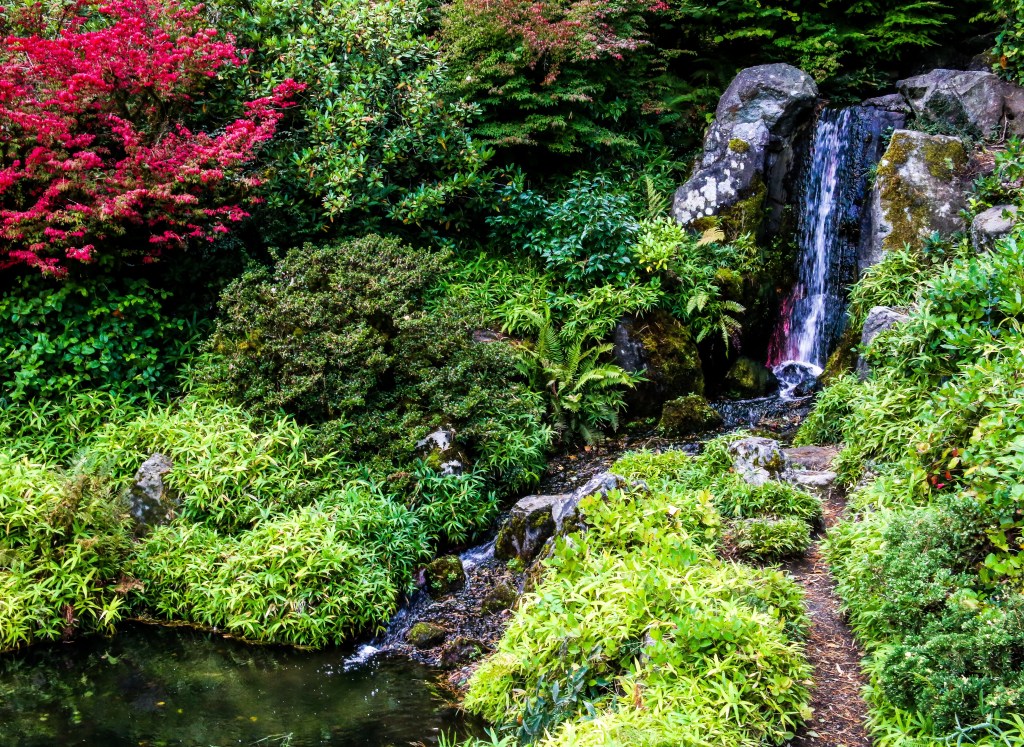
Boasting meditative monuments, waterfalls, ponds, streams and a vibrant variety of foliage and provide a novel journey into the delicate, and decorative world of Japanese landscaping. Eventually, the gardens ballooned from five acres to twenty. Unfortunately, with their families internment – no work was done on the park for several years – but after the war, with the assistance of his two sons, Fujitaro rebuilt the grounds to feature reflection pools, incredible waterfalls and plants from his nursery that he had been keen on incorporating into the garden. In 1972, the Japanese government presented Kubota with the ‘Fifth Class Order of the Sacred Treasure’ award for his achievements within his adopted country, and for giving life to Japanese Gardens in his new homeland; unfortunately, Kubota passed away at the ripe age of 94 the following year.

When the 20-acre property became a target for condominium developers, community groups encouraged the Seattle Landmarks Preservation Board to designate the 4.5-acre core area of the garden as a Historical Landmark. In 1981 the American-Japanese Garden created by Fujitaro Kubota was declared to be an Historical Landmark of the City of Seattle.

In 1981, the City of Seattle was made into a Historical Landmark in order to preserve his legacy – especially as the area was targeted for housing developments; and finally, in 1987 the city officially acquired the Kubota Garden from the family and it is currently maintained by not only the city, but plenty of volunteers. To ensure further protection of the area, the city’s Open Space Program has bought an additional twenty eight adjacent acres of land to remain as a natural area to protect the ravine, as well as Mapes Creek.

Whether you’re coming to or from the Sea-Tac airport, or live in the area and are craving an escapade in your backyard – this is one fantastic field trip that I recommend to all. For more on the colorful Kubota Gardens, head to their socials – currently, you’re allowed a visit as long as you maintain your social distance, but if you’re not willing to risk it – simply take a peak using the live view of Google Maps!

Website | Facebook | Twitter | Instagram

[Seattle Sights] A Cacophony of Color at Chihuly Glass and Garden

“I want people to be overwhelmed with light and color in a way they have never experienced.”

Dale Chihuly

I’m picky – with almost everything, but especially with what I want out of a museum. In my eyes – when art can exist in so many beautiful forms in ‘the wild’, let’s just call it, I have a hard time believing it should be relegated to a stuffy room with static lighting. I love when art is unencumbered and free – probably a reason I fell in love with large installations at music festivals, and the vast swaths of street art in San Francisco and Los Angeles. Art is everywhere you look, if you look with the right eye – or so, I’d like to believe.

This image has an empty alt attribute; its file name is 0c8e67ff-f270-40bb-8754-452dfb4f0e30.jpg

That said, it takes a special brand of both art and artist to get me into a museum. Growing up in the Bay Area, my family took me to plenty of museums growing up, but my heart was always much happier at the San Francisco Academy of Sciences, the Barbie Museum in Palo Alto, or roaming the city streets in search of hidden art right under our noses and feet.

Even with an immaculate collection of museums in and around Los Angeles -from the LACMA to The Broad, The Getty and Getty Villa to the Museum of Death and Destruction, and all the niche pop-up museums in between – I always enjoyed myself, but still gravitated more towards the street art in the alleyways as versus the art within. As mentioned before, my taste in artistic expression has been vastly shaped by both Burning Man art installations as well as music festivals like Lightning in a Bottle, EDC, Shambhala – and even the Coachella Music and Arts Festival, art makes me happier when I can interact with it; when I can engage multiple senses, and open my mind in new ways of thinking creatively.

I was over the moon when I stumbled across Hauser and Worth, and the Kusama exhibit at The Broad was one of the coolest things I’ve ever seen in person; but not shortly after we made the big move up north. Ever since migrating to Seattle a few years ago I have been searching for something comparably fantastic. As transplants, one way we could get to know the city and the community ethos was to try and visit as many museums, galleries and parks as we could fit into a day

This image has an empty alt attribute; its file name is 45ea0251-e610-41f6-afd9-ee547224d38e.jpg

Up here, the nice days are exquisite and it’s your duty to get your cute butt outside and enjoying the fresh sunshine – but on a cloudy, rainy, blustery day it’s the diverse array of art that’s truly inspiring about the Pacific North West. So, believe me – when I heard about Chihuly Glass and Garden I immediately knew I had to have an adventure.

Built to host the exquisite designs and artwork of Washington’s own Dale Chihuly, Chihuly Glass and Garden is located in the heart of the Seattle Center in the mix of the hustle and bustle of Seattle proper.

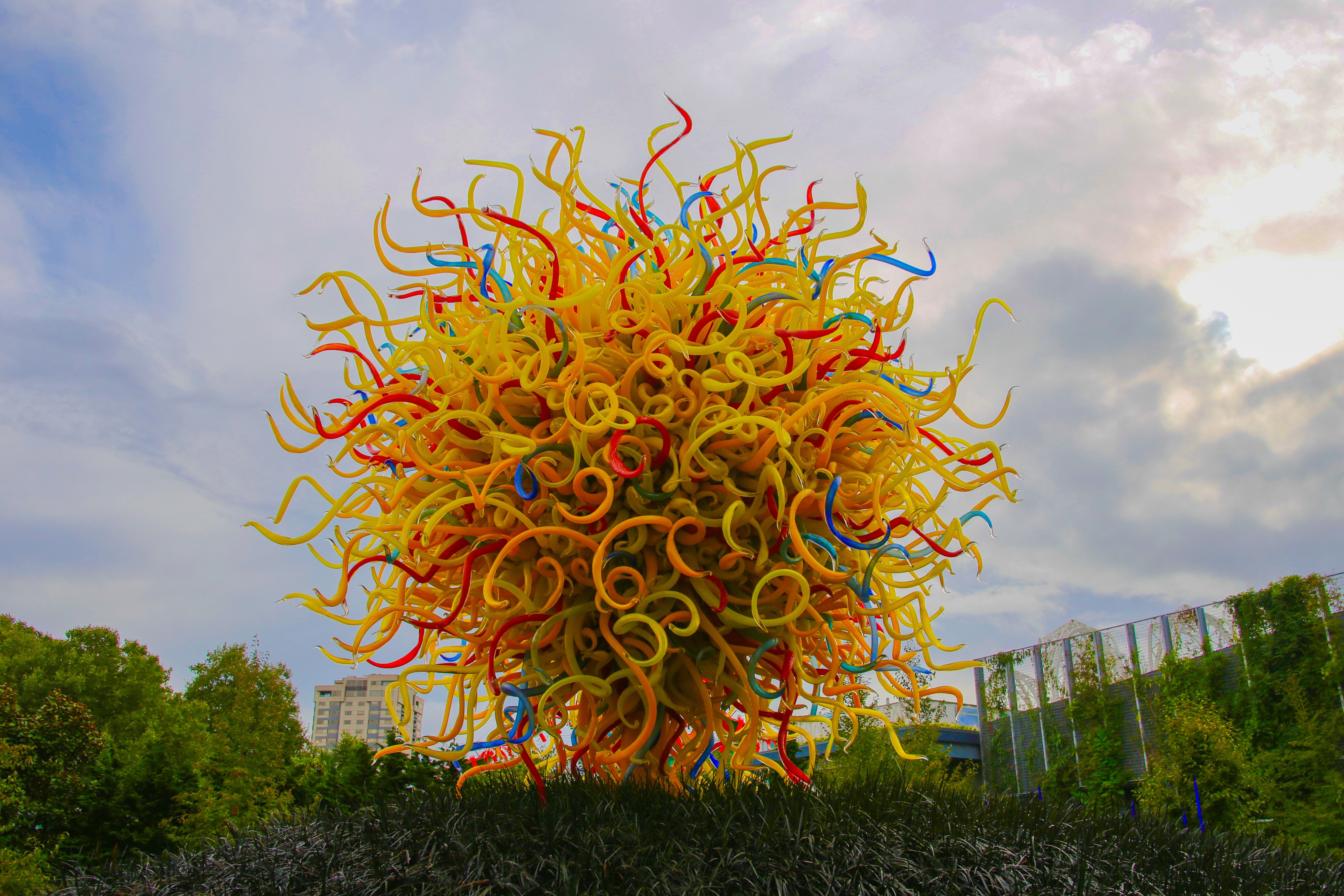
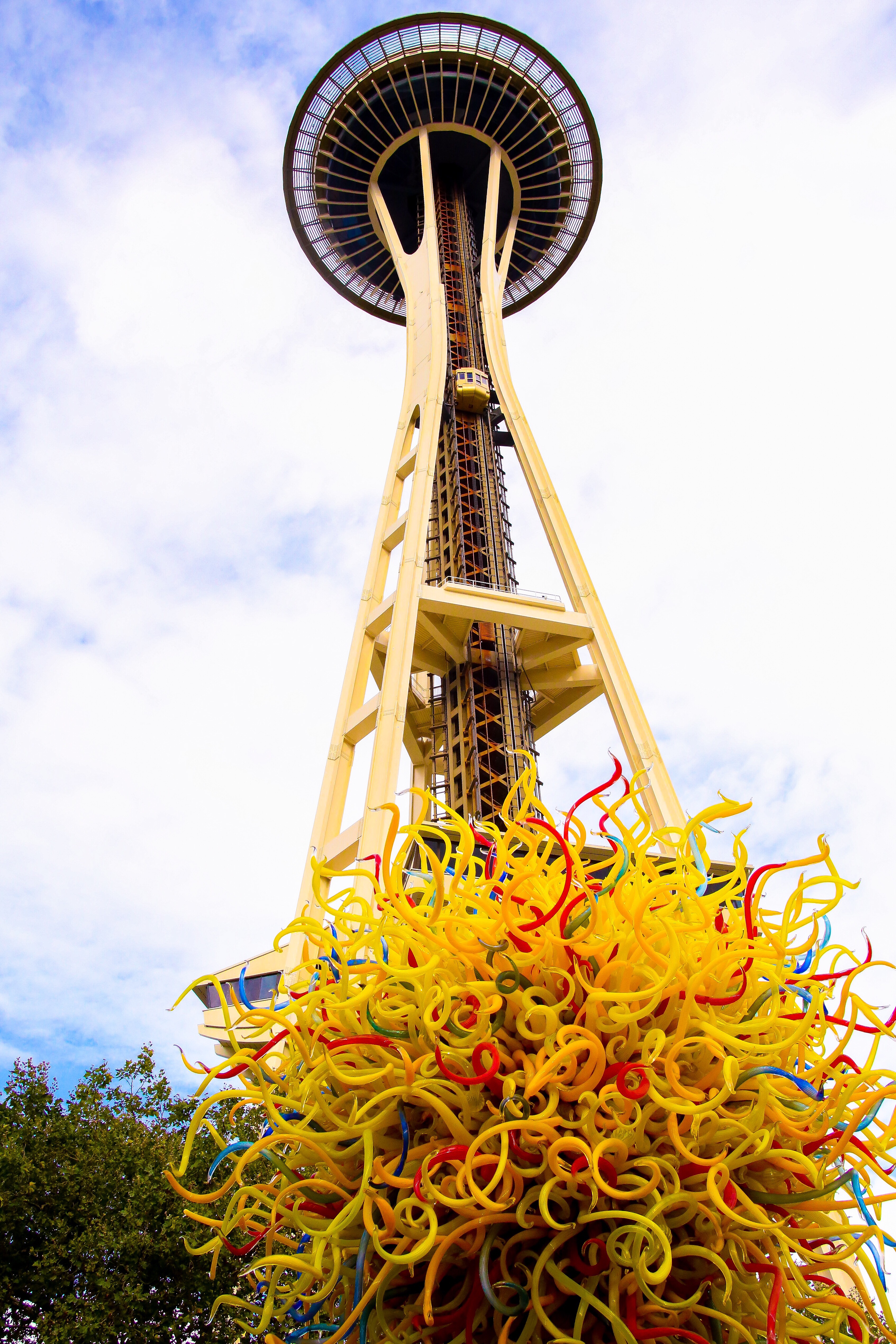
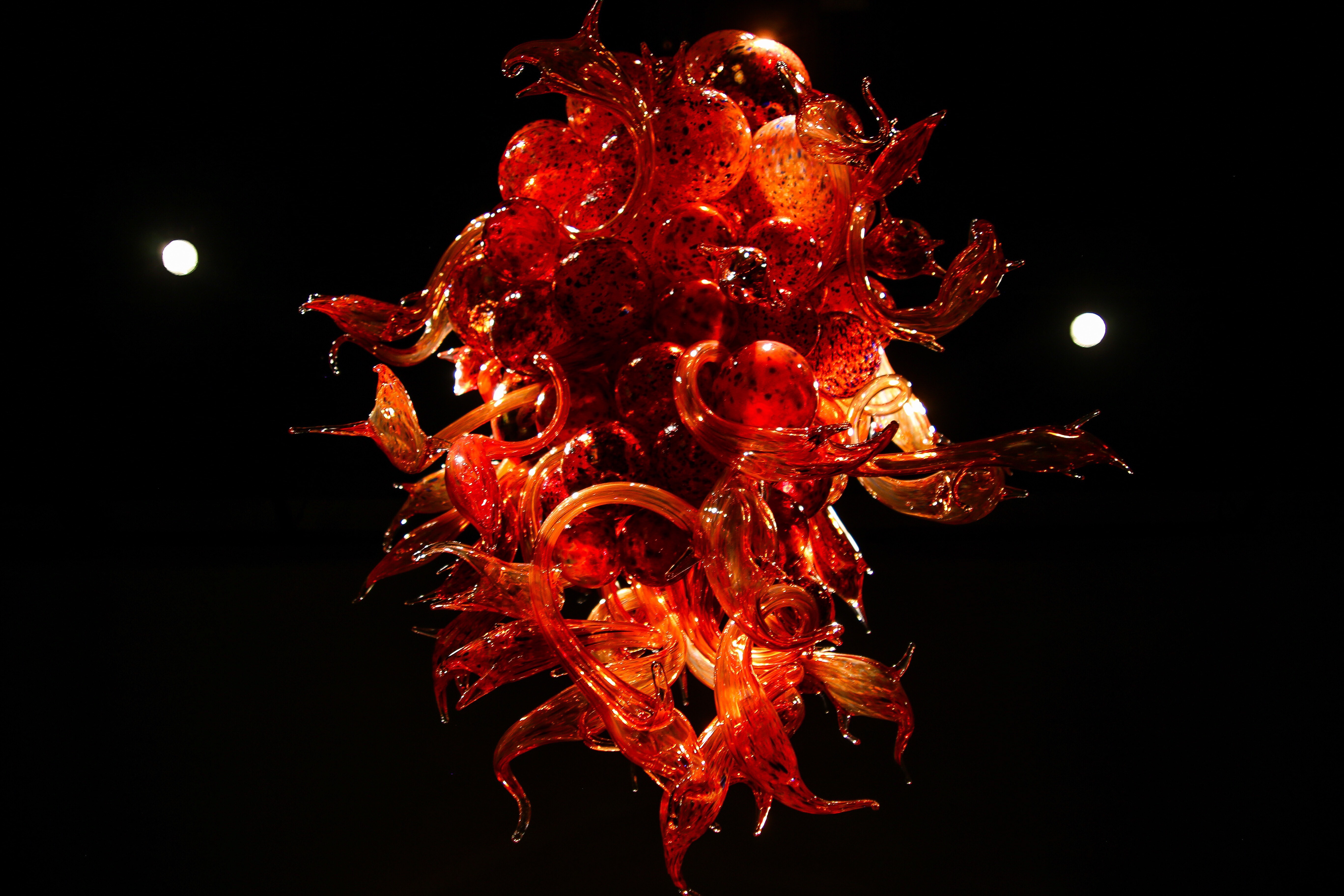
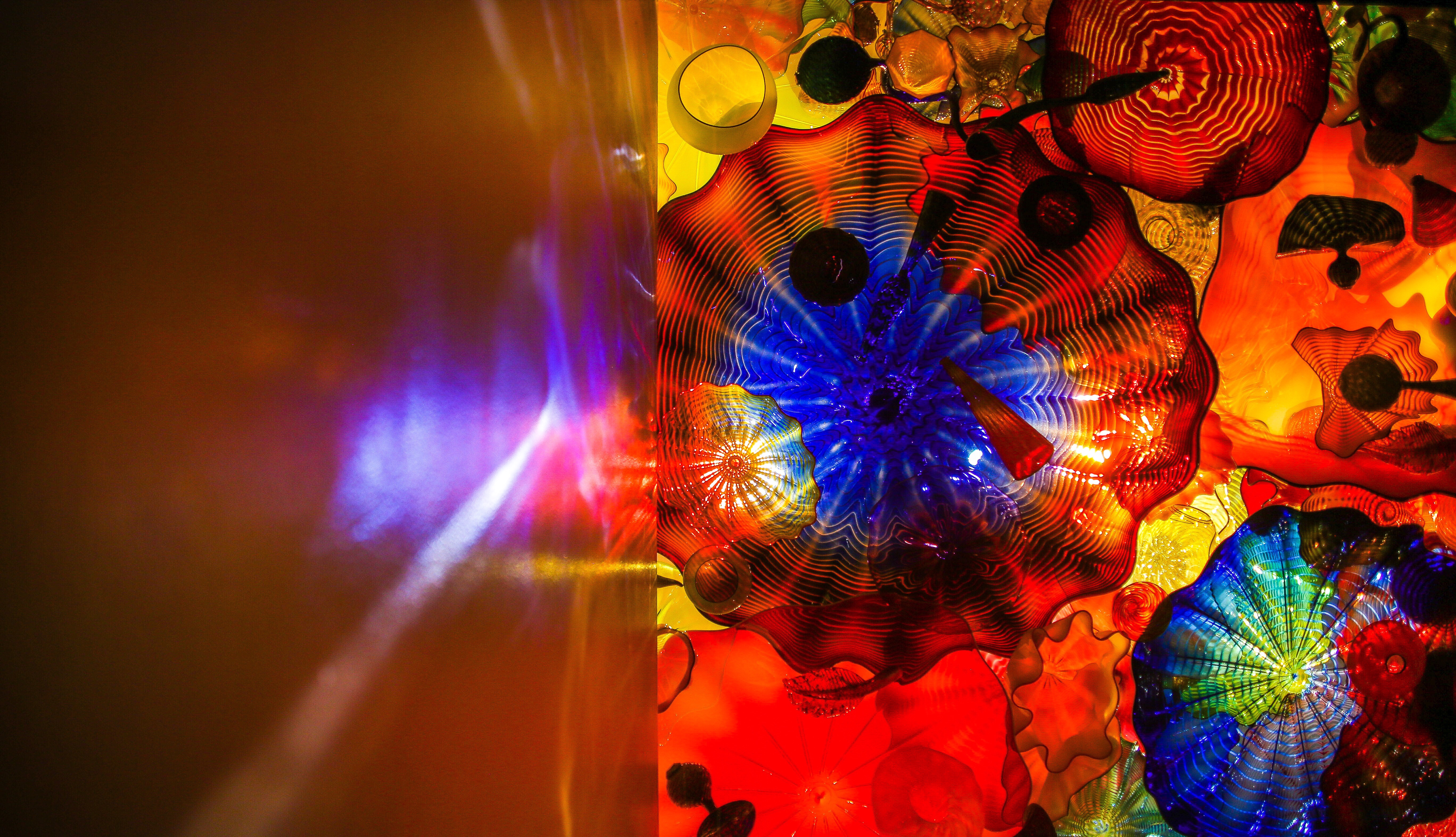
With gorgeous gardens adorned with exquisite glass pieces, as well as several permanent pieces indoors and a rotating show of the latest and greatest in blown glass – this is a can’t miss museum that fairy tales are made of. From the second you get to the grounds, you’re greeted with a spectacular view of Seattle’s iconic Space Needle.

This image has an empty alt attribute; its file name is e5c35c99-898d-4e31-8ee9-75358f6f2ab7.jpg

Inside, you’ll meander through the hallways and large scale, open air designs with three different drawing walls and eight individual galleries of work. Once you’ve marinated on the unique and exquisite beauty indoors, you’ll be greeted by my favorite pieces – the Glasshouse, and the gardens. Standing over 40′ tall with over 4,000 square feet of radiant space -The Glasshouse is one of the most amazing things I’ve literally ever seen with the focus on a larger than life suspended structure in the middle, full of vibrant and delightfully rich colors.

The Chihuly Glass and Gardens is a phenomenal experience that deserves to be on everyone’s bucket list, Whenever travel is available again, it’s really worth visiting Seattle for – and 10 out of 10, I greatly recommend it! If the Pacific North West isn’t in the books anytime soon, there are also exhibitions around the country, including permanent galleries in the Tacoma Art Museum, the Colorado Springs Fine Arts Center, Ohio’s Franklin Park Conservatory and Botanical Gardens, the Morean Art Center in Florida, and Tokyo’s Toyama Glass Art Museum.

For more on Dale Chihuly, his life’s work and his various galleries – head to his social media links and websites:

Chihuly | Chihuly Garden and Glass | Instagram | Facebook

“In Seattle, we live among the trees and the waterways,
and we feel we are rocked gently in the cradle of life.
Our winters are not cold and our summers are not hot
and we congratulate ourselves
for choosing such a spectacular place to rest our heads.”

What’s the most interesting museum that you’ve ever been to? Do you have a artistic niche that you cant help but be enthralled by? Let me know what some of your unique museum experiences in the comments below!

This image has an empty alt attribute; its file name is 8da8f8d5-4f42-4434-9fcd-74c6c943d40e.jpg
This image has an empty alt attribute; its file name is e5c35c99-898d-4e31-8ee9-75358f6f2ab7.jpg

[Seattle Sights] An Enthralling Experience at the Seattle Art Museum

“Art, at the dawn of human culture, was a key to survival, a sharpening of the faculties essential to the struggle for existence. Art, in my opinion, has remained a key to survival.” – Herbert Read

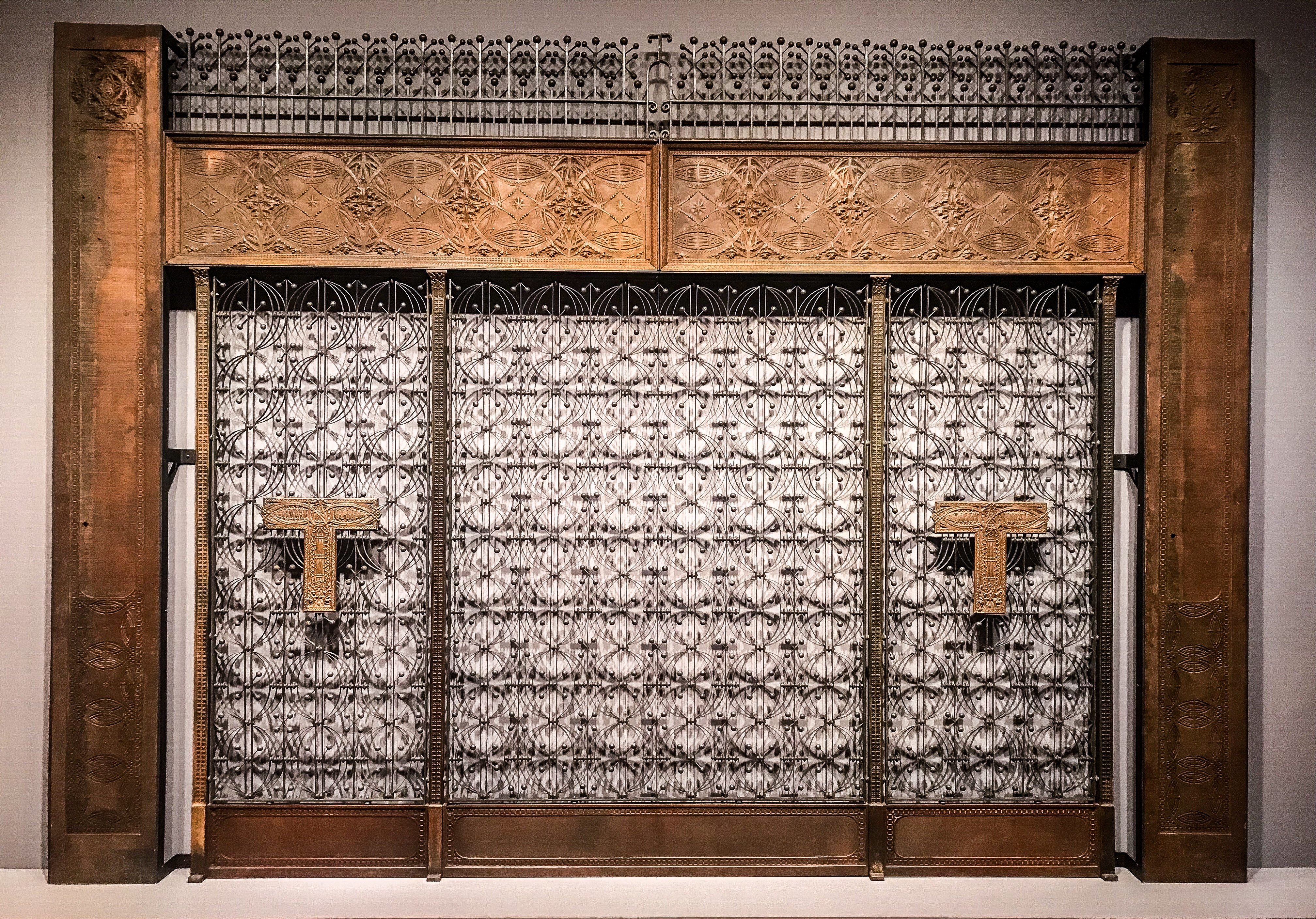
Located in the heart of Downtown Seattle near the Seattle Aquarium, Pike Place Market and steps from the Starbucks Reserve and colorful bane of my germaphobe existence – the historically disgusting gum wall, the Seattle Art Museum sits surrounded by towering skyscrapers and moody skies – depending on the time of year at least. One of three sister facilities with the Seattle Asian Art Museum and the Olympic Sculpture Park, the Seattle Art Museum opened it’s doors in 1993 and plays host to over 25,000 unique pieces of fine art, sculpture, pottery, design and experimental immersive exhibits from around the world.

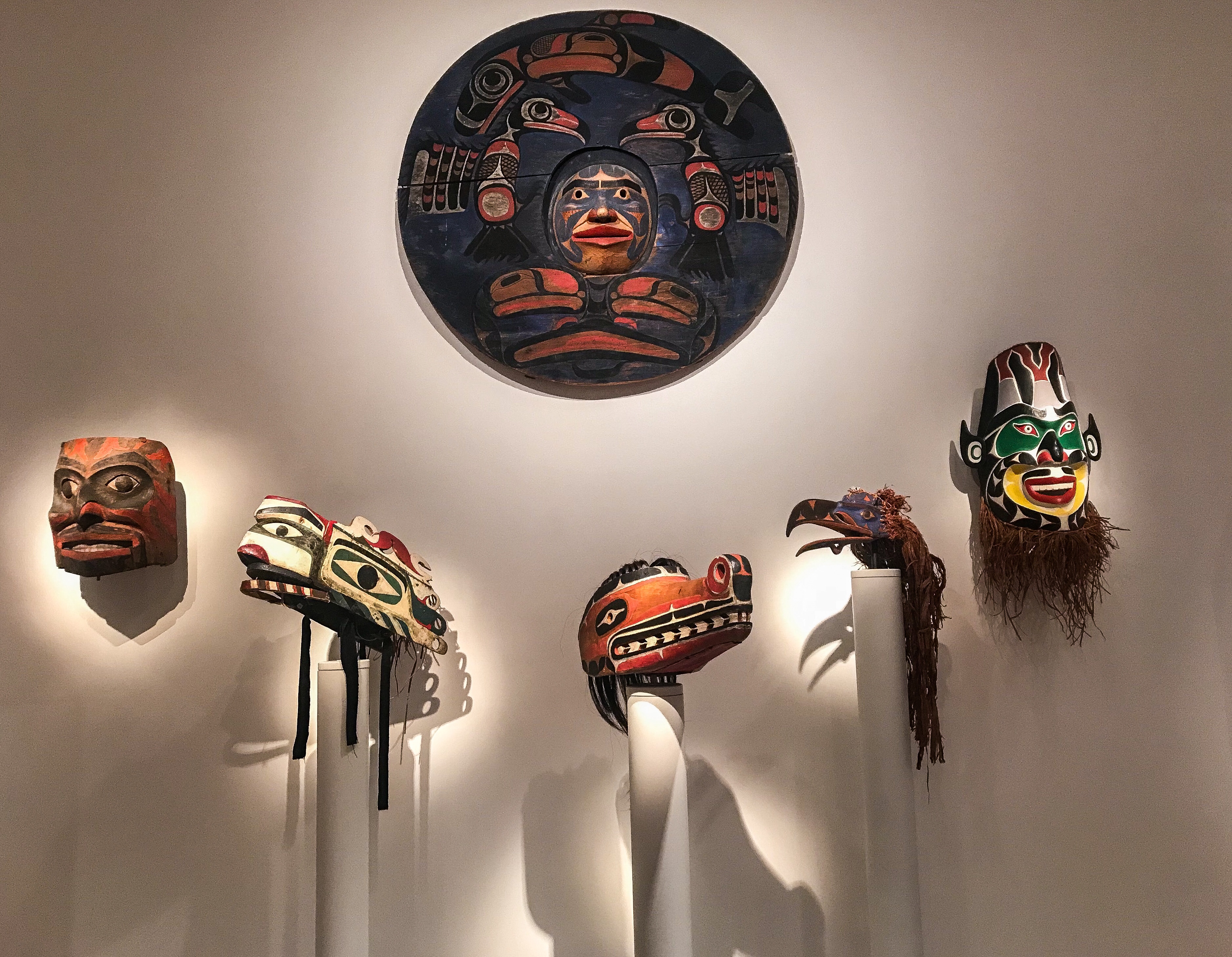
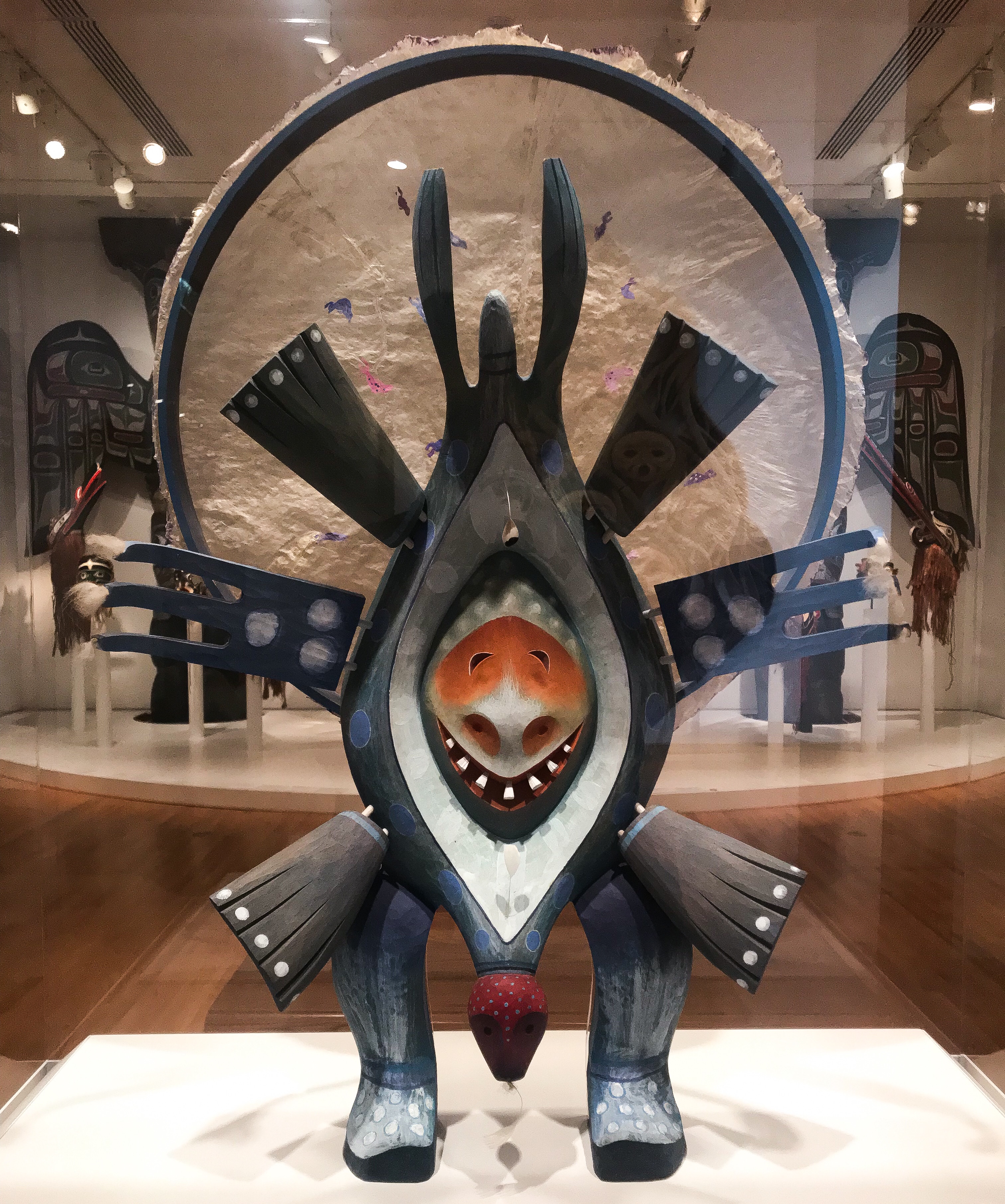
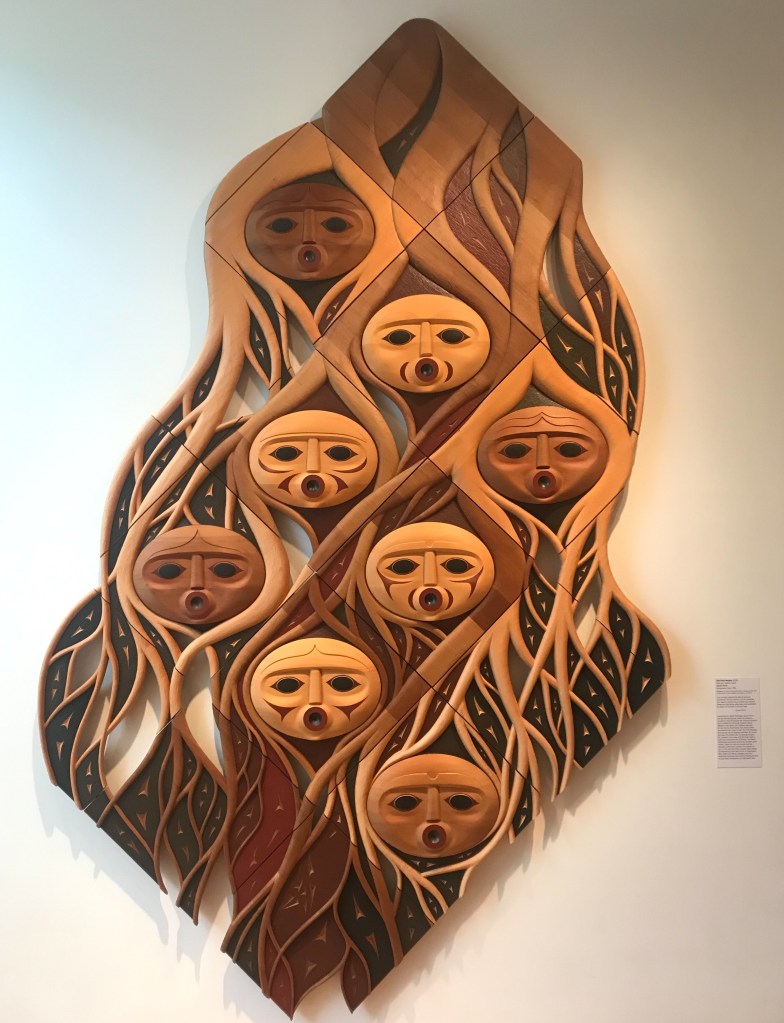
Native American Masks

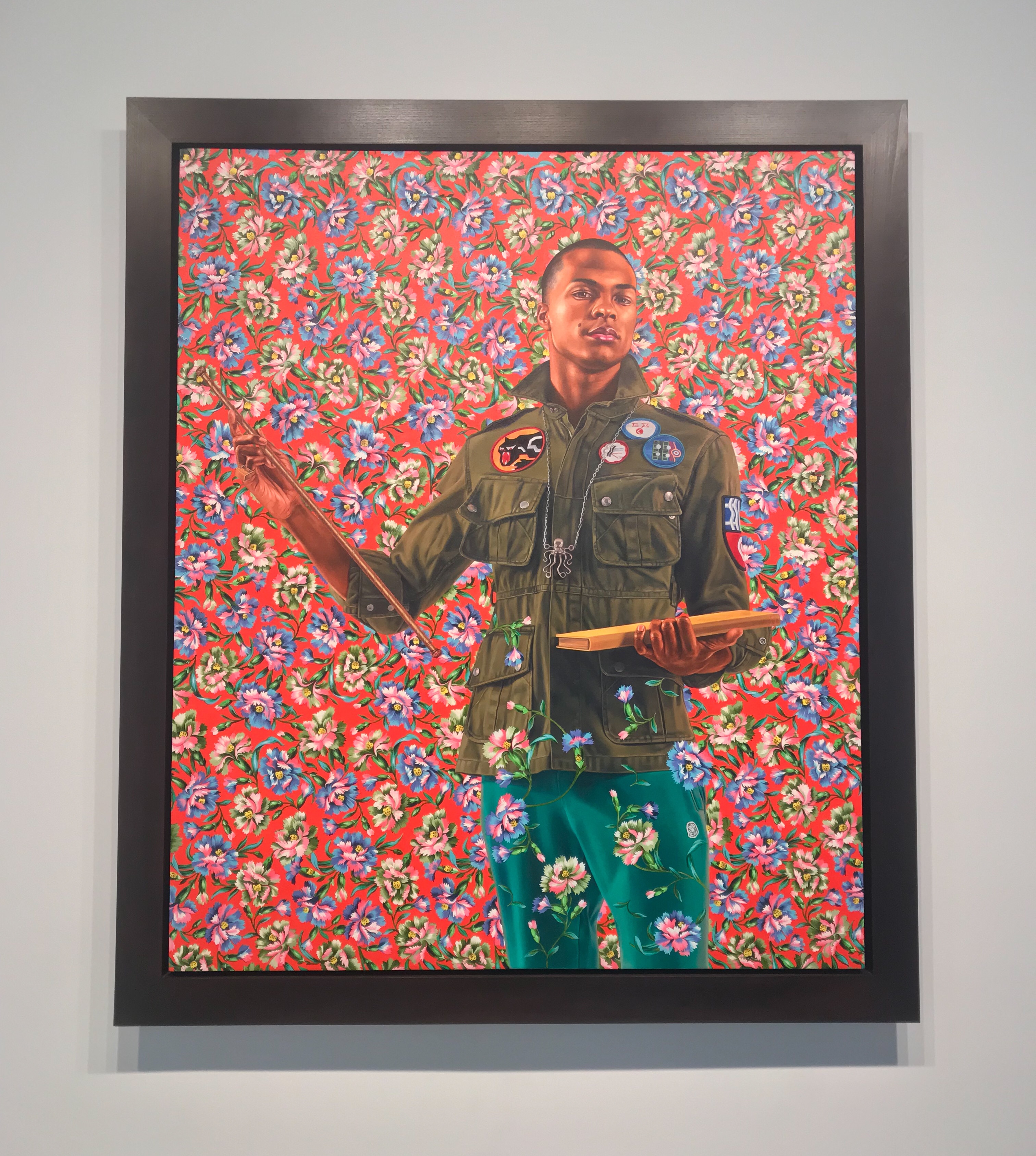
Many Art Museums tend to lay their focus on the European, or Western, historic artistic influence – but one of the many wonderful things about the SAM, is their focus on art and artists from around the globe, and because of that have renowned and fantastic collections of African, Native American, Aboriginal, Oceanic and Islamic Art in addition to more traditional collections of Modern, American and European art.

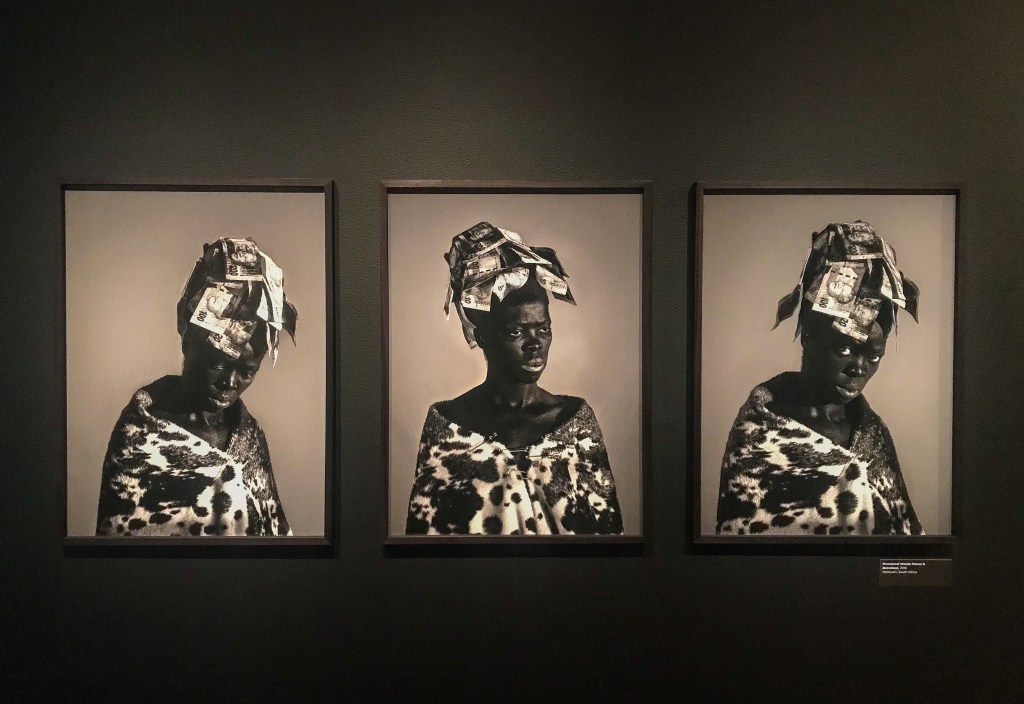
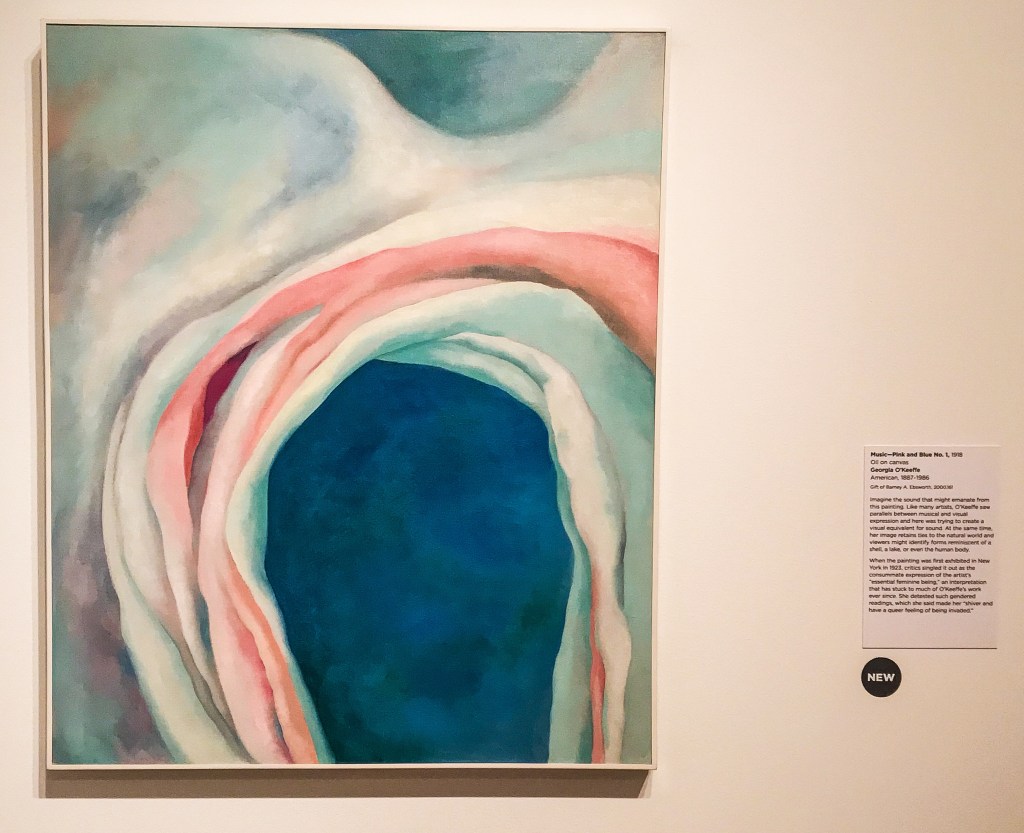
I was lucky enough to go at a time where there were two fantastic exhibits – which have both catapulted to personal favorites after the Yayoi Kasuma Infinity Rooms at the Broad, and the Crystal Bridges Museum of Art in Bentonville, Arkansas. Finally, at the age of 34, I saw my first Georgia O’Keeffe collection in person and found the colors, shadows and textures mesmerizing and meditative; needless to say, I thoroughly enjoyed viewing a retrospective of her body of work.

Another favorite rooms in the SAM was the Porcelain Room; an exquisite collection, immaculately laid out in a wonderfully chromatic aesthetic. Brought in from around the globe, many of the pieces on view can be dated back as far as the 17th century – and are dichotomous and beautifully paired with modern retrospective kiosks which can engage and educate you on each piece. Photos simply can’t do the room justice, either; the innocently creme and pastel colors, paired intricate attention to detail on each individual piece, makes the entire collection even more stunning to take in.

I don’t know what it is about art that works up an appetite for wine, but every time after I go to a museum – I come away with a silly cultured craving for some bubbles and snacks, and couldn’t have been more thrilled to discover Purple Cafe + Wine Bar just a hop, skip and a jump from the museum. Featuring a fantastic array of flights, it’s the perfect afternoon beverage and snack break, and they also have an incredible menu if you’re looking for a full meal.

For a sneak peak into the Seattle Art Museum, peep this fantastic new concept – the First Thursdays Virtual Art Walk hosted by the adorably engaging duo behind By The Hour.

In every corner of the country, albeit the world – there are many businesses that are suffering because they are agreeing to stay closed for the betterment of all of our health, and the preservation of our humanity – and our arts – for the future. If you are in a position to do so, please help your local art and music communities by donating where and when you can. To donate to the Seattle Art Museum, head here – and for more on the Seattle Art Museum, including proposed reopening schedules and practices – head to their socials:

Website | Facebook | Instagram | Twitter | Soundcloud

This image has an empty alt attribute; its file name is 603092d5-77da-4128-b112-31a26256890c-1.jpg

[Wander Washington] A Sensory Experience at SeaTac’s Highline Botanical Garden

“Heaven is under our feet as well as over our heads.” ― Henry David Thoreau

A trip to or from the airport is already excuse enough to look for a reason to stretch your legs, and for those that are plotting a trip to the SeaTac airport are in for quite a treat. Located just a stone’s throw from the airport at under three miles and five minutes, the Highline SeaTac Botanical Garden is an extrasensory experience that’s worth immersing yourself in any time of year.

What started as a small one acre garden of private plantings by Elda and Ray Behm, was eventually slated for demolition when the SeaTac airport was slated for expansion; in 1999, the gardens beautifully evolved to sit on over 10 acres of land in a new location, with many of the original plants salvaged and transplanted – including a two acre section to mirror the original garden.

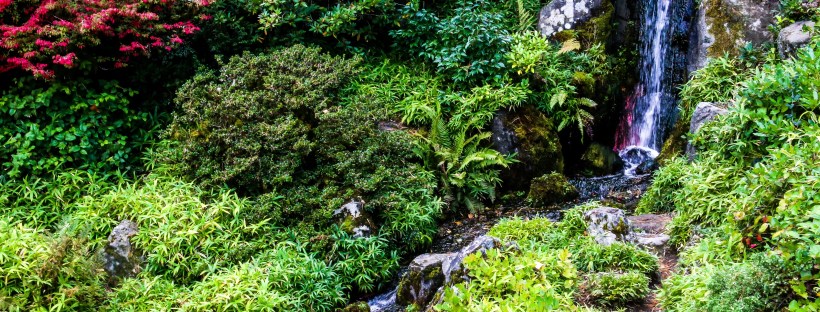
As you enter the Highline SeaTac Garden, you traverse through the Elda Behm Paradise Garden and can walk whimsically along the ebbing stream through the park, catching waterfalls and reflective views along the way as you explore your way through seven unique areas, some even maintained by local groups.

A wonderful adventure in the late Spring and early Summer, the King County Iris Society has a 500 square foot display bed of bearded iris. Not to be outdone, there’s also the Seattle Rose Society’s Celebratory Garden and the Puget Sound Daylily Club’s display garden, each with over a hundred different varieties of flower.

The Sensory Garden is full of wonder and amazement, and dazzles the senses with their unique collection of plants, from a variety of textures and fragrances, to a rain garden and a vine tunnel. Meanwhile, the Shade Garden offers a pleasant repose from the sunshine and features billowing arms of Alders and Madronas, as they shade the pathway in tinges of sepia tone, blowing wistfully in the wind.

Last, but most certainly not least – winding around the grounds, you’ll each my favorite – the historic Seike Japanese Garden.

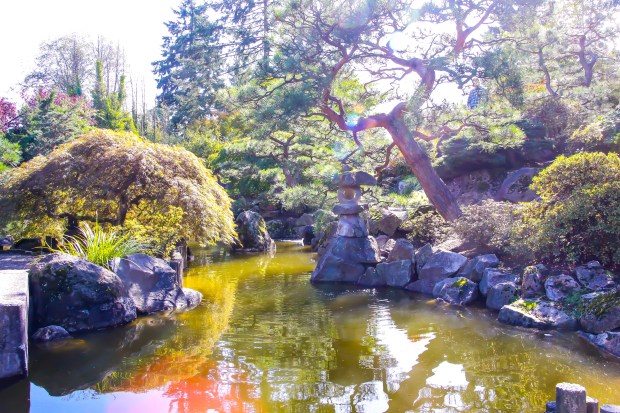
Originally built in 1961 by the esteemed Shintaro Okada of Hiroshima, the gardens were a dedication to a fallen son; eventually, in 2006, the entire Seike Japanese Garden – from the bridges, hand-candled pines and massive stones, was relocated to the Highline Botanical Garden.

As many parks are across the state and country, the Highline SeaTac Gardens are currently closed due to the Coronavirus pandemic – please do your part, abide. If you’re itching to pay them a visit now, check out their socials – if you’d like to donate to the gardens as a community gesture – head here.

Website | Yelp | Facebook | Trip Advisor

Do you have a favorite, secret garden – or at least one you’re willing to share? Let me know in the comments below!

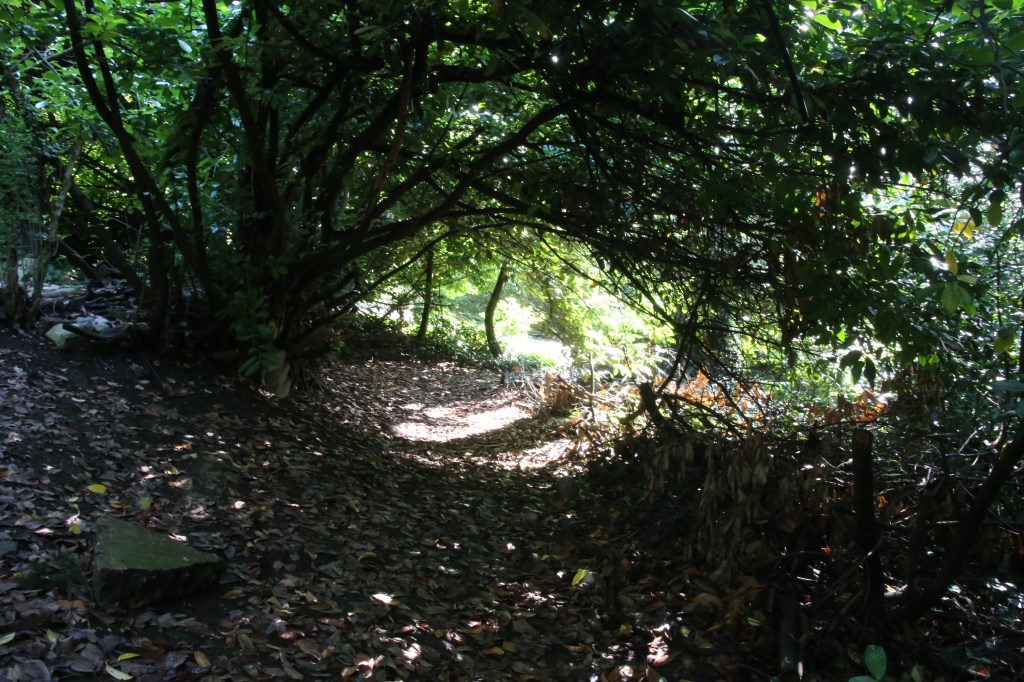
Tunnel of Vines

[Seattle Sights] Wanderlust at the Woodland Park Zoo

Admittedly, it wasn’t until these last few weeks, being stuck inside with my thoughts, my books and crafts, camera lenses and unpublished blog posts, husband, mother in law and cats – that I finally realized: I have taken far too long of a hiatus from writing. It’s like ideas oozing out of each and every part of my brain right now, almost like the dam of my mind has been reopened and can’t stop pouring out experiences, learnings and epiphanies that are ripe for sharing; as I gallivanted through my memories – I realized I never shared the entirety of one of my favorites – the Woodland Park Zoo.

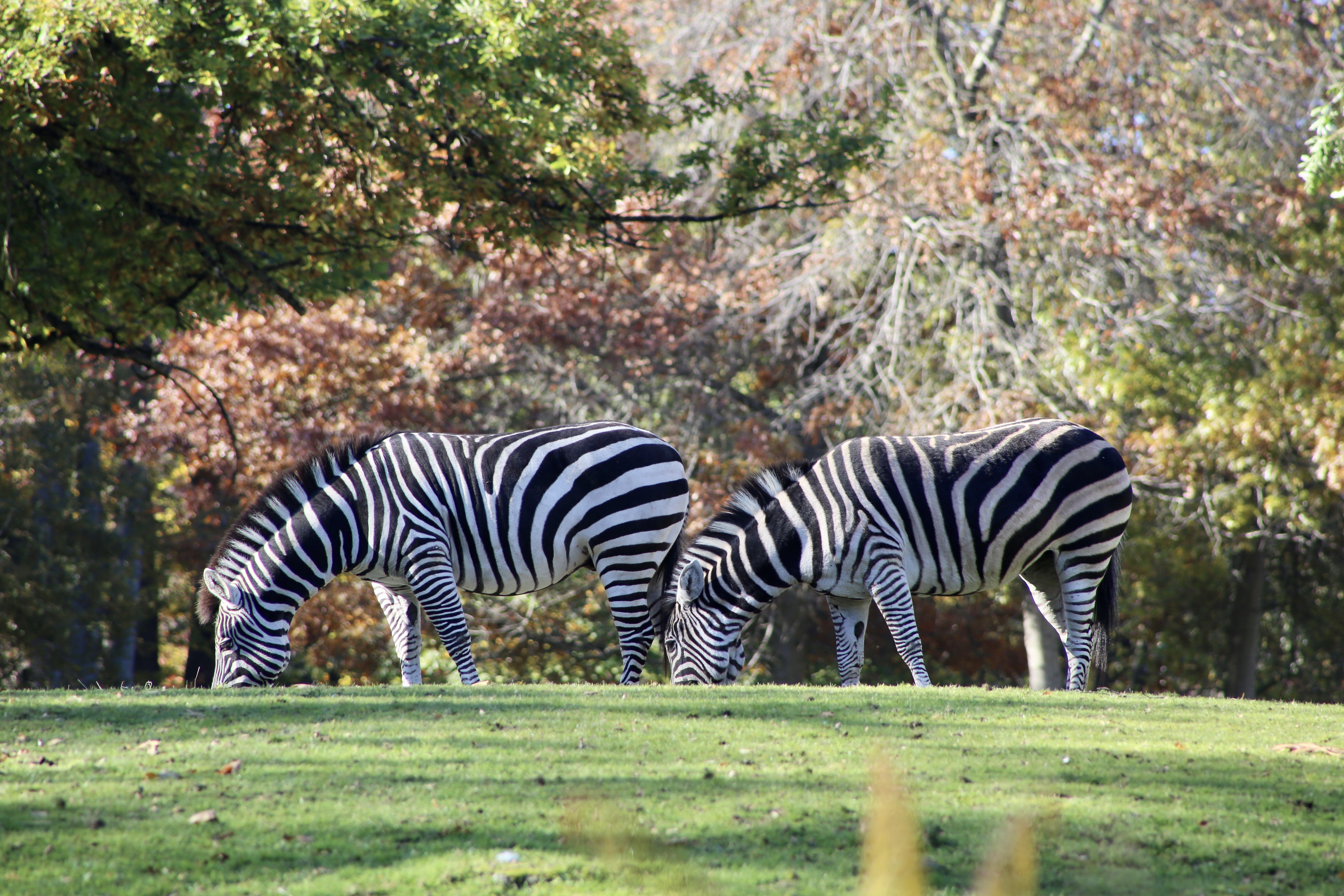
Hailed as a winner of multiple awards for Best National Exhibits by the Association of Zoos and Aquariums, and only second in number received to New York’s fabled Bronx Zoo, the Woodland Park Zoo encompasses 92 acres of public spaces and exhibits in the heart of Woodland Park, with over a thousand animals and three hundred species, not to mentioned over thirty endangered and five threatened. And to boot, the park is equal amounts nature as it is plants – bringing to life over 50,000 shrubs and herbs, 7,000 trees and over a thousand different species of plants.


This image has an empty alt attribute; its file name is c0b84674-c0a3-4387-be0b-4111f58ce85f.jpg

Boasting several different park entrances, you can make each visit equally unique by switching your style up and diving into a new arena. From the African Savanna to Tropical Asia and the Tropical Rain Forest, the Northern Trail and Temperate Forest to Australasia, the entire world seems to exists in the extreme microcosm of the Woodland Park Zoo.

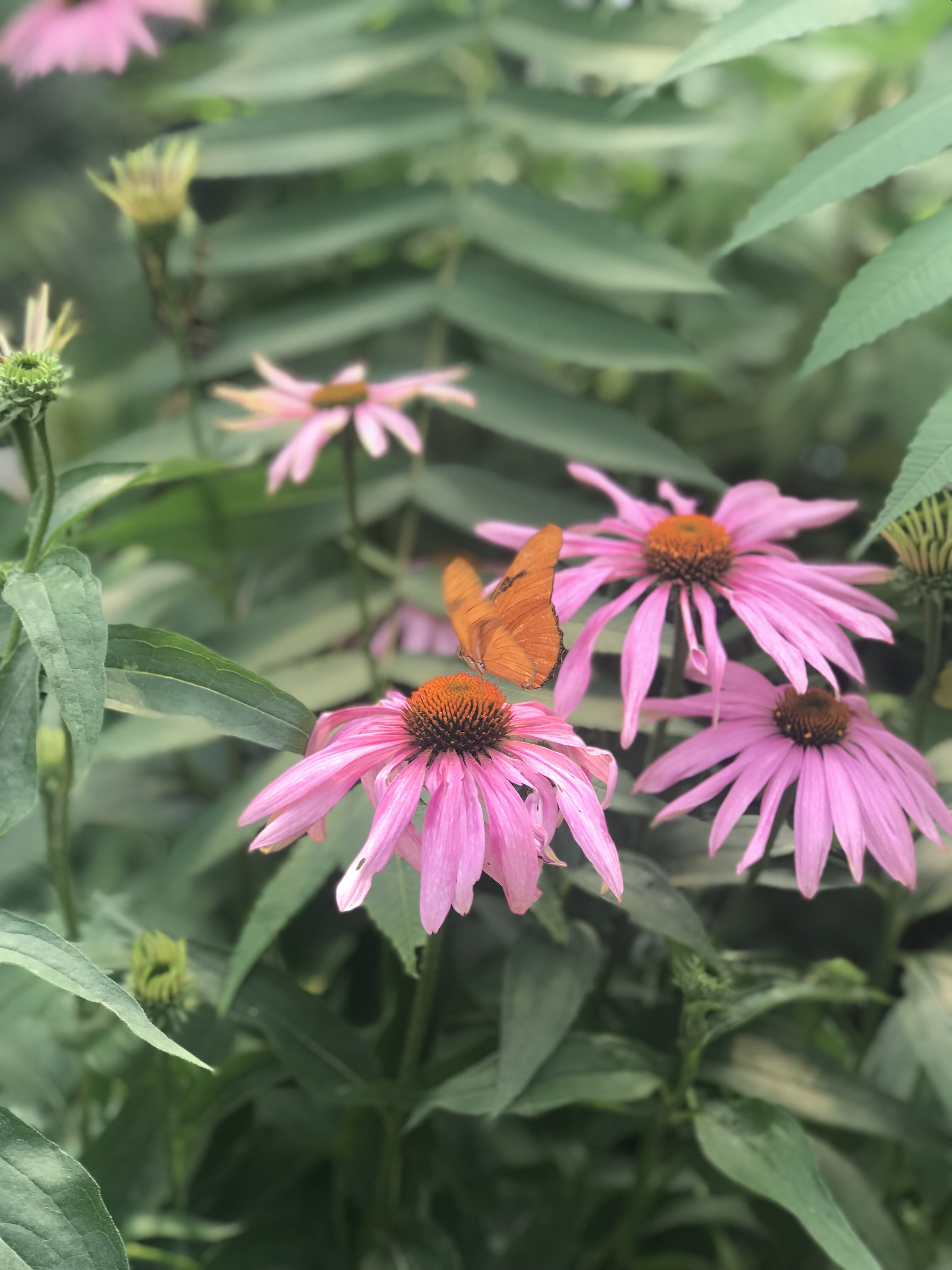
My ultimate favorite: Molbak’s infamous and seasonal Butterfly Garden. With dozens of varieties of butterflies, this area is full is wonder and beauty – with hundreds of butterflies flying around you, it feels like you’re in a whimsical sort of wonderland. Any way you spin it, each adventure to the Woodland Park Zoo is unlike any others – I’ve collected a few of my favorite snaps from my last visits, enjoy!


On your way out, a great spot to soak up some final sunshine is over in the Rose Garden. The perfect setting for an afternoon or sunset stroll once the park has closed down, there you’ll find incredible landscaping, fragrant blooms from all over the world and a lovely reflection pool. Ever-changing with the seasons, the Rose Garden is a solid bet any time of year.


With over a dozen distinct eco-systems and geographic zones to roam through, and a diverse cast of characters within – you shouldn’t stress about fitting it the whole Woodland Park Zoo in during one visit, plus – let’s face it, the animals keep vastly different schedules than us and are often asleep during the day, which can make it hard to find them. The more times you visit, the more you’ll be able to take in – plus, it feels good to support a great cause, so I’m all for forking over the money for my membership. Within two visits, your membership will pay for itself, not to mention get you additional perks including discounts in the restaurants as well as the general store.

Become a Woodland Zoo Member here!

For more on the Woodland Park Zoo and my favorite – their incredible seasonal Butterfly Garden, visit their website and socials; or once this stay at home order is lifted – if you’re in the area, stop by for a visit – I promise you, it’s worth it.

Website | Facebook | Twitter | Instagram

[Seattle Sights] Get Your Fill of Wonder in Woodland Park Zoo’s Butterfly Garden

We delight in the beauty of the butterfly, but rarely admit the changes it has gone through to achieve that beauty.Maya Angelou

Nestled soundly and sweetly against Green Lake and taking over half of Woodland Park sits the fantastic Woodland Park Zoo. Open year round, the Zoo itself is truly equal parts nature park and equal parts animal conservation with 92 acres of grounds to cover and 10 distinct areas to whimsically wander between. The first time I visited, we tried our damnedest to see it all (in true Fire Sign fashion), but quickly realized it was preventing us from really enjoying each section in it’s entirety. So, upon our return I swiftly ushered us over to Molbak’s fabulous Butterfly Garden and am still infinitely glad that I did.

Able to exist in a menagerie of different habitats, butterflies are considered an indicator species that give us a litmus test on the health and quality of our ecosystems. Around the globe, there are over 17,000 species – with approximately 750 of them around the United States.

Featuring over 500 variations and 15 different species of butterflies, Molbak’s Butterfly Garden boasts butterflies from all stages of development in a fantastically floral arena, from chrysalises to their mature form. And wrapping all around the garden are the most wonderful and aromatic plants and flowers, from the Egyptian Star-cluster, Sea Holly, Daisies and more. For a look into all of the unique variations they have, check out this cute little cheat sheet for the identification of flora, fauna and ‘flies from the Zoo.

Pro Tip: take some extra notes from the plant identification, because everything within the Garden was planted specifically to engage and attract the butterflies buzzing around – which means as you plant more of these flowers around your place, you should see an uproar of butterflies! My personal favorites include but are in no way limited to the Spicebush and Pipevine Swallowtails, American Ladies and the Zebra Longwing (above) and the Monarch Butterfly (to the right)

For more garden inspo, right after you exit the Butterfly area, take a meandering moment in Pollinator Patio to take in all the ways to encourage pollinators in your own yard!

Still fairly new to the city, the Zoo has easily become one of my favorite places to visit and I’m proud to say that we are now not only members of the Seattle Aquarium, but members of the Woodland Park Zoo! Within two visits, your membership will pay for itself, not to mention get you additional perks including discounts in the restaurants as well as the general store.

Become a Woodland Zoo Member here!

With so much to see and enjoy, it makes more sense to not try and jam it all in with one session – not to mention, the animals aren’t all out at the same times, so there’s a good chance that even if you try and visit certain exhibits, you won’t get to see all the animals on one day anyways. That happened to us with the Jaguar – the first time, she was asleep; but on trip two, we had a wonderful experience!

For more on the Woodland Park Zoo and their esteemed Butterfly Garden, visit their website and socials; or if you’re in the area, stop by for a visit – I promise you, it’s worth it.

Website | Facebook | Twitter | Instagram
[Seattle Sights] Wildlife and Wanderlust in Union Bay

All good things are wild, and free.

Thoreau, Walden

Hiding around every corner of Seattle, from the coastline into the heart of the city in all directions are glorious amounts of open, public green space. The Trust for Public Land ranked Seattle as the 11th best city for parks, and fourth on the West Coast – and I wholeheartedly agree. Boasting over 485 natural areas and parks – and growing, city parks come in at around 6,400 acres, with a whopping 96% of Seattle residents able to walk to a local park in ten minutes or less.


Befit with sports fields swimming pools, marshes, rivers and beaches, BBQ pits, boat launches, a plethora of winding paths and a menagerie of wildlife, the local lore at the parks just keeps me coming back for more, and more. With a new sense of childlike wonder and amazement since moving up to Seattle in February, I’ve made it a goal to explore and enjoy as many of the open spaces as possible; and I can’t wait to share my favorites with y’all – of course!

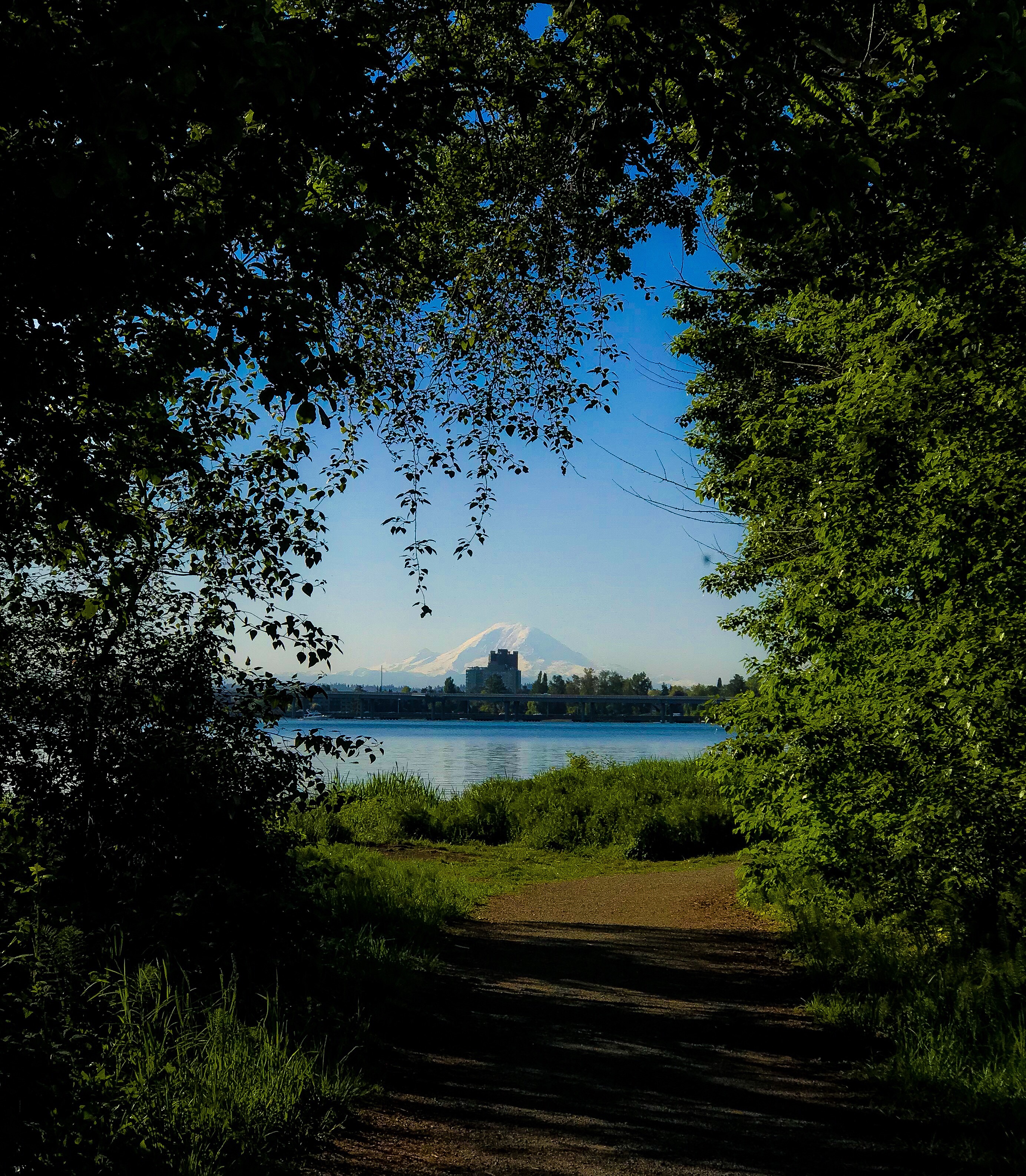
Just a hop, skip and a little run from our home, the University of Washington sits in pristine location – and features multiple parks on site, each with a stellar view of Mt. Rainer and the waterfront. From the North East, you’ll first meet Yesler Swamp which is managed by the Center for Urban Horticulture. Back at the turn of the last century, the area used to be known as the Yesler Sawmill, until it was bought by the University. After the sawmill burnt down in the 1920’s, the area went unchanged for almost seventy years until a graduate student project revitalized the area and turned it back into a nature preserve.

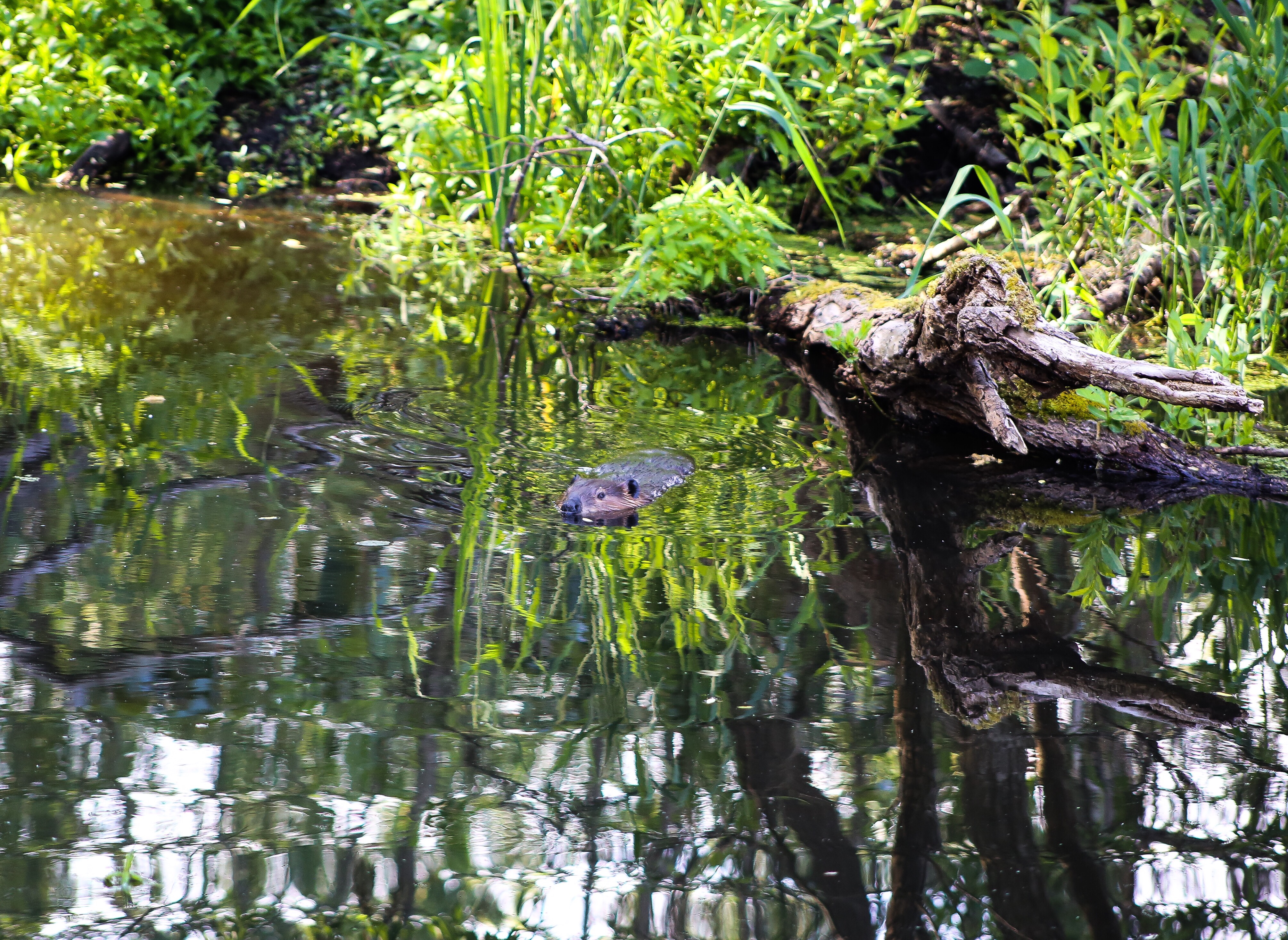
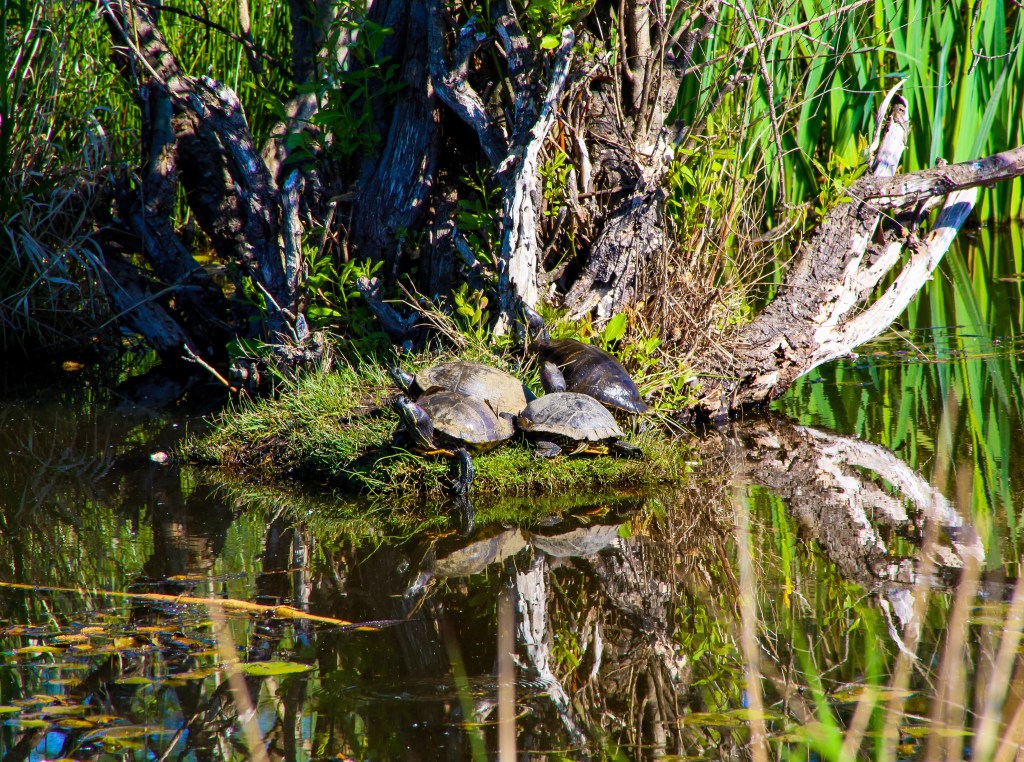
The swamp is full of critters, including plenty of ducks, geese, egrets, blue herons and even beavers!

Winding across the walkways and into the heart of campus, you’ll get dumped out at the Center for Urban Horticulture’s Soset Garden and Fragrance Garden; and yes, it is indeed a delectable smell!

University of Washington, Center for Urban Horticulture

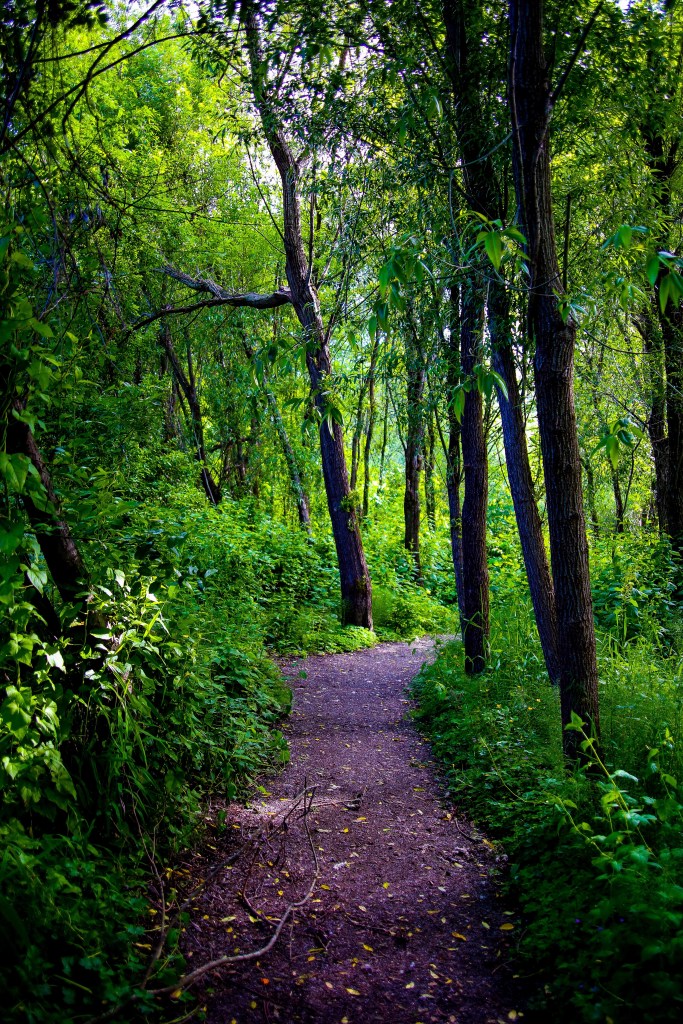
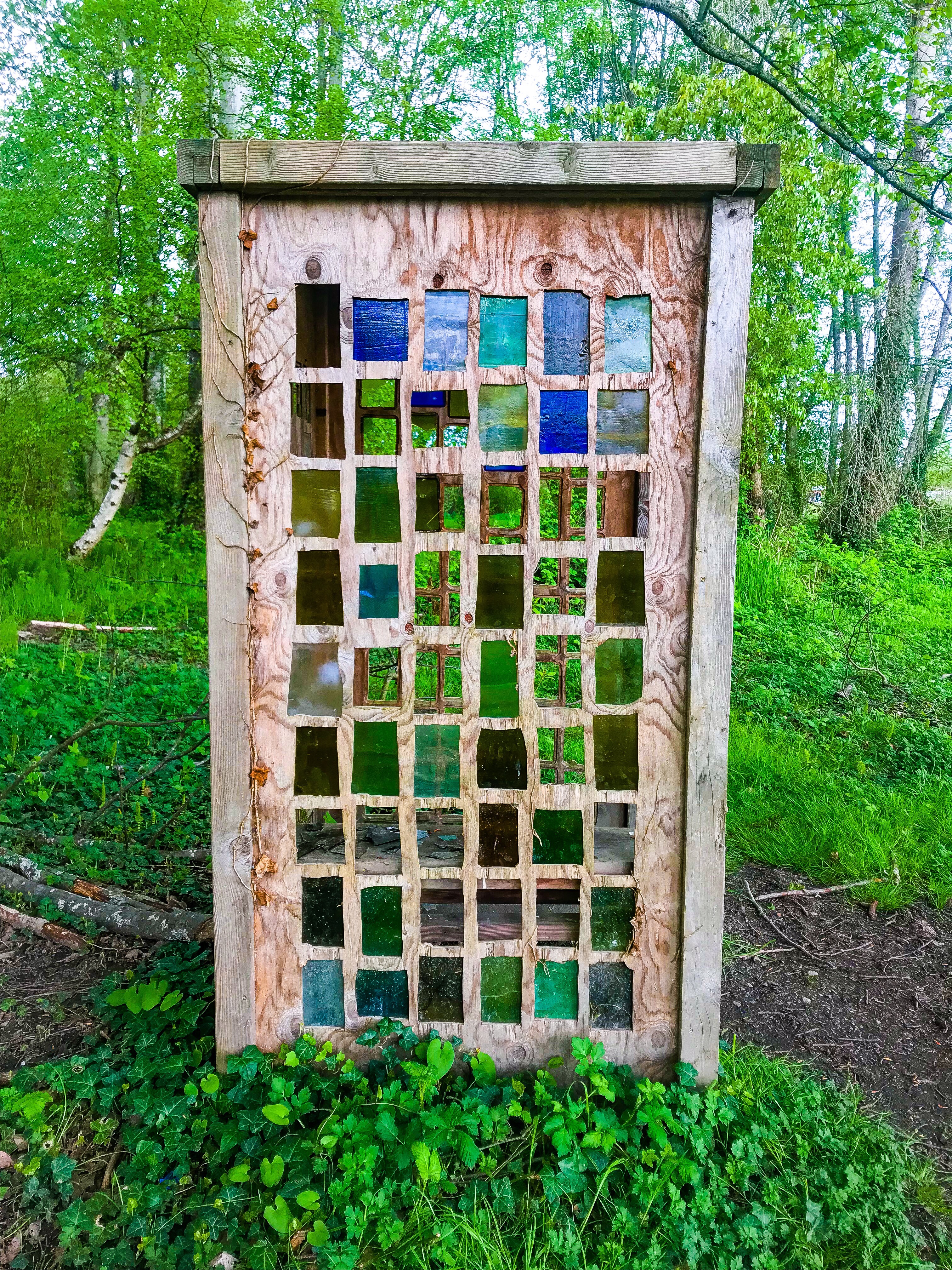
If you’re willing to take the path less traveled, there are some neat graduate projects standing in the woods – you’ll just have to go out on a limb and find them! My favorite is this little stained glass booth, perfect for meditation or journaling in the midst of the woods.

And now, you’re well on your way into Union Bay on a variety of different foot and bike paths. From there, you’ll get a fantastic view of Mt. Rainer and Bellevue, not to mention the UW Football Stadium and Lake Washington. The paths are lined with native plants, and as Spring keeps making headway – there have been so many more blooms, including these wild roses which are abundant with all sorts of bees.

As I dive deeper into nature and wildlife photography, I’ve been depending more on my telephoto lens, and believe you me – animal are fucking difficult to capture, let alone for a crisp snap.

It’s curated my patience, knowing that I will definitely not get the photo I want in one shot; it’s made me slow down and listen to the sounds of the world, which happen to be an excellent giveaway if you’re tracking down an animals. With the beaver above: if I hadn’t heard branches crash into the water, I would have never known he was around. Lastly, it’s inspired me to grow, mentally, emotionally and physically – to carry around a Canon 6D and four lenses at all times, to know when to use which lens and which settings to find quickly. I have an infinite amount of respect for others in the same field.

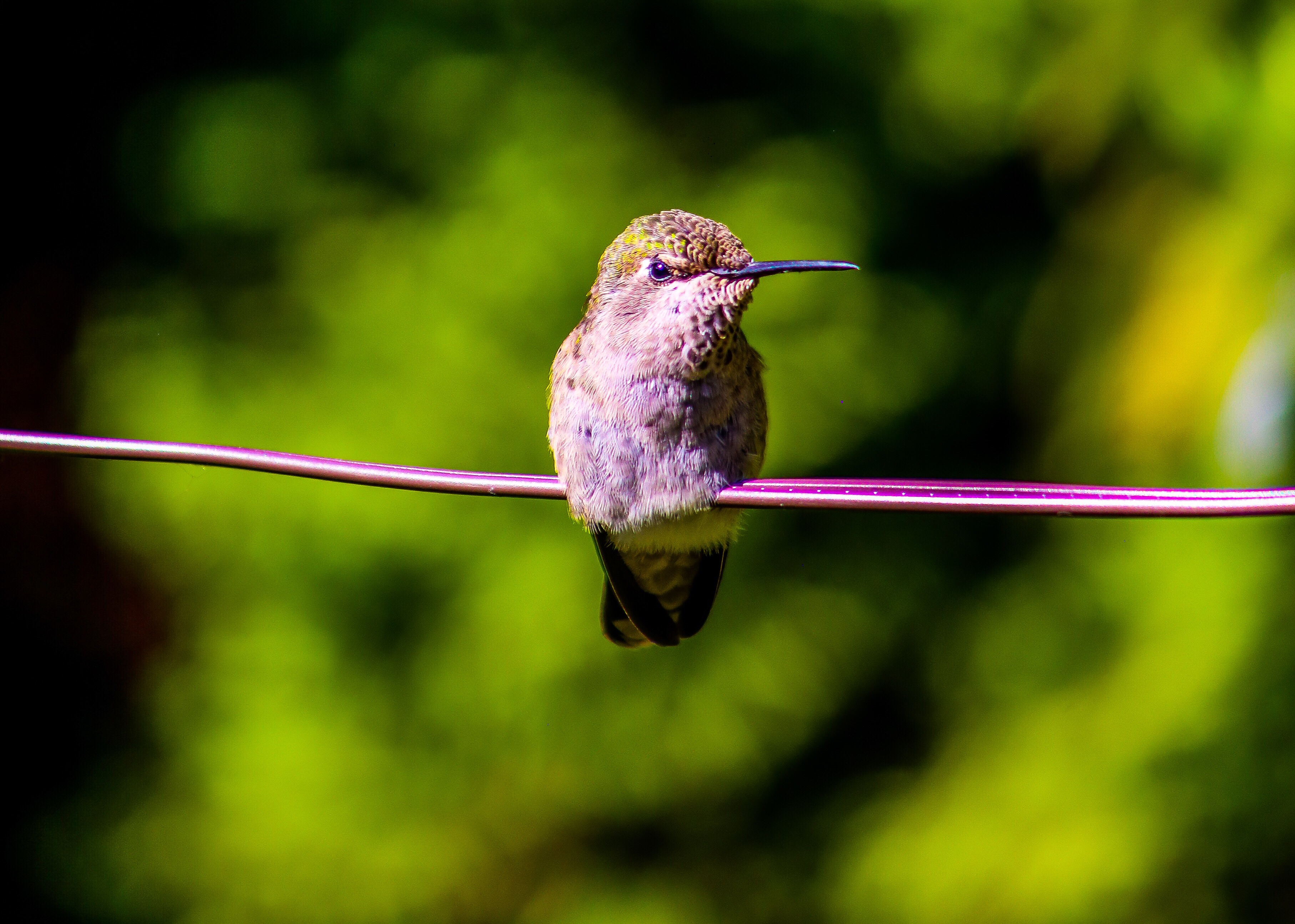
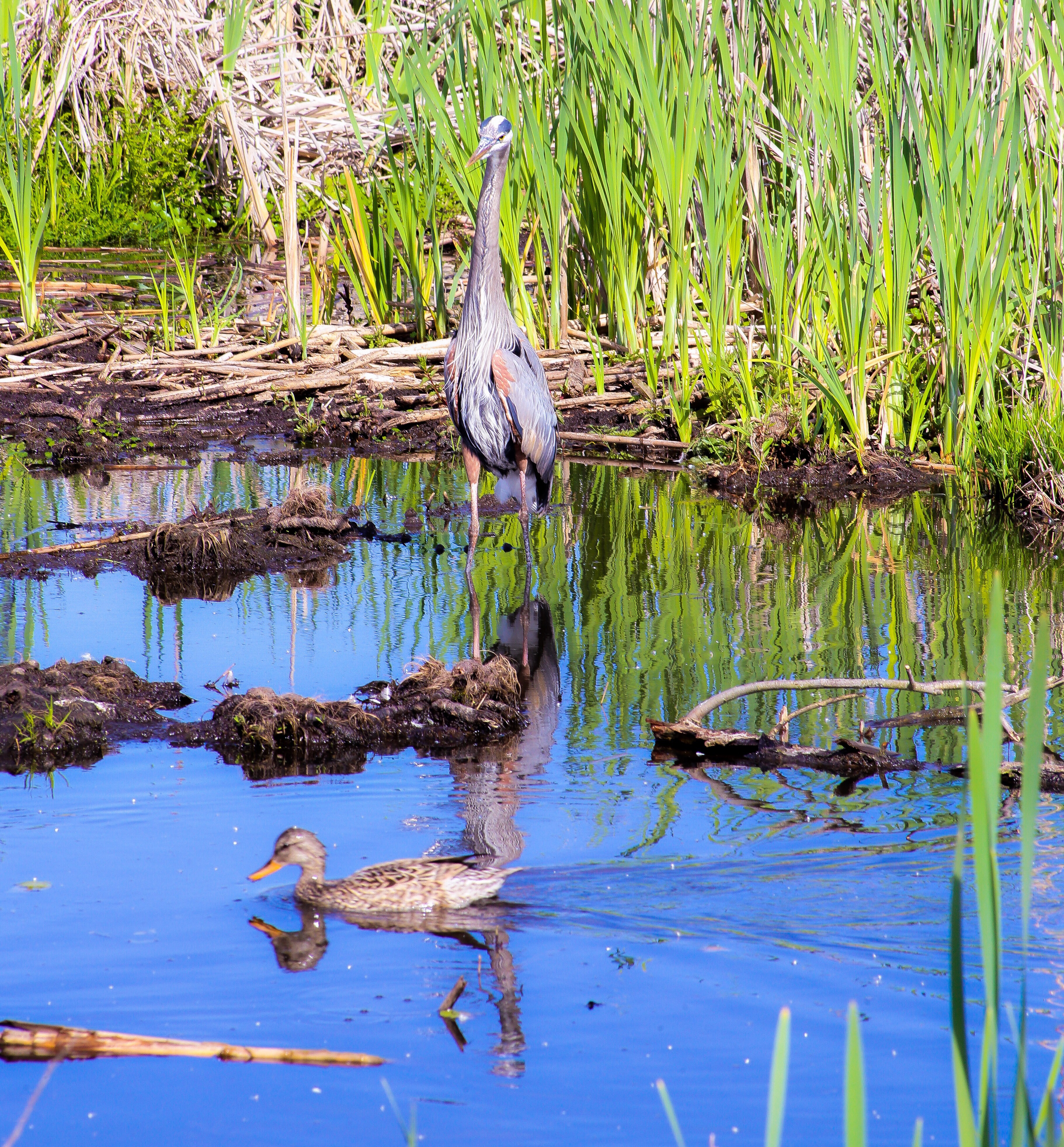
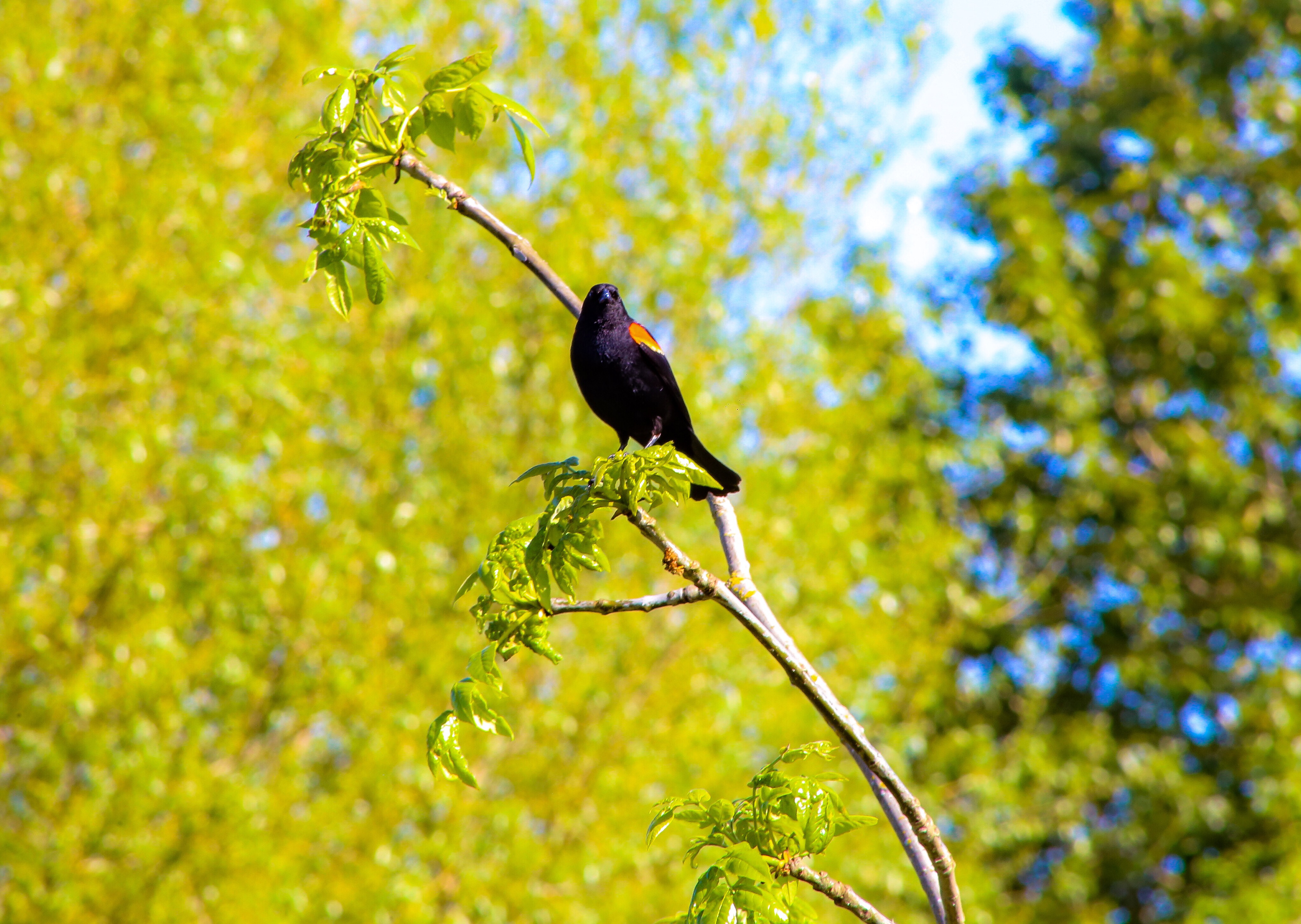
Last but certainly not least, for all the ornithophiles out there; these photos are for the birds! How many can you identify for yourselves?

Falcon chased by a smaller bird
Hummingbird
Song Sparrow
Blue Heron + Duck
Red Winged Blackbird

Do you have any tips or tricks to getting stellar nature photography? Is there one centralized location near you that you can literally find all the flora, fauna and furry friends? Let me know in the comments below!

For more on Union Bay and Yesler Swamp, peep these links:

Yesler Swamp | Union Bay Natural Area
University of Washington Center for Urban Horticulture