[Self Discovery] Holding Space for Grief

For the most part, I consider myself an upbeat rationalist, a positive pragmatist of sorts. I try and take the world as it comes: framing things in a true and positive light, holding myself accountable for understanding uncomfortable feelings and holding space for my emotions. But it’s not always rainbows and butterflies; from time to time – life can get my down and out and the grey cloud that lives in the corner of my mental state overrides the good feelings I try and project. Depression and anxiety start getting in the way – and whisperings of pessimism start to rain on my parade. In moments like those, I turn to my support system.

Half due to my childhood and my parents having split custody right when the internet was coming into being, half due to moving across a thousand miles over the course of the last three years – my life has evolved me into someone adept at processing emotions with a distant support system. It’s not exactly a skill set that’s wanted, or typically needed – but I’ve found that in quarantine this past year, it’s a skill set worth sharing.

I’ve feel – a lot. I feel deeply, often uncontrollably, and am affected often for days by sensitive information. Growing up in therapy, I realized that I simply feel the underpinnings of depression and grief in differing, unique and novel ways than most – and I’ve learned the best way to cope with them when you feel out of touch, physically, mentally and emotionally. In all, it’s also taught me better tools for how to deal with, hold space for, and transition out of emotional states which no longer serve me. I should preface this by saying that no, I’m not a therapist, I’m not a licensed psychologist and am in no way a professional grief counselor; however, I have been through my fare share of trials and tribulations, and sincerely others on their journey to brighter days and simply hope I can do the same for others.

From unshakable life experiences to minor disturbances, grief is an unavoidable truth that knocks us off our personal paths and often into uncharted, or at the very least – chaotic, emotional territory. An unfortunate tenant of living, grief afflicts us all at some point – no matter who your status, friends, family, or vocation. It’s essential that we have a mental tool kit that allows others, as well as ourselves, to hold space for important emotions.

Quarantine has done a number on many people, from the loss of family, friends and significant others down to the loss of their jobs, or semblances of normalcy. We’re all distant from each other, and it’s human nature to pine for human connection – especially under duress; being able to hold space for grief is an important facet in our relationships, and to discover new ways to do so in our “new” normal seems doubly important.

All emotions deserve equal mental weight, and there simply ‘bad’ emotions – the idea of a bad emotion is a personal pejorative we place on a moment in time; what can in one second be viewed as a ‘negative’ can easily be transmuted over time to be a ‘positive’. For example: you were unhappy in your vocation and have had to re-evaluate your job, maybe quitting – possibly being let go; in the moment, it’s stressful to find a new position – but months later, after you’ve found a new gig that you truly care about – you view the transition in a positive light.

Sure, one could just dismiss bad feelings and move on from them, but that means you’re choosing to avoid further knowledge of self and spring load your evolution. The fear is that by ignoring, passing over or not holding space for important emotions will create a negative feedback loop where you’re eventually out of sync with your mental space, potentially re-creating the same problems for yourself because you haven’t chosen to reconcile those very emotions.

One holds space for grief, so that they can rebuild emotionally – remember the lessons, accept their new truths and move forward with the mind, heart and soul in tact. In it’s most basic sense, to “hold space” for anything means that your intention as an outside influence is simply to exist with the other person, and let whoever is going through the emotions flow through them at their own pace. As the old adage goes, ‘one does not drown by falling in the water – one drowns by staying there’ and that can be extrapolated onto holding space for emotions that seem to get in our way of daily life. By holding space for others, we accept them for everything they are, for their humanity, their brilliance in handling life, and their beauty in wishing to transmute through their emotions. We actively build a more open and honest relationship, built with integrity and without judgement – and through those relationships, we evolve into better versions of ourselves.


While negotiating our own grief is one thing, it’s important to acknowledge that helping someone else with theirs is a bird of a completely different color and no two people are identical in the way they need to process their individual traumas and truths. Helping others in times of need instinctually reminds us of our own needs, for comfort, for closeness, and for community; and while learning the love languages of others, we can be reminded of what our own needs are in times of trial and tribulation.

First and foremost, the best way to be there for someone is by – well – being there. Being available, and being authentic and asking questions without judgement. Sometimes, just being in their ether and letting one know that they’re simply not alone can be the most helpful thing you can do. Here are a other few ways we can ‘hold space’ for others

  • Ask without prying; let them explore their emotions on their own accord and at their own speed
  • Give permission to others to explore their own innate wisdom and intuition without guiding or steering them through yours
  • Empower others to create their own reality, don’t take that power away by applying your own judgements or opinions
  • Reserve judgement and opinions, even if explicitly asked. What works for you on an emotional, mental and spiritual level doesn’t always translate into the life of others.
  • Remove your ego from their situation; this is not about you, it’s about them
  • Create a safe space to explore difficult emotions
  • Remind them that it’s okay to feel, and fail at moving forward from feelings, what’s important is understanding the feelings – not the speed at which we get over them, but the value of getting through them
  • Don’t force anyone down your own rabbit holes. It’s human nature to believe that we have the ‘best’ of all possible ways, mechanisms, etc to get through this life – what’s good for us, isn’t necessarily the best for others. Allow space for others to explore their unique paths and truths.

Now, back to love languages for a moment – there are essentially five types of love languages: sharing emotions and words of affirmation, sharing physical space and quality time, human touch, gifting and acts of service. So, how does this translate to a digital world? Thanks to quarantine and COVID, three of those five are a bit harder to do than before. Those who desire to be held and physically loved, or who need to be physically surrounded by others are feeling the hit much more than others. It’s important to acknowledge when that love language is being ignored. Thankfully, our current technology has allowed us to reach out to others and keep in touch – more or less; sure, the digital world we’re living in leaves a lot to be desired when it comes to holding space for our emotions and mental space but lately I’ve found it to be more helpful than hurtful.

Helping someone who needs physical touch? Send a written note, a stuffed animal, stress ball, or even some of their favorite snacks. If you’re assisting someone who could use quality time, set up a Zoom or a FaceTime call to check in – smiling is contagious, and we could really all use a dose of actual connection every now and again!


The human condition is a complex web, it would be remiss to say that grief isn’t part of it – but it’s only a part, it’s not the whole. As my mom used to and still tells me, ‘This, too, shall pass.’ The totality of the human condition, the complete nature of it, is one of love, one of perseverance, one of beauty – however ephemeral that might be. Emotionally, we are not islands – our human nature means that we thrive on communication, culture and connection. It’s in our human nature to reach out, to feel down to our core and to explore every facet of ourselves. If we’ve disconnected from our authentic selves, disallowing ourselves to marinate within our mental space and avoiding our emotional truths – that human connection becomes impossible, because our self connection has disintegrated. How could we possibly be kind to others, love others, and hold space for others – when we’ve declined to do so for ourselves? Having others around to remind you that you are enough the way you are, you are accepted the way you are, and that you will get through whatever you’re facing is an incredible feeling, a formidable bond, and tantamount to our experience on this Earth.

What are some ways that others have held space for you that have been beneficial? How have you held space for the grief of others?

Leave some helpful hints for other readers in the comments below.


Resources

For those looking for a bit more assistance, knowledge or both – I’ve put together a small list of resources to expand your emotional repertoire.

Reads:

Websites and Hotlines

One thing about living in 2021: the internet provides – there are ample support groups on every corner of the internet, if you know where to look. Here are a few that I recommend:

[Oh, Snap] Celebrating Mother Nature on Earth Day

“However mean your life is, meet it and live it; do not shun it and call it hard names. It is not so bad as you are. It looks poorest when you are richest. The fault-finder will find faults even in paradise. Love your life, poor as it is. You may perhaps have some pleasant, thrilling, glorious hours, even in a poorhouse. The setting sun is reflected from the windows of the almshouse as brightly as from the rich man’s abode; the snow melts before its door as early in the spring. I do not see but a quiet mind may live as contentedly there, and have as cheering thoughts, as in a palace.”

Mount Tahoma

As the saying goes, ‘The Earth Without ART is just EH’; and mother nature is the most wonderful of artists. I feel blessed by the treasures I’ve discovered, places I’ve uncovered and experiences I’ve been able to share. I hope on this Earth Day, you get to go and enjoy the wonders that this world has to offer. Though many of us spend the entire year in reverie of what Mother Nature has to offer, Earth Day gives us a moment to pause and take stock of the wonder, seductive beauty and technicolor menagerie this planet offers us on the daily. Now living in my third state in less than five years, I’ve had a unique opportunity to roam and road trip through the entire Pacific Coast and Western part of the United States. In honor of Earth Day and National Park Week, I’m excited to share some photos of this beautiful planet we get to call home.

Originally from the south Bay Area, I went to college in Santa Barbara then moved down to Los Angeles for a good decade. Between the memories of music festivals and downtown, West Hollywood and beach days in Santa Monica – there are equally fond memories of getting out into the great wilderness that the area had to offer. From the Southern tip of California to the North, bouncing from the dry desert to the coast, from rugged highways to ridge tops and frequenting parks throughout the Sequoias and Big Sur, San Francisco and the Angeles Crest Highway.

I spent a good part of my 20’s as a music journalist, it was awesome – and involved a lot of traveling. Even while gallivanting from state to state to cover the next festival, we made it a point to stop and smell the roses – no matter how far off the beaten path they were. On the way to Global Dance Festival in Colorado, we were lucky enough to travel through Zion and Bryce Canyons; take the backroads through Colorado and breathe in the fresh air of the Rockies.

And on the way to Shambhala in Canada, we made sure to take the most scenic of the routes and hiked Multnomah Falls in Oregon, and were taken back by the beauty of Osoyoos, the Wine Country of British Columbia’s Okanagan Valley.

Moving to Oregon a few years back changed my life for the better, and the slowness in their pace of life now seems more normal where the one I was living in California finally felt frenzied and anxiety induced. Not knowing a soul besides my family, we took trips to different corners of the state almost every weekend -tip toeing around the tidepools, hiking to the top of Cape Perpetua, and making Yachats, and the Oregon Coast, a home away from home. An unexpected perk was how the daily scenery of Corvallis poured on the charm, ushering in a warm Autumn that truly felt and looked more like Spring.

Going on my third year in Washington, I find myself in awe more times than not – the variety of nature, flora and fauna, of daily weather; it’s unlike anything I’ve ever experienced. One day, we’re in a snow storm – the next, sun dances through the flower blossoms and the sweet floral aroma of Spring effuses itself into each moment. With Mount Tahoma, we have the tallest mountain in the contiguous United States – with the Cascades and their waterfalls descending into the East as desert land; meanwhile in Olympic National Park, Washington is home the only rainforest in the greater 48 and we can’t not talk about the most adorable islands I’ve ever visited in the San Juan Islands.

Though I’ve only been out of the United States a handful of times – Costa Rica and Mexico – I feel lucky to have seen much of the western part of our country by car. Admittedly, some times I can get a bit sad when I visit some parks – there’s trash everywhere, and a view that was once magnificent is overrun by the mistakes of man: plastics, forgetfulness, and arrogance. However, I’m grateful for my family andthe conscious festival community for instilling good practices; like ‘leave it better, leave it beautiful’ (thank you, Do LaB) while picking up after yourself and others. To combat the trash pileup, my husband and I invested in some trash pickers and have been taking garbage bags with us while we’re out and about; and let me tell you: it feels good to be good to our planet.

There are hundreds of ways to respect the planet – but it’s a conscious decision that you have to continually make. Choose eating sustainably to benefit the local ecosystem and biodiversity of plant and animal life while ensuring you’re getting the right type of nutrition. In our culture of overconsumption, it’s tantamount we reduce our dependence on single-use plastics; take reusable bags to the store, ask for paper bags (I use mine for cat litter) and I mean, do you really need that straw?

Look for corporations that are making the switch to alternative and renewable power sources like Solar Energy and Wind Turbines over traditional power sources like Nuclear Power and Electric for a more sustainable future. When it comes to transportation, we’re battling the ‘Cult of the American Car’. Sure, we’re a country where people are fervent collectors – especially when it comes to our vehicles, but we are close to having more cars than people – with only 8% of people without access to one. But there are also trains and planes, in addition to automobiles – with public transportation coming in hot as a $74 Billion a year industry. By converting to renewable energy, even just in the United States, would add jobs and help save the environment.
The Earth was not ours to inherit from our parents, it’s ours to give to generations that haven’t even been born yet. It’s a good time to pick up a new practice, even if you’ve been doing your part. So, what are you doing that’s going to preserve the sanctity of nature and life on this planet?

[Wander Washington] Welcoming Spring at Mount Tahoma

“The clearest way into the Universe is through a forest wilderness.”

John Muir
May be an image of tree and nature

Growing up in California, I was invariably spoiled by beach days and Summer weather seemingly all year round; but as I’ve gotten older, I’ve found myself more and more enjoying the variation in seasons that Oregon and Washington have to offer. I tend to forget how much of California is a true desert, how the Summer season reaches into the Fall and touches Winter, scorching the Earth beneath it; proof that the grass is greener where it’s simply watered.

Now that I’ve had a foothold in the Pacific North West for a few years, I’ve found that it suits me – trees as tall as skyscrapers around every corner, wildflowers ushering in the Spring and then the Autumn leaves giving us a second dose of color in the Fall – and Winter, oh -how I do love me a good snow storm (something I’m sure I would have never said in Los Angeles!). It’s inspiration to get into the great outdoors every chance we can, especially when there are so few people on the trails and in the parks compared to how densely populated literally all the things were in Southern California.

Lately, days and nights are inching longer, while the sunlight dances through trees to wake us up politely and set us to slumber sweetly; oh, yes – Spring is here, and it’s a delicate beauty all unto itself. Spring in Washington isn’t without rain, but it’s the type of rain that comes quietly in the night and leaves dew drops as it goes with the morning sun. Each day, you can see the sun maneuvering a new pathway from East to West, dipping into the Pacific Ocean in a glorious reverie of technicolor light, bouncing off of clouds and trees to illuminate the landscape. Offering a perfect invitation to get outside, and explore until your wanderlust has been quenched – at least, for the moment. For the most part, that means frequenting a park at dusk or getting in a late morning walk around Twin Ponds, but last weekend we had a chance to get out to Mount Tahoma, and let me tell you – Spring hits something different there.


The last time I was at Mount Tahoma, it was a gloriously sunny September morning and the weather hadn’t yet kicked into Autumn. The wildflowers around Paradise were bright and vibrant, almost like a second Spring had sprung – while the fog crept in on little cat feet around the base of the mountain. As a side note, though we know it now as Mount Rainier, past indigenous tribes proudly remember and revere it as Tahoma, or Tacoma – and it’s only proper to me that we try and bring these names back into the fold. An active stratovolcano, Mount Tahoma is located about sixty miles southeast of Seattle and may as well be the unofficial mascot of the Pacific North West, right next to Sasquatch. Before we get into my latest adventures, here’s a little geology lesson on the area:

Made of alternating layers of lava, ash and pyroclastic ejecta flows, Mount Rainier effortlessly towers over the rest of the Cascade Mountain Range with 26 major glaciers and 36 square miles of permanent sparkling snowfields, earning its status as the most glaciated mountain peak in the contiguous United States. At the top of the summit, the geothermic heat spewing from a duo of volcanic craters prevents the rims from getting snowed in or iced over, forming the world’s largest glacial cave network of ice-filled craters. While the current top formation of Tahoma is estimated to be approximately 500,000 years old, the mountain and the entire Cascade Volcanic Arc is considered part of the ‘Lily Formation’ and spans from roughly 840,000 years old to a whopping 2.6 Million years old. Though small eruptions have happened since with a frequency of every few hundred years, the last major eruption of Rainier was about 1000 years ago. (for more, check out my post from a few years ago on the Magic and Majesty of the Mountain.)


May be an image of tree and nature

Travelling definitely looks a bit different a year into quarantine and COVID, and it wasn’t lost on us how much time and effort everyone has put in to being healthy and safe in Washington. Thankfully, we had our second vaccine shot just before the weekend and it was a breath of fresh air knowing that as of April 15th, the rest of the state of Washington was finally eligible for their shots as well.

Believe you me, We still had our masks on us, and used them in areas outdoors that were too densely populated and we couldn’t keep six feet apart, or whenever we were indoors – but that was few and far between. For the most part, we were the only ones on the trails, barely even seeing a soul until we managed to find some scenic vistas and viewpoints of Tahoma; and the same went for indoors – because the weather turned lush so quickly, many people didn’t make it out to the mountain last weekend. Maybe it’s my natural personality showing, or maybe I’ve just become slightly agoraphobic over the last year but I really loved the feeling of ‘having the park for ourselves’, and it felt so good to let my face be free.

The last time I adventured around the mountain, I came with Danny and my parents; we took a day trip, and tried to see as much as we could around the Northern and Western rims of the mountain. This time, Danny and I took a different approach – staying at the base of the Cascade Mountain Range. Sitting right between Tahoma and Mount Saint Helens, and within a quick jaunt to the White Pass Ski Resort – Packwood is a tiny, 300 person town called just off the Cowlitz River – full of wildflowers, Elk and sprawling scenery.

May be an image of 2 people, tree and nature

When I booked lodging for the weekend, the weather had predicted clear skies but only at about 20-30°F; at the time, I said fuck it. If there’s one thing I’ve learned in Washington, it’s that you cannot simply stay indoors because of the weather rpoert, if you did you would miss out on SO much! That wisdom came to fruition as we pulled into Packwood; feeling incredibly grateful and lucky, because the temperatures broke clear into 80° territory and there wasn’t a cloud in sight.

After sight seeing on the way up to the mountain on Friday, we decided to stop by the local market and make our own dinner in our kitchenette at the Mountain View Lodge. Two pro tips here: firstly, if you ever have the opportunity to get a place to stay that has it’s own kitchen – do it; especially when you’re in the heart of nature as we were. The produce is local, the meat is local – the community is small, and it feels good to be part of the local economy, and food chain. Secondly, marry someone that can cook. Danny whipped up a fantastic steak dinner with a side of greens tossed in the steak sauce, and oh my wow – it was the perfect end to a long day. We made some libations and took a stroll down to the river, where we were met with an 8PM sunset that danced along the shoreline. With colder weather recently, the river had a relaxing ebb and flow to it and we were joined by a pair of geese – fun fact here: geese mate for life, and seeing one while with your significant other is a wonderful sign of things to come as a couple. A perfect sighting for Danny’s birthday weekend.

Saturday morning the sun wafted through the blinds, rousing us from a wonderful slumber – and we immediately took our coffee back to the edge of the Cowlitz River to kick the day into gear. As we reached the edge of the water, it was clear that the weather from Friday had caused quite a snowmelt as we were greeted with murmurs, gargles and bubbles from the water against the shoreline. Once we were properly caffeinated it was off, off and away into the mountains to check out Skate Creek Park. I must have sounded like the biggest city kitty in the world when I asked my husband “Wait, so there’s a skate park in the woods?” because apparently Skate is apparently a type of fish; and once upon a time, Skate Creek was actually stocked with catchable trout. With the continual steelhead and salmon reintroduction into wild waters, there are now State regulations which prevent the restocking of ‘catchable’ trout species in ‘anadromous’ waters; under this designation, this is any river, creek and waterway that fish use to come from the sea to release their eggs inland. The trail itself for Skate Creek Park is about 2 miles, and fairly easy to maneuver. For those (like moi!) that enjoy getting off the beaten path, there are ample locations to park your car next to the river, grab your gear and enjoy a private beachside picnic, or afternoon libations.

May be an image of 1 person, tree and nature

We tried to make it through the mountain pass, but sadly our little Civic wasn’t prepared to hit the bumpy roads and we turned around fairly fast so as to not get stuck there. We made a few more pit stops along the river, and just – wow. Because of the recent heat waves, the glacial ice was ripping and roaring around each turn, taking up technicolor hues of vibrant greens, teals, turquoises and blues; it looked good enough to drink! Paired with the lush vegetation on all sides, clear skies and warm sunlight on our shoulders – it truly felt like we were transported into Fern Gully or Avatar.

May be an image of 1 person, nature and tree

After heading back to the lodge and reassessing the situation, we decided on a quick lunch at White Pass Taqueria and Taproom and our stomachs couldn’t have been happier. Real good TexMex has been hard to come by outside of California, and White Pass went above and beyond; you honestly can’t go wrong with the selection of eats and treats and the outdoor seating is fantastic. Then it was off, off and away to explore new sights on the East side of Tahoma.

One thing we noticed during the journey is the optical illusion of mountain size. Maybe it’s the sheer grandiosity of it all the way from the heart of Seattle, or the University of Washington campus – maybe it was the fact we were already at an altitude of 2000 feet; but cruising along the base of the mountain, it seemed small for the very first time.

As we drove from Parkwood into Randle and Naches, Tahoma felt like a mountain out of Alice and Wonderland – eating this and drinking that, growing larger around one curve and then retreating in size the next. Beyond the popping in our ears, we could tell the elevation was increasing because there was ample snow on all sides of the mountain – an actual dream of a situation. Sunny, clear skies from above reflecting and refracting off of the snow in a cascading technicolor scheme all around us.

Winding around the 12 Highway, we slowed to a snails pace to fully take in the scenery: towering ridgelines of trees with sorted gushing waterfalls bellowing down to the next level, and the next, and another too far down to see on one side, while snow rimmed lakes danced with still reflections on the other.

May be an image of tree, mountain, lake and nature

Finally, we stumbled into a doubly delicious lake situation with Clear Lake to the South and Rimrock Lake to the North of us and made an afternoon out of it. Hiking up and down the winding trails around the lakes, sitting on the shores edge and skipping stones in the crystal clear water while admiring the grandiosity all around. On the way out, we took the long way home – driving to the most northern edge of Rimrock, and soaking in sunset as we gradually descended down the mountain, admiring the view from all angles – grateful for the treasures Earth has to offer.

No matter how you get there, or which side of the mountain you choose to roam – there is something magical around every nook and cranny of Mount Rainier. For more, including current closures due to COVID, as well as Winter road closures as we head into the warmer months, head to their website or social channels – or put on your adventure pants, say “Fuck It!” – pack a bag, and plan a visit!

Website | Facebook | Instagram | Twitter | YouTube

May be an image of nature

“Everyone wants to live on top of the mountain, but all the happiness & growth occurs while you are climbing it.” 

Andy Rooney
May be an image of sky, lake and nature
May be an image of 1 person, lake, nature and tree
May be an image of 1 person, body of water, nature and tree

[Seattle Sights] Adventure Your Way Through the Kubota Gardens

A hidden gem of the outskirts of Seattle, and Washington state at large, the Kubota Garden boasts beautiful grounds to meander through, inspiring views and incredible landscaping. Covering twenty stunning acres of land in the Rainier Beach neighborhood in South Seattle, the Kubota Garden started as a labor of love from the Fujitaro Kubota back in 1927; sixty years later, the city of Seattle adopted it into their public park system – and let me tell you, we are all infinitely better off for having such a beautiful park in our proverbial backyard.


A fun fact, and lesser known to me before my move to the Pacific Northwest – the city of Seattle has incredible ties to Japan.

Thanks to the former Prime Minister of Japan, Takeo Miki, we get to celebrate the beginnings of Spring alongside the beautiful cherry blossoms – 1000 of which were donated to the city back in 1976 to commemoration of America’s bicentennial and the long allegiance, alliance and friendship between the people of Japan and of Washington state..

Historically, Seattle is been known for hosting the second largest Japanese population on the West Coast next to San Francisco, with Los Angeles and San Jose coming in close behind.

These Japantowns (日本人街), formally known as Nihonjin-gai or informally as J-Towns, Little Tokyo or Nihonmachi ( 日本町 )were created during the Meiji period. From approximately 1870 to 1910 an outpouring of Japanese immigrants fled home to pursue better economic opportunities, initially settling along the West Coast of America and Canada.

Though at one point there were over 40 different Japantowns in California, after World War II and the unfortunate and disappointing internment of the Japanese community – only three are now left; out of the numerous Little Tokyo’s scattered along the West Coast, the only left outside of California is Seattle.

Now, back to Fujitaro Kubota – Kubota was part of the Issei immigrants; a term used to describe first generation immigrants from Japan. Though his first job was working on the railroad, Kubota forayed into his own gardening business, the Kubota Gardening Company, in 1922. By 1927, Kubota bought five acres of logged off swampland and started work on a small garden as a hobby; fast forward a hundred years later, and that small hobby has become a pinnacle of park life in the greater Seattle area. Before his passing, the Japanese government presented Kubota with the ‘Order of the Sacred Treasure’ award for his achievements within his adopted country, and for giving life to Japanese Gardens in his new homeland.

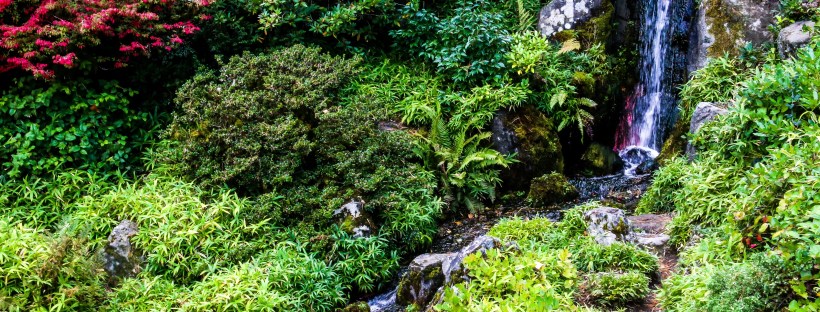
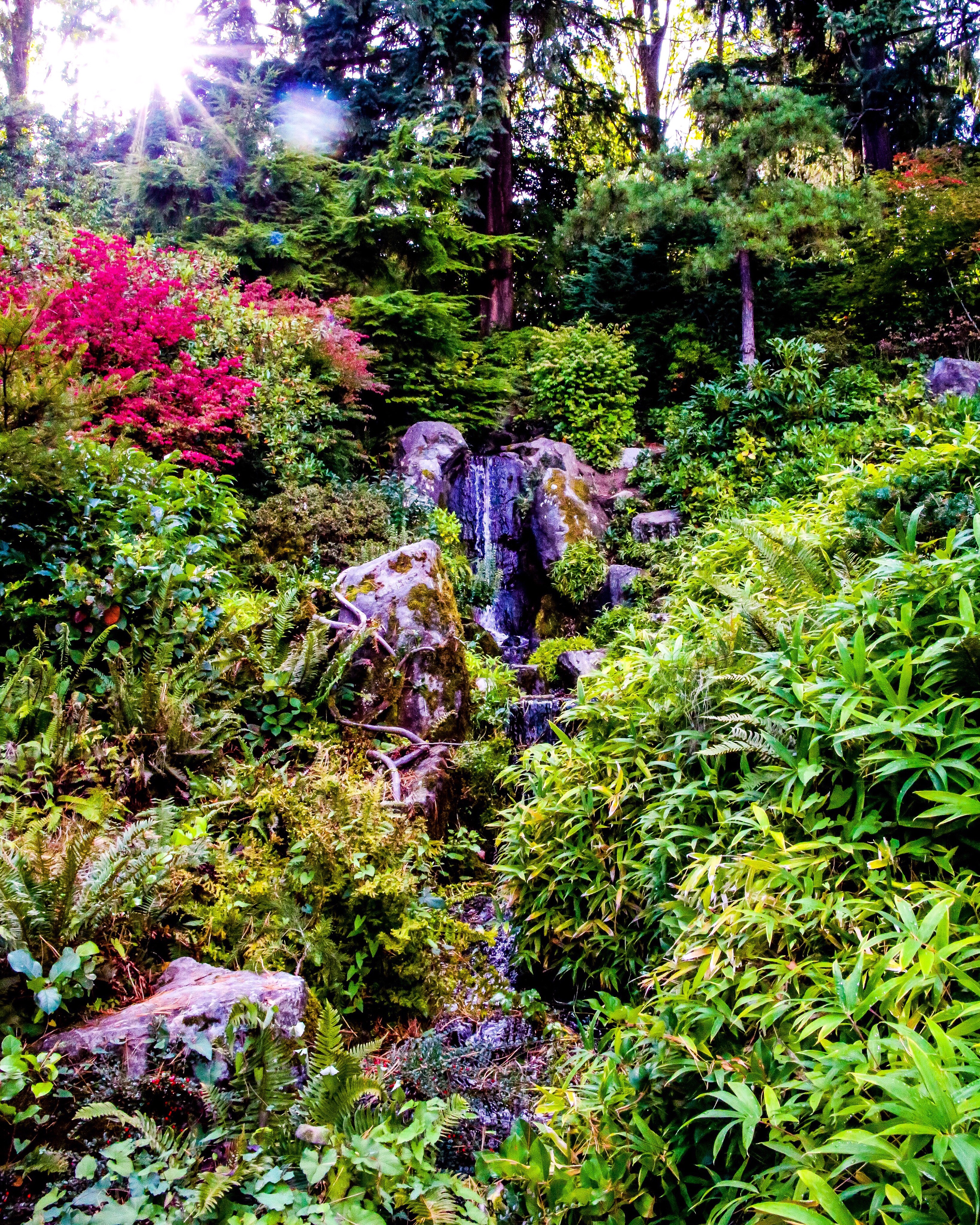
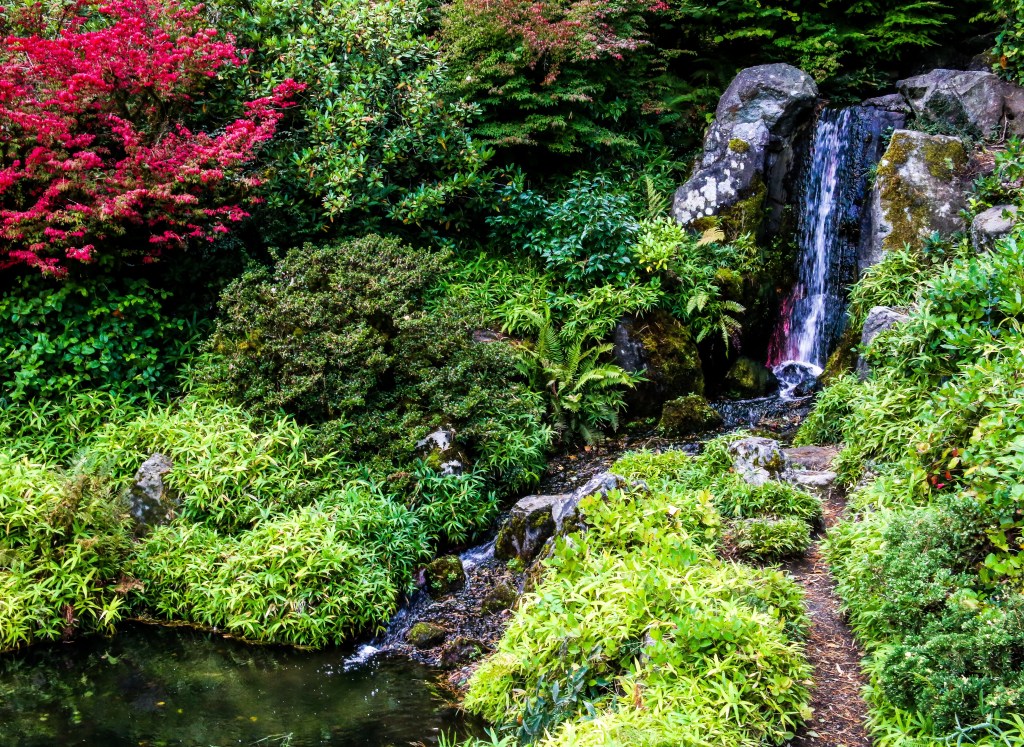
Boasting meditative monuments, waterfalls, ponds, streams and a vibrant variety of foliage and provide a novel journey into the delicate, and decorative world of Japanese landscaping. Eventually, the gardens ballooned from five acres to twenty. Unfortunately, with their families internment – no work was done on the park for several years – but after the war, with the assistance of his two sons, Fujitaro rebuilt the grounds to feature reflection pools, incredible waterfalls and plants from his nursery that he had been keen on incorporating into the garden. In 1972, the Japanese government presented Kubota with the ‘Fifth Class Order of the Sacred Treasure’ award for his achievements within his adopted country, and for giving life to Japanese Gardens in his new homeland; unfortunately, Kubota passed away at the ripe age of 94 the following year.

When the 20-acre property became a target for condominium developers, community groups encouraged the Seattle Landmarks Preservation Board to designate the 4.5-acre core area of the garden as a Historical Landmark. In 1981 the American-Japanese Garden created by Fujitaro Kubota was declared to be an Historical Landmark of the City of Seattle.

In 1981, the City of Seattle was made into a Historical Landmark in order to preserve his legacy – especially as the area was targeted for housing developments; and finally, in 1987 the city officially acquired the Kubota Garden from the family and it is currently maintained by not only the city, but plenty of volunteers. To ensure further protection of the area, the city’s Open Space Program has bought an additional twenty eight adjacent acres of land to remain as a natural area to protect the ravine, as well as Mapes Creek.

Whether you’re coming to or from the Sea-Tac airport, or live in the area and are craving an escapade in your backyard – this is one fantastic field trip that I recommend to all. For more on the colorful Kubota Gardens, head to their socials – currently, you’re allowed a visit as long as you maintain your social distance, but if you’re not willing to risk it – simply take a peak using the live view of Google Maps!

Website | Facebook | Twitter | Instagram

[Be The Change] The Dangerous Precedent of Georgia’s Voter Suppression Laws

Image

Since America’s inception, the right to vote has inherently been a focal point of our society – because time and time again it has disenfranchised parts of our society into not having a representative voice in government, and the inability to push for actual change. Even though the original constitution didn’t formally establish voting rights, or ineligibility, we are still at it’s core a country founded by White, Christian Males; thankfully, we have opened up our voting system to finally include minorities, the youth, women and our African American population.

One thing I’ve discovered in the here and now – when there isn’t a law in place to actively progress society, facets of society will use that space to push back even further. That said, with new legislation, came a trove of new pushbacks coupled with a new vitriol; with new change, came those who inherently rejected that change and have done almost anything they can to make it null and void. So, pull up a seat, grab some popcorn – and let’s travel back in time for a little history lesson before we get into what’s currently happening in Georgia.

The U.S. Constitution

After the Civil War, the Fourteenth Amendment formally abolished slavery. Laying the groundwork for the Civil Rights activism that we’re still in the mix of in 2021, the Fifteenth Amendment is a pivotal point in American society and culture – granting the right to vote to men of any color and was subsequently passed in 1870, As a country founded on the backbones of our African American brothers and sisters, it was tantamount to the evolution of the Reconstruction era of American history once slavery had been eradicated.

Next, finally passed on May 21st, 1919, and then certified on August 26th, 2020 – the Nineteenth Amendment took almost a decade of protesting to pass; and specifically prevents and prohibits the federal and state government from denying the right to vote based on gender. At the time, it brought in approximately 26 million American women to vote in the 1920 presidential election. Unfortunately, this still left the door open to prevent giving minorities the right to vote because by in large – it was an amendment duly applied to White women, which spurred the National Women’s Party to begin their work on the Equal Rights Amendment. However, every time it seemed like we were taking two steps forward as a country, we still had to negotiate with the one step backwards.

In 1962, the Twenty-fourth Amendment was passed – eradicating the poll tax. Yes, there was a tax to vote – and primarily a way to keep the poor, minorities and women from being able to participate in government. Primarily used by Southern States of the former Confederacy, the poll tax was a reaction to the Democratic Party gaining strength and seats in state legislatures. Unfortunately, there were several states who refused to do away with the tax – including Alabama, Arkansas, Texas, Mississippi and Virginia. It wasn’t until 1966 for the Supreme Court case of Harper versus the Virginia Board of Elections that the poll tax was made formally unconstitutional.

The Politics Of Passing 1964's Civil Rights Act : NPR
Image: NPR

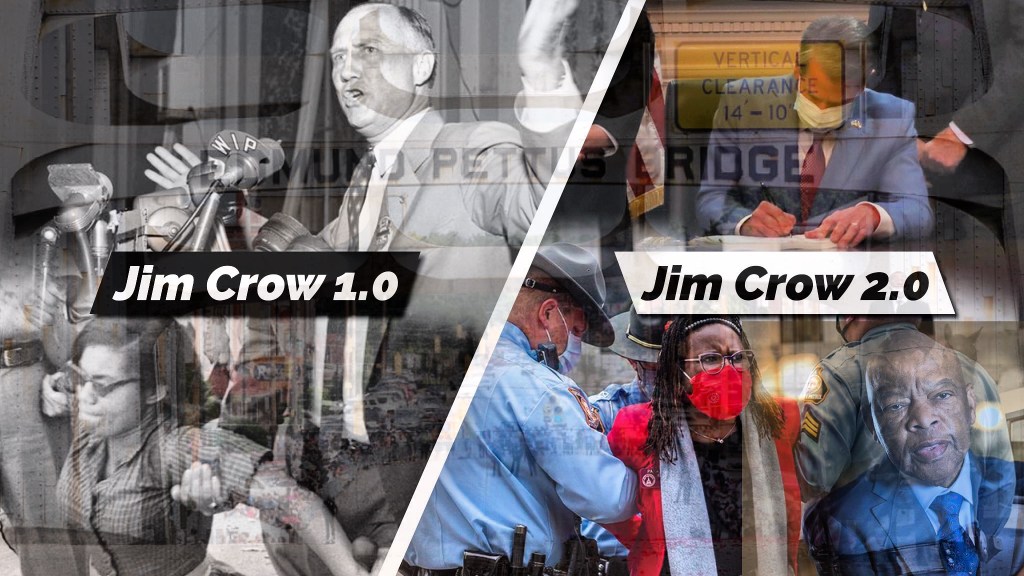
Through it all, the South did an unfortunately impeccable job of upholding Jim Crow laws. Brought to the forefront by the White Southern majority, the Jim Crow era of laws essentially doubled down on racial segregation and racist policies throughout the South on state and local levels. These laws were put in place solely to prevent and dissolve the economic, societal and political gains made by African Americans in the post-slavery era. Slowly, over time, these laws were dismantled. Starting with the 1954 Brown versus Board of Education trial where segregation in schools was formally deemed illegal, Jim Crow laws were formally done away with in the 60’s with the one-two punch of the Civil Rights Act of 1964 and the Voting Rights act of 1965.

The Civil Rights Act of 1964 is in itself an incredibly crucial piece of legislation. Not only did it formally outlaw discrimination based on sex, race, color, national origin – and now, sexual identity and gender identity; the Civil Rights Act established laws surrounding segregation – forbidding racial segregation in schools or public accommodations, employment discrimination, and most important to our current discussion unequal voter registration requirements. Piggybacking on the Civil Rights Act, as well as the 14th and 15th Amendments, the Voting Rights Act of 1965 was created to ensure that racial minorities throughout our country, but especially in the south, would be guaranteed the rights to vote – making literacy tests and the like illegal, and preventing discrimination against language and racial minorities.

Last, but most certainly not least – we fast forward to 1971 – and the Korean conflict, and various Vietnam wars where we’re drafting soldiers into battle yet denying them the right to have a say in government. This brings us to the Twenty-sixty Amendment which prevents states from denying the right to vote for those over 18.


Image: FiveThirtyEight

All combined, these small changes in policy in addition to the monumental amendments of grandiose importance have made it possible for millions of disenfranchised Americans to participate in their own government. However, In the absence of federal legislation concerning elections, it’s up to the individual states to establish their own qualifications; and hence the rub.

The unfortunate fact of the matter is understanding that blue states aren’t vastly more progressive than red states but that red states do more to disenfranchise their communities more than anywhere else. And thanks to current state level legislation, it feels more and more like we’re heading back into eras of voter suppression within predominantly White communities than ever before.

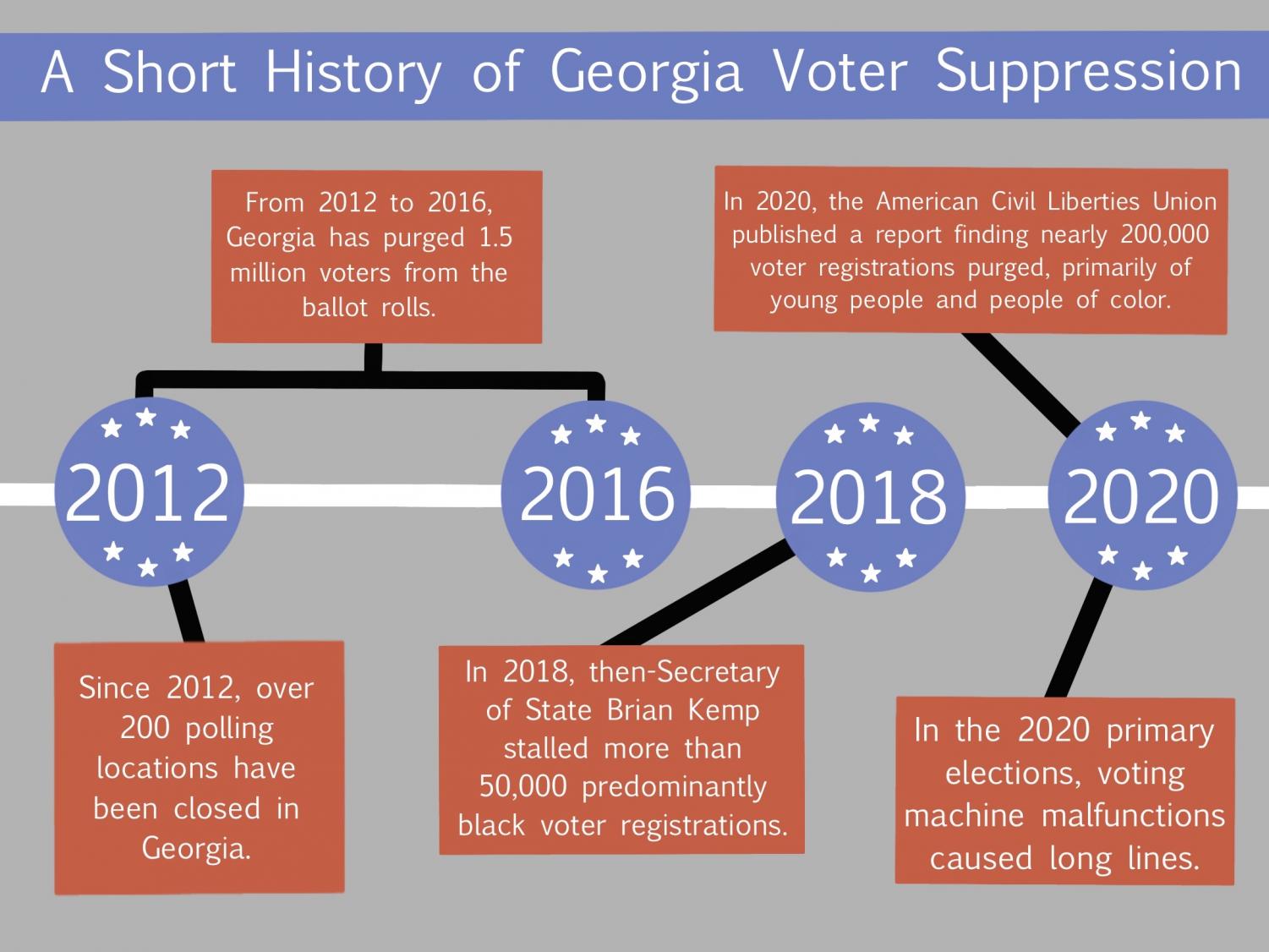
In 2018, NPR penned an article citing that almost half the United States had implemented restrictions on voting – noting that some states require a photo ID, which could be seen as a nuanced version of a poll tax, in addition to both Ohio and Georgia championing what’s considered “use it or lose it” legislation – essentially purging voters from participating in elections simply if they haven’t recently been part of them.

“You’re seeing a national effort by the Republican Party to try to restrict voting rights, and it’s playing out in states all across the country.”

Ari Berman, Author of “Give Us the Ballot”
Since the 2018 gubernatorial election all eyes from the nation and from the citizens of Georgia have been glued to the polls and the subsequent election resuts.

Paired with the 2013 Supreme Court decision Shelby County versus Holder which permitted states with long history of discrimination to bypass the federal government in discussion for changes in voting laws, Ari Berman of Mother Jones believes these are part of a bigger strategy by the GOP to restrict voting access. When the 2018 mid-terms were underway, these laws were brought to the forefront of many discussions – especially with Georgia in the mix.

Though there are dozens of states, with hundreds of pieces of legislation on the table – Georgia is the first battleground state to pass such restrictive voting laws in the aftermath of the 2020 election.

There’s a reason that Stacey Abrams is coveted so much by the BIPOC communities of Georgia. There’s a reason that everyone was so keen to get into the kind of ‘good trouble’ that John Lewis was referring to. There’s a reason our country was on pins and needles with the run-off races in Georgia, and why so many of us were championing for, donating to, and elevating Raphael Warnock and John Ossoff for their senate seats.

With their latest litany of legislation, Georgia’s GOP is actively pursuing a campaign against minority voters. As of the other week, Georgia’s Governor Brian Kemp signed #SB202 – an almost 100 page bill into effect after being passed in the state house and senate. Some key points to the legislation that was passed. It standardizes early voting on Sundays. This is incredibly important in Georgia primarily due to the vast amount of campaigning, busing and voter turnout that African American Churches bring to the table – making it unnecessarily difficult for the African American Democratic population to participate.

Additionally, this same bill would limit the number of drop box locations in the state, cuts back on the time to request an absentee ballot, pave the way for unlimited voter challenges, require photo ID for mail-in ballots and last but most certainly not least prohibit the community from handing out water, drinks of food to anyone waiting in line to vote. And to boot, the Georgia Democratic Representative Park Cannon – a young, vivacious, openly queer and Black Representative elected just this past year – was arrested…simply for knocking on Kemp’s door because she was concerned about the legislation. Enforcement officials (…currently) are adamant that they arrested Cannon because they feared another January 6th Riot, and arrested Cannon on the charge of “obstructing law enforcement and disruption of the General Assembly”.

At the end of the day, it’s become unfortunately clear who and what the American government, as well as the American police, are propping up – and what they are actively working to dismantle. They are trying to dissolve our greatest strength, our differences and our diversity. As a society, America is a stained glass window built off of thousands of unique pieces, perspectives, and peoples. We each have our individual truths, but the fact of the matter is – we must pull back to see the biggest picture, we must view us as one whole America; not within the fractional window of White, male privileges and pride.

One thing I’d like to leave you with – we are not done enfranchising those who do not have a right to currently vote. Many states have a residency requirement, making it difficult for the homeless population. In almost every state, prisoners – current, or former, do not have the right to vote. Our country will not be free, until we are all free to participate within it; we will not be inclusive, until we include everyone.

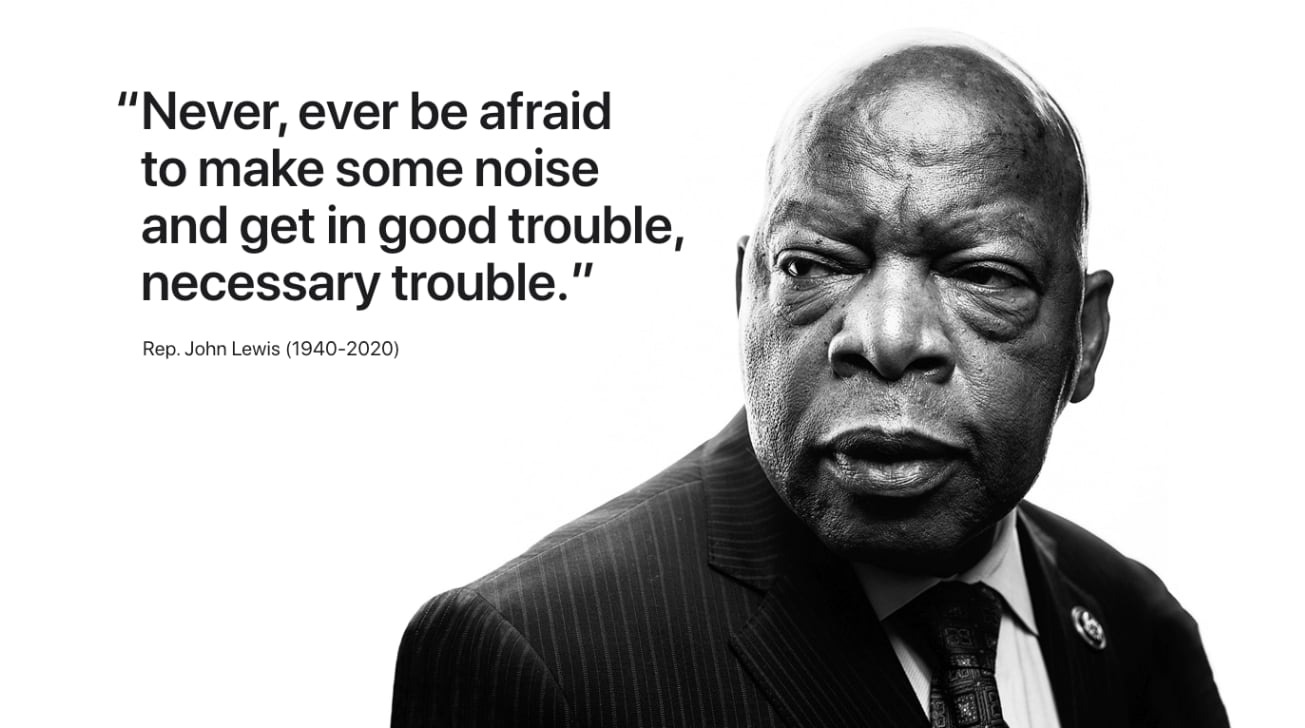
“Get in good trouble, necessary trouble, and help redeem the soul of America.”

John Lewis
Getting in Good Trouble. Remembering John Lewis - National Association of  Social Workers Michigan

How to Help in Georgia

Donate to the Georgia Democratic Party

Donate to ActBlue

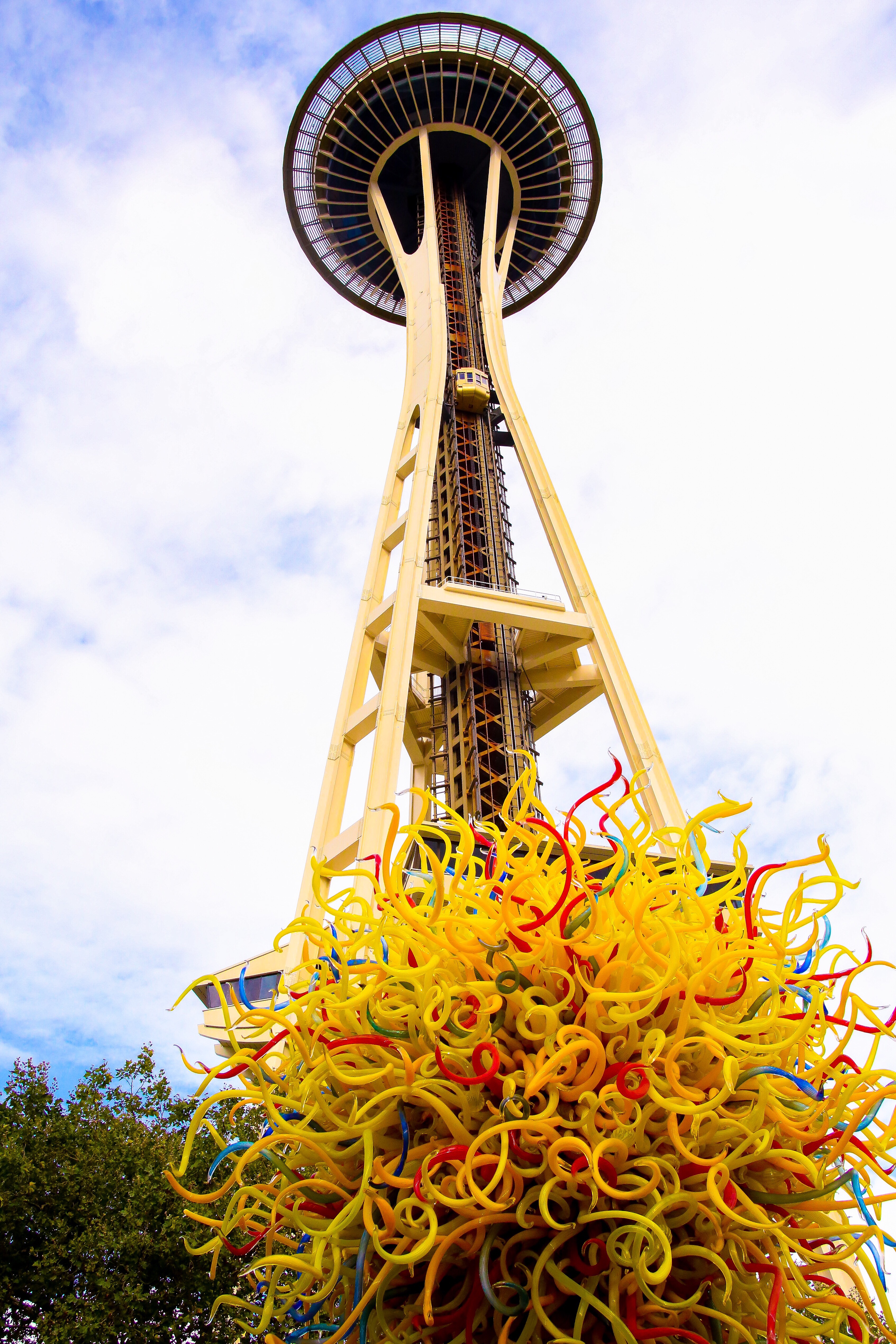
[Seattle Sights] A Cacophony of Color at Chihuly Glass and Garden

“I want people to be overwhelmed with light and color in a way they have never experienced.”

Dale Chihuly

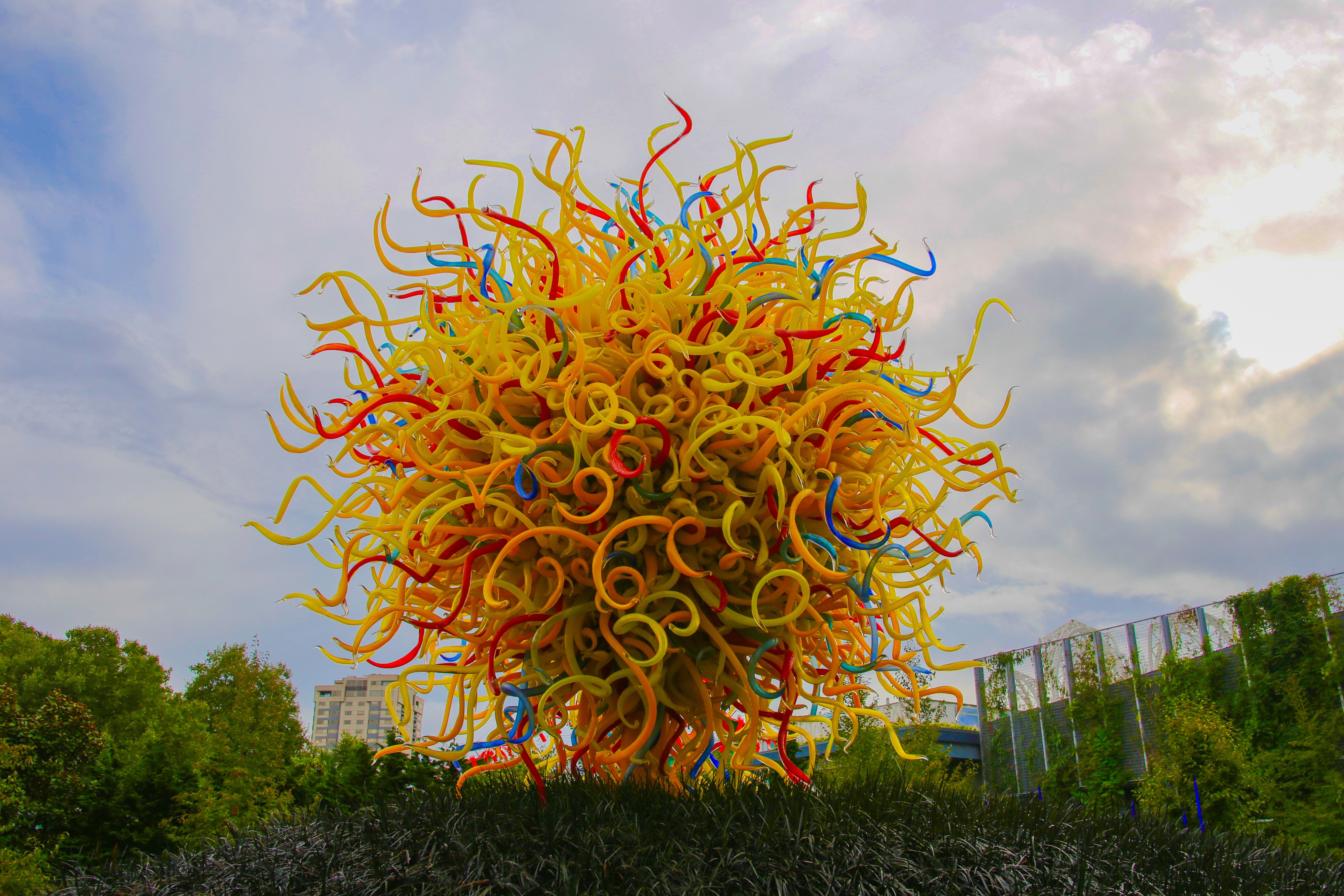
I’m picky – with almost everything, but especially with what I want out of a museum. In my eyes – when art can exist in so many beautiful forms in ‘the wild’, let’s just call it, I have a hard time believing it should be relegated to a stuffy room with static lighting. I love when art is unencumbered and free – probably a reason I fell in love with large installations at music festivals, and the vast swaths of street art in San Francisco and Los Angeles. Art is everywhere you look, if you look with the right eye – or so, I’d like to believe.

This image has an empty alt attribute; its file name is 0c8e67ff-f270-40bb-8754-452dfb4f0e30.jpg

That said, it takes a special brand of both art and artist to get me into a museum. Growing up in the Bay Area, my family took me to plenty of museums growing up, but my heart was always much happier at the San Francisco Academy of Sciences, the Barbie Museum in Palo Alto, or roaming the city streets in search of hidden art right under our noses and feet.

Even with an immaculate collection of museums in and around Los Angeles -from the LACMA to The Broad, The Getty and Getty Villa to the Museum of Death and Destruction, and all the niche pop-up museums in between – I always enjoyed myself, but still gravitated more towards the street art in the alleyways as versus the art within. As mentioned before, my taste in artistic expression has been vastly shaped by both Burning Man art installations as well as music festivals like Lightning in a Bottle, EDC, Shambhala – and even the Coachella Music and Arts Festival, art makes me happier when I can interact with it; when I can engage multiple senses, and open my mind in new ways of thinking creatively.

I was over the moon when I stumbled across Hauser and Worth, and the Kusama exhibit at The Broad was one of the coolest things I’ve ever seen in person; but not shortly after we made the big move up north. Ever since migrating to Seattle a few years ago I have been searching for something comparably fantastic. As transplants, one way we could get to know the city and the community ethos was to try and visit as many museums, galleries and parks as we could fit into a day

This image has an empty alt attribute; its file name is 45ea0251-e610-41f6-afd9-ee547224d38e.jpg

Up here, the nice days are exquisite and it’s your duty to get your cute butt outside and enjoying the fresh sunshine – but on a cloudy, rainy, blustery day it’s the diverse array of art that’s truly inspiring about the Pacific North West. So, believe me – when I heard about Chihuly Glass and Garden I immediately knew I had to have an adventure.

Built to host the exquisite designs and artwork of Washington’s own Dale Chihuly, Chihuly Glass and Garden is located in the heart of the Seattle Center in the mix of the hustle and bustle of Seattle proper.

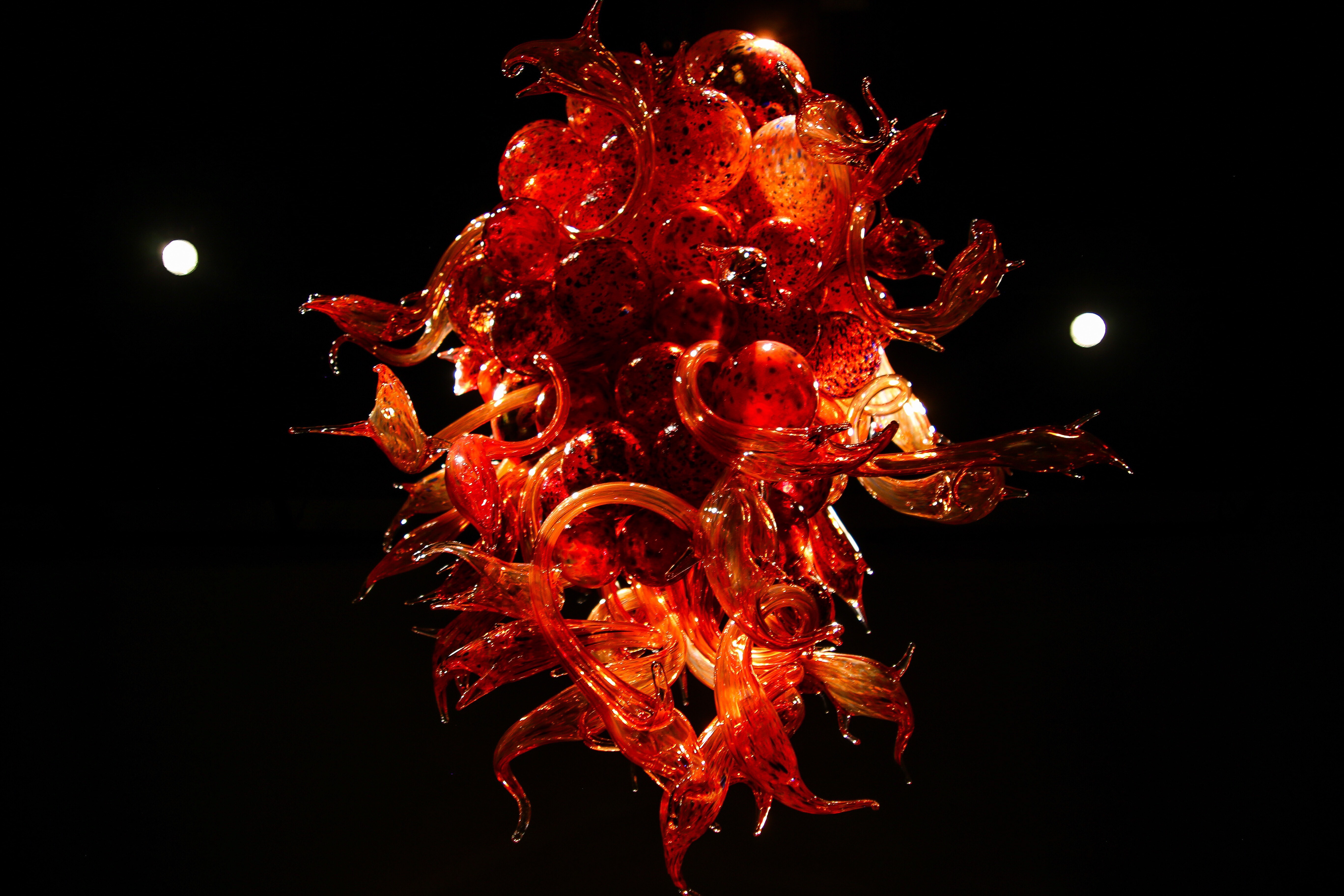
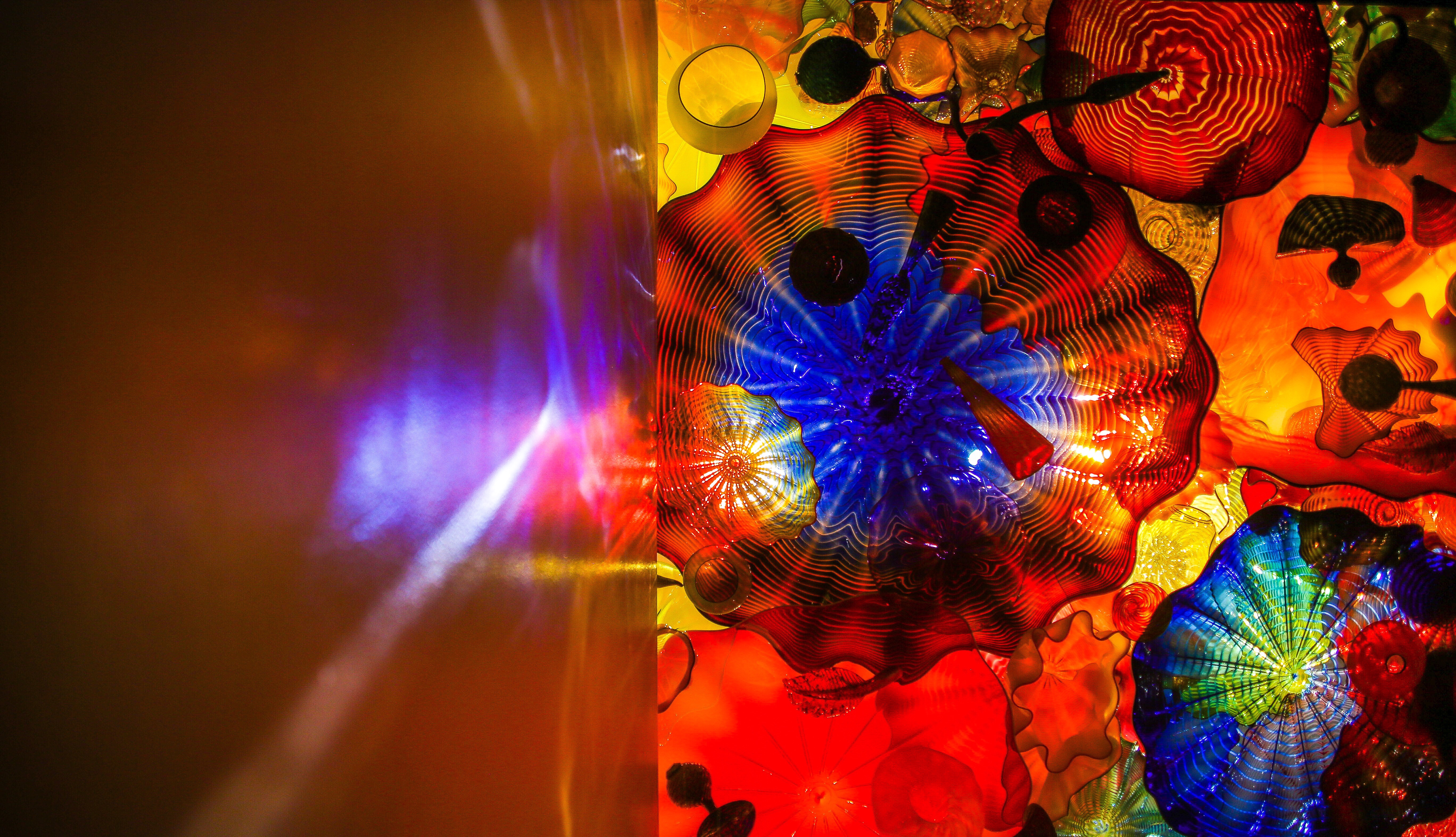
With gorgeous gardens adorned with exquisite glass pieces, as well as several permanent pieces indoors and a rotating show of the latest and greatest in blown glass – this is a can’t miss museum that fairy tales are made of. From the second you get to the grounds, you’re greeted with a spectacular view of Seattle’s iconic Space Needle.

This image has an empty alt attribute; its file name is e5c35c99-898d-4e31-8ee9-75358f6f2ab7.jpg

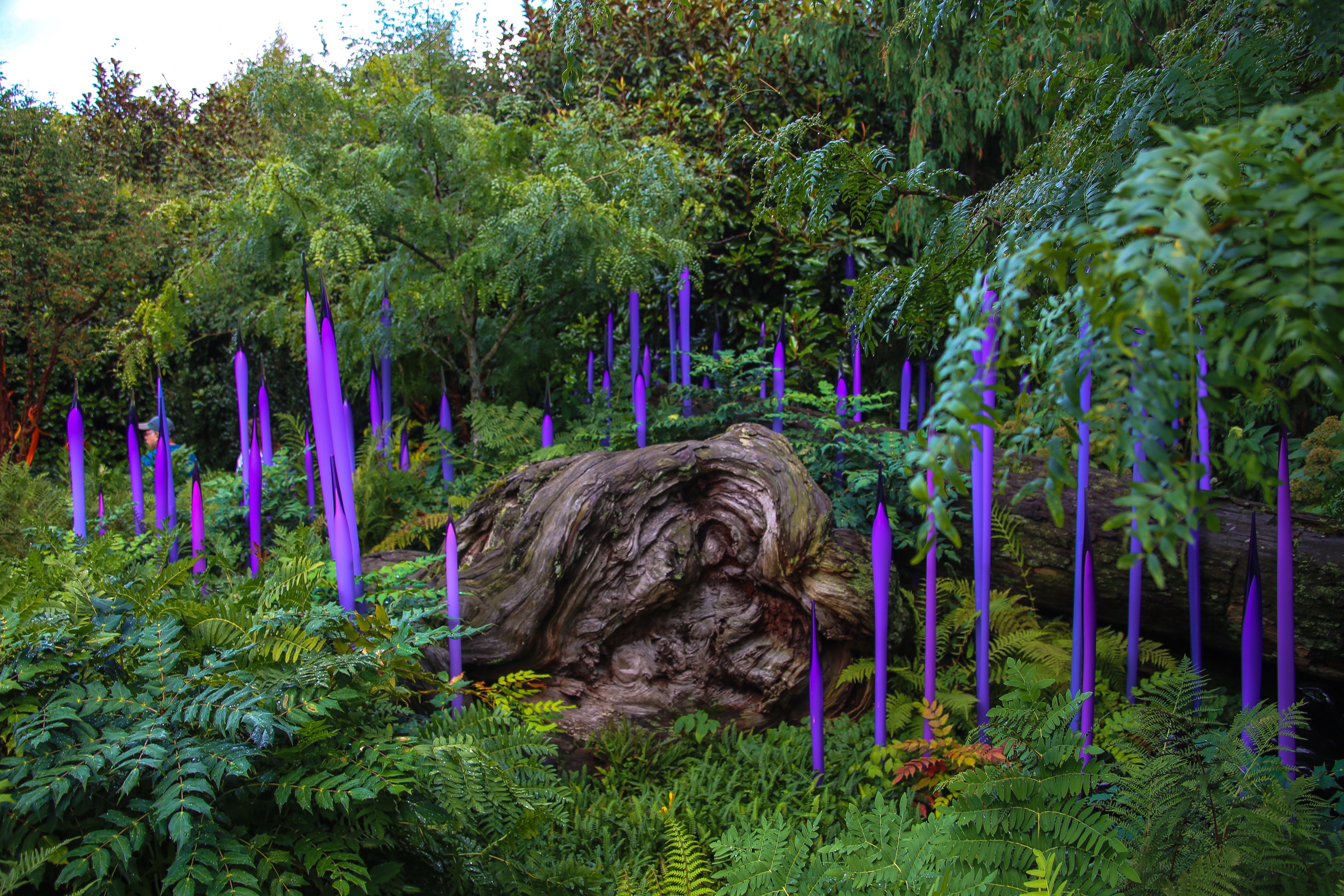
Inside, you’ll meander through the hallways and large scale, open air designs with three different drawing walls and eight individual galleries of work. Once you’ve marinated on the unique and exquisite beauty indoors, you’ll be greeted by my favorite pieces – the Glasshouse, and the gardens. Standing over 40′ tall with over 4,000 square feet of radiant space -The Glasshouse is one of the most amazing things I’ve literally ever seen with the focus on a larger than life suspended structure in the middle, full of vibrant and delightfully rich colors.

The Chihuly Glass and Gardens is a phenomenal experience that deserves to be on everyone’s bucket list, Whenever travel is available again, it’s really worth visiting Seattle for – and 10 out of 10, I greatly recommend it! If the Pacific North West isn’t in the books anytime soon, there are also exhibitions around the country, including permanent galleries in the Tacoma Art Museum, the Colorado Springs Fine Arts Center, Ohio’s Franklin Park Conservatory and Botanical Gardens, the Morean Art Center in Florida, and Tokyo’s Toyama Glass Art Museum.

For more on Dale Chihuly, his life’s work and his various galleries – head to his social media links and websites:

Chihuly | Chihuly Garden and Glass | Instagram | Facebook

“In Seattle, we live among the trees and the waterways,
and we feel we are rocked gently in the cradle of life.
Our winters are not cold and our summers are not hot
and we congratulate ourselves
for choosing such a spectacular place to rest our heads.”

What’s the most interesting museum that you’ve ever been to? Do you have a artistic niche that you cant help but be enthralled by? Let me know what some of your unique museum experiences in the comments below!

This image has an empty alt attribute; its file name is 8da8f8d5-4f42-4434-9fcd-74c6c943d40e.jpg
This image has an empty alt attribute; its file name is e5c35c99-898d-4e31-8ee9-75358f6f2ab7.jpg

[Self Discovery] Manifest Mindfulness in Your Morning Routine

When I was younger, I thought the idea of ‘waking up on the wrong side of the bed’ was a silly notion; but thanks to 2020, I now know that one can wake up on the wrong side of an entire year. Not to say last year was pure chaos, dissonance and struggle – but, between COVID and quarantine, racial injustice, protests, the dissolution of the office of the 45th President, and three surgeries to recover from – I’d be remiss to think that I was in any way grounded in the present moment, nor efficient at using my time wisely.

Waking up and taking charge of your day is a powerful feeling; when the world feels out of control, doubly so. The fact of the matter is, the only thing we can personally control is ourselves; our mental space and mental dexterity, our boundaries and desires, our emotions and how we react. This year, I’ve recommitted myself to some necessary changes and have noticed my mindset shift by leaps and bounds, simply by implementing a solid, consistent and fulfilling morning routine.


Let’s start with something basic, but vital to this conversation: why should you create a dedicated morning routine? Besides being able to set the tone for your day, it let’s you control the clock and gives you some personal power back in your pockets. By choosing where we place our focus from the start of the day, we can both harness our potential energy and turn it kinetic, in addition to being able to attack the tasks at hand, schedule our time better and raise our productivity levels. I’ve honed in on some fantastic methods that have my mind, body and soul set right over these last few months and can’t wait to share them with you – so let’s jump into my morning routine!


Yoga on Gaia

Notoriously not a morning person, creating my morning routine literally took me 36 years. And it actually starts the night before; call me silly but I set the autodrip on our coffee pot and have it go off at the same time as my morning alarm – that way, the second I get up and at the day, there’s a fresh cup ready for me (because let’s face it, we all need caffeinated reinforcements!).

Then I head to the living room, get my essential oil diffuser kickin’ with an invigorating fragrance (more on aromatherapy later!), roll out the yoga mat and get down to business with Gaia. I’ve tried a few different yoga and workout apps for AppleTV, Gaia is hands down my favorite – probably because it’s so much more than just yoga; they really have things for the mind, body and spirit. Whether it’s an illuminating video on a variety of transcendental topics, diving into one’s meditation practice or browsing through their immense catalog of instructors and classes. Classes range from 10 minutes to an hour, at a variety of levels with instructors from every walk of life I’ve become quite fond of everything they offer, and even have a favorite yoga instructor (Tiffany Bush, you give me LIFE!).


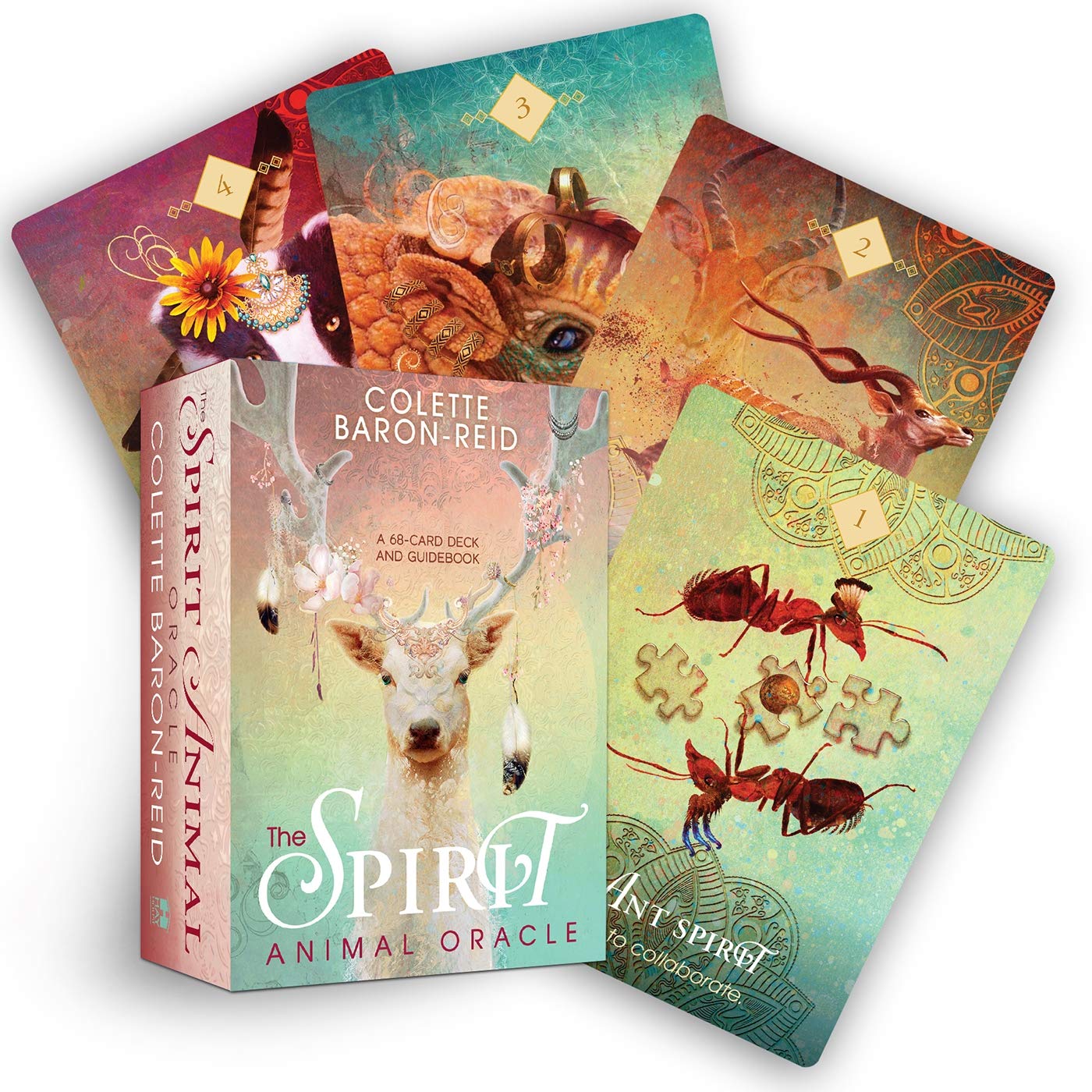
Once I’m limbered up and a sweaty, happy mess of a human – I bust out a gratitude journal and my Animal Oracle Cards and take my metaphysical temperature for the day. I tackle ideas like what am I going to work on for the day, where in my spirit do I place my personal focus, and what tools do I need to become the best version of myself. One thing I’ve learned about gratitude journals, is that there is one for literally every personality – do you want one without dates, or with them? Do you want a full year of journaling or to jump in on a whim?

Tiny Buddha's Gratitude Journal

Keen on my personal evolution, I decided to splurge at the end of last year and am currently juggling between three different gratitude journals and three planners, that each offer something different and unique. To be fair, some I think are better for work life, like the Passion Planner, while others like the Writual Planner with daily, monthly and weekly Tarot spreads for self discovery are keen for those of us who have committed to the spiritual side of life.

Now, for the morning – I love setting my mind right by working with the Tiny Buddha’s Gratitude Journal. The prompts are thoughtful and poignant, and if you’re like me and love a good doodle sesh – there’s plenty of space to both color, draw and explore. and jump in there a few times a week. Once I’ve given grace to the day, I’ll set up my Spirit Animal Oracle Cards, get into my Moonology Diary, and write a bit about how the card I’ve pulled relates to the moment.

The Spirit Animal Oracle: A 68-Card Deck and Guidebook: Baron Reid,  Colette: 9781401952792: Amazon.com: Books
Animal Spirit Oracle Deck

The Wild Unknown on Instagram: “Holy 🌈🌈🌈! The archetypes deck has  obviously landed at @solar_return 👽👽👽” | Wild unknown tarot, Wild unknown,  Tarot decks
Wild Unknown’s Archetype Deck

Just like there’s a vast variety of journals and diaries, there’s no one right oracle, deck, Tarot Deck or runes stones. These things aren’t one size fits all souls; we each have a preference for what calls to us innately, and how the world resonates with us. Personally, Colette Baron-Reid’s deck is one of the most beautiful pieces of art I’ve ever owned. Each card is embellished with impeccable, incredible detail.

If you’re looking for something a bit edgier, Kim Krans’ The Wild Unknown has an incredible set decks – whether you want Animal Cards, Tarot Cards, or my personal favorite from their assortment – the Archetype Cards; plus, their journal is super fun and open form. Some people still have a preference for old school tarot decks, and I’ll use those some mornings as well. I have several different tarot decks of my own, from a Thoth Tarot deck (technically, two of them) to the Rider-Waite Deck, my Cat Oracle Tarot cards and the circular Tarot of the Cloisters. Just like the animal cards, there are also tarot decks for every person. Don’t worry if you found this paragraph confusing, I’ll dive more into Tarot (a true art and love of mine) at another time.


Science of Meditation |Dhyana - Isha

Last but most certainly not least, after set my intentions and tone for the morning; I give myself a few minutes locked in Meditation. When your brain more closely resembles a web browser with dozens of tabs open (a la, mine), meditation becomes a great way to settle into your breath and the present moment. Some days, I’ll take it to the shower or bath – others, I’ll go back to my Savasana and marinate in the moment. Meditation has been proven to lower blood pressure, increase circulation, and boost mood and mental health. Gaia has been a fantastic resource for guided meditations, as well as applications from Calm to Headspace.


What tips and tricks do you have for settling into your morning and manifesting what you need for the day?

Let me know in the comments below!