
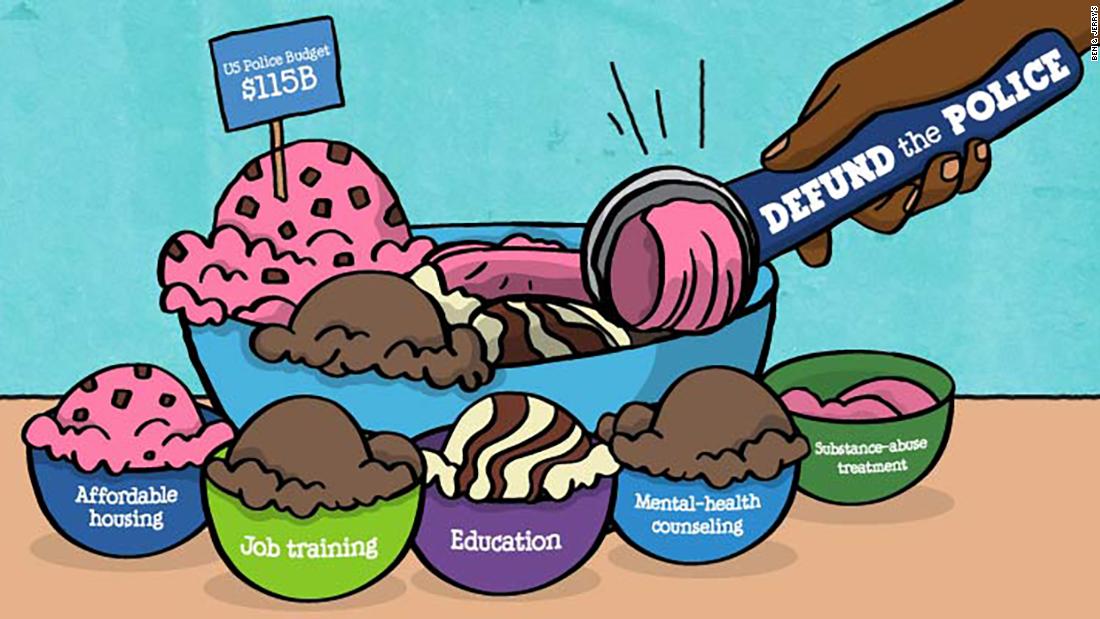
With the perseverance of the 2020 Black Lives Matters movement, I’d like to focus catchphrase that has everyone up in arms – defunding the police.
👊🏿👊🏾WHAT does it mean to Defund The Police? 👊🏾👊🏿
First, let’s just start with a few simple definitions – first, let’s just talk about what it is for something to be defunded. From the Cambridge dictionary, to defund is to stop providing the money to pay for something.
With that out of the way, now we need to focus on the matter at hand: what does it mean to defund a public community service, funneled by our tax money? I might be wrong, but I’m pretty sure every person who pays their taxes deserves to know where the money is funneled through – regardless of the programs. Schools, hospitals, transportation – all get defunded, all the damn time; but, we still have them as public, societal programs.
We’re not saying eradicate and abolish the police, or decline to fund them entirely – we’re asking that communities, cities and states take a harder look at both where the funding for their police, their training and their equipment come from and the proportional rate of funding compared to other helpful civic functions – public housing and assistance, education reform, child protective services. We’re asking for a reinvestment of Black and BIPOC lives.
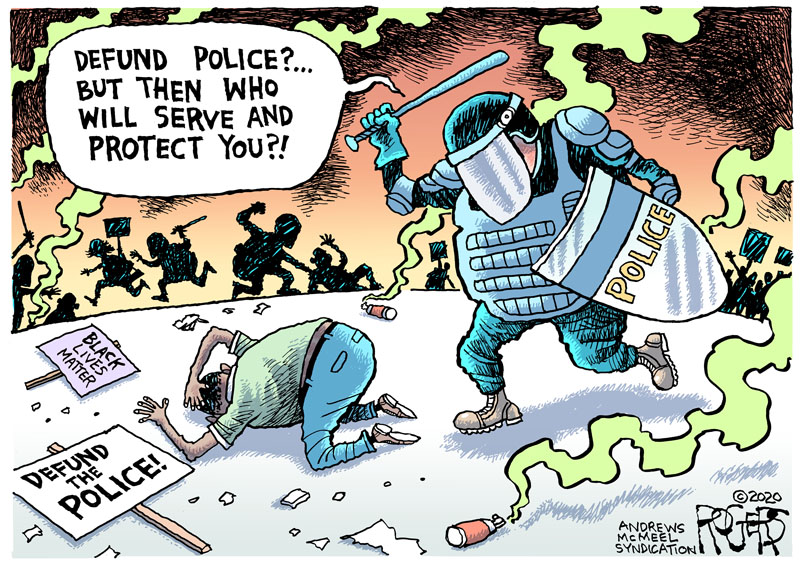
Now, we could probably try and chant “re-evaluate and redistribute our tax money through better channels of public service than a racist police force because it’s killing people“, or we could shorten it to “Reform the Police“. But let’s face facts, those slogans simply aren’t as persuasive, powerful or conversation starting as a protest march thousands of vibrant faces deep in a beautiful display of the complexities of the human condition, screaming “DEFUND THE POLICE” in unison.

• In 2019, the police murdered 1098 US citizens
• Black people were 24% of those killed despite being only 13% of the population.
• There were only 27 days in 2019 that the police did NOT kill anyone
👊🏿👊🏾WHY are we asking to defund police departments?👊🏾👊🏿
Our current police system is rigged against Black and minority communities, and needs staunch and inherent reform from all directions. From the salaries of those at the top, to the training – or lack thereof – for new officers, and the vast stockpile of militarized weapons police forces are receiving.
“…we have everything from office equipment, clothing, tools, radios. But then we have some pretty heavy-duty things, things like armored vehicles, assault rifles, grenades and something called a Mine-Resistant Ambush Protected vehicle (MRAP), which was invented by the Department of Defense as a counterinsurgency strategy to be able to fight IED attacks in Iraq and Afghanistan.”
Karim, Marketplace Morning Report
If you’ve watched any of the protests at all, you’ll notice LRAD cannons and tanks, armored vehicles and oodles of tactical gear; a stark contrast to what we’ve seen the medical community supplied with in the wake of COVID-19. Since moving up to Seattle a year and a half ago, this city has become a new home to me – and because of that, I’ve taken a vested interest in how our city has been handling the protests. Statistics provided are from USA Today.

• Population, 2018: 744,949 (20th most populated city in the US)
• Police dept. funding as % of total budget, fiscal year 2020: 27.2% (5th largest out of 50 largest cities)
• Total police budget for fiscal 2020: $409 million (17th largest)
• Total city budget for fiscal 2020: $1.50 billion (19th smallest)

• Law enforcement employees per 100K: 262 (123rd highest out of 634 cities with 65K +)
• Total law enforcement employees: 1,954
• Violent crimes reported per 100K in 2018: 680 (111th highest out of 634 cities of 65K +)”
👊🏿👊🏾HOW does defunding work?👊🏾👊🏿
The actual, literal act of defunding is simple, it’s just not easy: all you have to do is reduce spending to the department while moving that money to social services better suited to assist the entire community. Here’s the rub – to get there you have to go through policy makers and politicians; the same ones who are potentially bankrolled by part of that same budget you’re asking to diminish.
![How Much Do U.S. Cities Spend Every Year On Policing? [Infographic]](https://blogs-images.forbes.com/niallmccarthy/files/2017/08/20170807_Police.jpg)
“Defunding the police does not necessarily mean getting rid of the police altogether. Rather, it would mean reducing police budgets and reallocating those funds to crucial and oft-neglected areas like education, public health, housing, and youth services. (Some activists want to abolish the police altogether; defunding is a separate but connected cause.) It’s predicated on the belief that investing in communities would act as a better deterrent to crime by directly addressing societal problems like poverty, mental illness, and homelessness — issues that advocates say police are poorly equipped to handle, and yet are often tasked with. According to some estimates, law enforcement spends 21 percent of its time responding to and transporting people with mental illnesses. Police are also frequently dispatched to deal with people experiencing homelessness, causing them to be incarcerated at a disproportionate rate.”
via @thecut

Our educational system is in disarray, many districts using outdated text books or without enough materials for all students. There isn’t enough job training for the unemployed and homeless communities to get them back on their feet, nor are there enough resources to bring citizens out of homelessness – even though there are thousands of high rent apartments that are empty. Our veterans aren’t taken care of appropriately when they return to the states. Mental illness has run amuck and there could be a vast focus on that for the betterment of society.
Each one of those functions is something that has been defunded over time, and each one of those could use reinvestment – let’s face it, that pseudo-utopian version of the United States would be beautiful, with education, access and housing for all; we could actually make America great again. Not to mention, that providing those social functions would help eradicate the future need FOR MORE law enforcement.
👊🏿👊🏾WHO would step in to... 👊🏾👊🏿
In the US, the police deal with far more than just crimes – they also deal with civil disputes, mental health issues, drug abuse and overdoses, as well as family disputes and domestic violence calls.

In each of these situations, an officers lack of diversity or community training can be costly – when you’re a Black American, they can also be deadly – as we’ve seen with Jacob Blake. One look at the infographic and it’s painfully obvious that many of the reasons behind crime are wound up in mental health; and by in large, that’s something that we do not tackle as a society – drug use included; if we had better funding for programs aimed at curtailing drug additions, as well as an end to the drug war – which by in large targets BIPOC communities as well – our society would get back on the right foot again.
In lieu of police serving more social functions with no psychological or sociological background to assist them, we could send in trained mental health professionals; for non-threatening emergencies, we could simply rely on the same EMT crews that are dispatched for car accidents.
👊🏿👊🏾WHEN? The time is NOW. 👊🏾👊🏿
With the Breonna Taylor verdict, or non-verdict, on all of our minds – I know people are angry, upset, outraged. We’re taking to the streets, we’re demanding change – but what we need to do is demand it from the right people. That isn’t the President, or the Executive branch – it starts with your local officials for your city, for your county – and for your state.
Find your local officials here.
We need to remember to vote not just every four years, but every year for state office and every two years for congress. Register to vote, double check you’re registered and if voting by mail or absentee be sure to turn in your ballot as far ahead of time as possible.
Do your own research on local and state government, and truly try to understand how they’re spending their money. How are you going to be a champion for the people today – how are you going to ensure that Black lives not only matter, but are an equally important and integral part of our gestation as a nation? Which side of history are you going to be on?
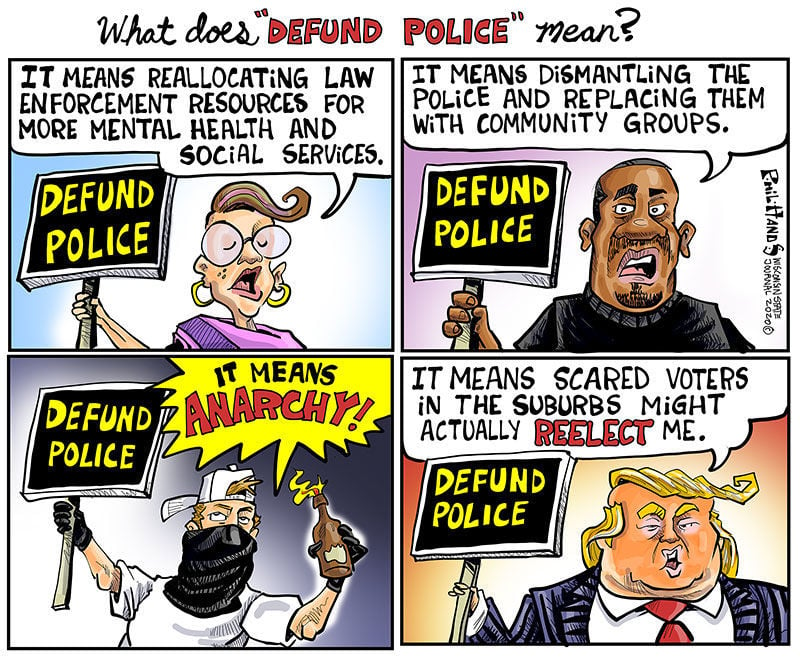


 But at least you can admit, to a point – they’re both clucking mad.

 The Bouncy Kitty