
Do I contradict myself?
Walt Whitman, Song of Myself, 51
Very well then I contradict myself,
(I am large, I contain multitudes.)
To be on a constant quest of self discovery is the most human thing there is, and it seems like for the past year and a half we’ve all been thrust into the soul searching world of personal development – whether we’ve wanted it or not. With the societally imposed downtime that COVID and quarantine have given literally all of us, it’s been the perfect occasion to dive deep and discover your unique truths. In my personal quest to appreciate, understand and evolve – I’ve found that it’s not always easy to love myself completely, in my entirety; for all my cracks and flaws, all of my shadows, have given me moments of pause, potentially even moments of discomfort.
In my darkest times, it felt disheartening; as if I didn’t know myself as well as I thought I did. A walk of emotional shame from an expectation hangover, where I was picking up bread crumbs to skeletons in my mental closet that I wasn’t prepared to deal with. It wasn’t until I fully committed myself to shadow work that I understood how fundamental it is to not only address the places within me that contain resistance, and parts of me that have been hurt in the past – but how I can hold space for those memories, observe them from a birds eye view, and then create a kinetic, positive feedback cycle to replace my old thought patterns.
Shadow work has helped me overcome my imposter syndrome, and catalyze a newfound growth in self confidence. But more than that, shadow work has helped me love myself in my entirety – and that’s something I haven’t had in a good, long time. So, let’s dive in and understand what it’s is all about, and maybe (hopefully!) shadow work can help you as much as it’s helped me.
“He who fights with monsters should be careful lest he thereby become a monster. And if thou gaze long into an abyss, the abyss will also gaze into thee.”
Nietzsche
So, what exactly is shadow work? It’s a hot topic, a buzzword you’ve probably heard tossed around more times than ever in the past year – especially if you’ve dabbled in yoga, meditation or the transformation communities.
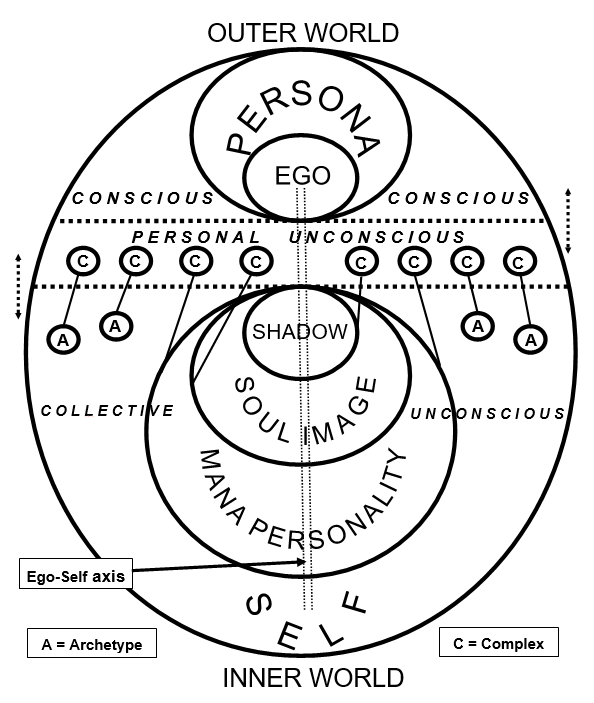
If you’re familiar with the philosophy of yin and yang, then the principles of shadow work will feel like a lightbulb moment; a modicum of thinking that we’re now able to put a name on. We all, as individuals, have an ego, a side of ourselves that we consciously display to the world, as well as ourselves. It’s the side of us that we’ve been constantly mastering our whole lives – building it up, and tearing it down wherever we’ve seen fit. As true as we can be to ourselves, there are things that we repress, resent and shudder away from that are true to who we are; there are facets of our personalities that we brush under a rug or hide in a closet in the corner of our mind. That is what creates the ego – the shadow of the ego is, in a way, the entire contents of that closet. It’s what happens when you take your demons out and acknowledge them as a gestation of your being just as much as the events or memories worn proudly on the sleeve of your soul.
The shadow self, then, contains all the parts of us that the ego eclipses; parts that go unseen to the conscious, or awakened, mind. It’s our unexplored; our uncharted waters and undiscovered emotional depths. Stemming from Jungian psychology, the shadow encompasses traits, feelings and emotions that are ‘unknown’ to an individual either through active or passive repression. If we are balls of clay, and society is molding our ego into the personality we externally display – our shadow side is the culmination of all those chisels into our soul. Negative experiences, expectations, interactions – if we are unable to deal with them as they are when they occur, they build up into our shadow self bit by bit.
“There is nothing scarier than facing the deepest realms of ourself, but there is also nothing more rewarding than that”
To commit to ‘shadow work’, then, is to do the mental and emotional ‘homework’ to bring your shadows into the light and out of the darkness; by acknowledging yourself as a dynamic presence, one that truly does contain multitudes, you’ll be infinitely closer to loving every fiber of your being as you authentically are. You’ll discover incredible personal growth because you’ll be able to see yourself for all that you are to the point that scars of the past will become tattoos and stories to muse over. While doing the work, it’s important that you really hold space for yourself and your growth as you re-experience dissonant events with new eyes – and remember, the point is to uncover discomfort, so be kind to yourself along your path into the light.
There are some fabulous creators out there who have done wonders to create templates and journal prompts for this very task, here are a few of my favorites:
[Unrefined Prose] 50 Shadow Work Journal Prompts to Help You Realize Your True Potential
[Seeking Serotonin] 31 Days of Shadow Work Journal Prompts For Healing, Self-Awareness & Growth
[Scott Jeffery] A Definitive Guide to Jungian Shadow Work: Shadow Work Exercises
My personal recommendation is to get a journal for shadow work and self reflection; it’s a calming and cathartic way to compartmentalize, and put to bed some feedback cycles and habits that I’ve held onto and the perfect litmus test for my temporal dexterity. But for all it’s worth, you could grab scrap paper or type it into the notes application on your phone. The important part here is that you do the work, not how you do the work.
I’m in much more of a mental flow state once after getting my mindset right – that includes yoga, breathwork, meditation or some combination of the three. For you, it might be as simple as right after your shower or after a good workout. If I have time in the morning before work, I’ll try and sneak follow it up with a gratitude prompt; but, if there isn’t an open chunk of time for my mental gymnastics, then I’ll use this as a wind down activity late at night as I’m getting ready for bed.
Have you had a chance to delve into shadow work before? What are some tricks or tips that have helped you embrace the totality of your being and process your past trauma? Drop me a line in the comments, looking forward to reading what y’all have found to be personally useful.
“The shadow is a moral problem that challenges the whole ego-personality, for no one can become conscious of the shadow without considerable moral effort. To become conscious of it involves recognizing the dark aspects of the personality as present and real. This act is the essential condition for any kind of self-knowledge.”
— Carl Jung


 The Bouncy Kitty
You must be logged in to post a comment.