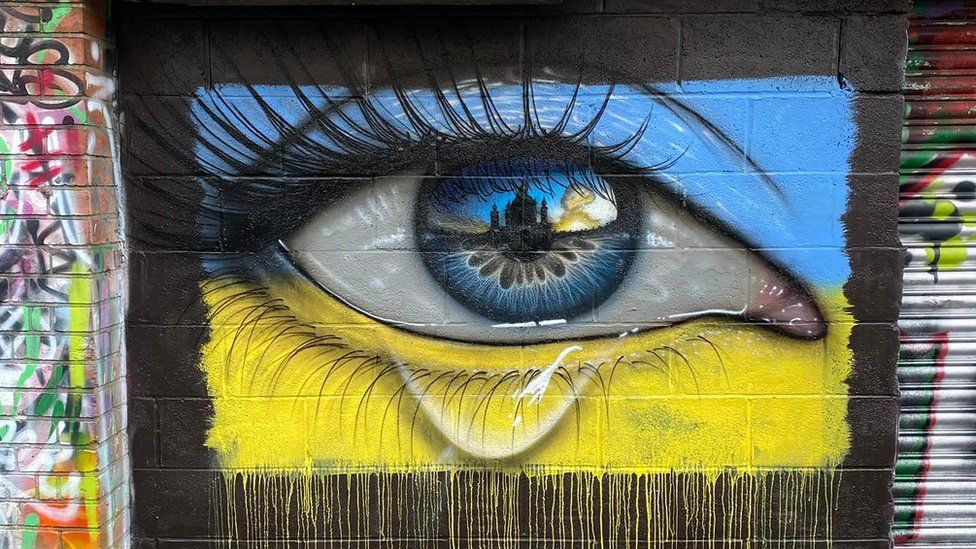
Every so often, a world event hits us in such a wide eyed way that we have to dive down a rabbit hole of history and education we’ve delicately put to bed. Maybe it’s been the onslaught of chaos in the world these last few years that’s pushed you away from International affairs. It’s a lot. Or, maybe history was never really your thing. Admittedly, that’s what I thought – first in High School, then in college. It wasn’t until about 2008 that I came to terms with the depth of the reality I was living in. I realized that to prevent the past from becoming the future it’s my due diligence to understand the full story of humanity.
This is a story that’s happened before, and if we’re not careful – it very well could happen again. Our world is a reflection of the self, and our understanding of the world – doubly so. Good news is that it’s never too late to dive in; it’s never to late to educate yourself.
So, how the hell did we get here?

All things considered, the digestible timeline here is the one you have the time to stomach. If you thought “haven’t we been here before?” You’re damn right. It simply depends where you want to drop in on the wealth of Kremlin inspired misinformation and massive Russian influence.
Rewind back to the 2014’s Ukrainian Crisis – where some could argue, that the fighting simply never stopped these last 8 years. Or, you could look at 2004’s corrupt and Russian influenced Ukrainian elections which ignited the Orange Revolution and a massive shift in geopolitical rhetoric. Or, go further: back to 1991, when Ukraine – the second largest country in the former USSR and the second largest country in Eurasia – claimed it’s independence. Or, there’s the historical plight of the Jewish communities throughout the region that have gone on for centuries. So, let’s break it down:
December 1991: After the USSR was dismantled and the Soviet Union fell, the Ukrainian people voted for their independence.
1994: Ukraine agrees to make themselves a non-nuclear power, and the country transfers their nuclear arsenal of weapons to the Russian Federation in the Budapest Memorandum. Signed by the UK, Russia and the United States, The memorandum states that all parties agree to honor the sovereignty of Ukraine, and their right to the land. The total payload given away was 1,900 warheads – the third largest stockpile in the world.
2004 Election: During the 2004 election, there were two distinctly different candidates – both named Viktor: Russian sponsored Viktor Yanukovych and the western-oriented Viktor Yushchenko, who was suspiciously poisoned before the election. No surprise here that Yanukovych won – however, the Ukrainian people called bullshit and took to the streets wearing orange, the campaign color for Yushchenko and inspiring the Orange Revolution. Eventually, a re-election was forced where Yushchenko was finally proven to be the true winner.
Spring 2008: During a NATO summit, Putin opposes then eventually prevents Ukraine from joining. Remember this, as NATO itself is the military alliance between the two North American Countries and 28 countries from Europe.
Winter 2014: Well, who could have imagined, Russian sponsored Viktor Yanukovych was elected president in 2010; now, he wants to point the nation of Ukraine to reconcile with Russia. Widely considered a controversial move, this is one of the straw’s that started the 2014 protests along with the timely arrest of Yanukovych’s political opponent Yulia Tymoshenko. Ultimately, Viktor flees to Russia and puts Ukraine in a progressive position to discuss its future with the EU.
Spring 2014: The Russian military forcibly takes the Crimea, and essentially breaks all vows made in the Budapest Memorandum concerning Ukraine’s independence, as well as their borders.
Spring 2019: Volodymyr Zelenskyy, the current man-crush of the free world, is elected president of Ukraine on the platform of ending ties with Russia, as well as eradicating corruption from state government.
December 2021: Over the course of the year, President Zelenskyy has made good on his promises to get rid of government corruption, making moves against all Ukrainian oligarchs with Pro-Russian influence. By December, Putin places Russian troops at the Ukrainian border in addition to calling on NATO to deny Ukraine future admittance
February 2022: Russia announces they recognize the regions of Luhansk and Donetsk as independent states from Ukraine, and sends in Russian military personnel. These two regions have been hotbeds of separatists since the 2014 conflict. Eventually leading to full out engagement by Russians and the invasion of Ukraine from those provinces.
Ukraine been in open conflict with Russian military forces since 2014.
— Vox (@voxdotcom) March 3, 2022
But on February 24, 2022 the conflict turned into one of Europe's largest wars since World War II. How did we get here? pic.twitter.com/yaNL1nUF8V
Whichever way you go back, you eventually have to bring that knowledge forward which gets us to where we are today. International timelines have been expedited and the global economy has been put on notice. Ukraine has become a stage, and Putin wants to put on a one man show; for Europe, and for the world. One of the biggest threats to both Putin’s Russia, as well as his legacy, is a unified European Union; through Putin’s actions and the events of the last two weeks, that unification has become a self fulfilling prophecy. Nations around the world are freezing assets of high value players, while countries like Norway, Finland and the notoriously neutral Switzerland have picked a side.
The world has lit a candle to drive out the darkness of this terror- here is the international response level:
Ukraine has applied to become a member of the European Union.
Russia receives International Economic Sanctions from America and the EU
In an historical move, Switzerland has chosen a side
Ukraine’s Volunteer ‘IT Army’ Is Hacking in Uncharted Territory [WIRED]
FIFA has removed the Russian Team from competition indefinitely and removes them from World Cup qualifying contention.
Volvo, Daimler Truck and Volkswagen have suspended their auto vehicle shipments to Russia
BP has exited a $14 Billion Stake (~20% of Shares) of Russian led oil company Rosnef
We all have our own sorted reasons for the things that move us, the things that drive us and the things that open our eyes. On a personal level, my Jewish family line comes from modern day Lithuania, formerly the Eastern Block of Europe. For more of my life, I’ve been regaled with harrowing family stories of pogroms – where the translation from Russian is “to demolish violently”, of escaping SS persecution in a wheelbarrow before coming to America, and escaped persecution for being Jewish; and I full well know my story isn’t unique.
Take or make some time to reflect on the privileges that you have and the freedoms that you have -and remember: an injustice somewhere is an injustice every where. Right now, more than ever, it’s important that our global society stands up – and stands together. Whether it’s a small act of service like supporting local Ukrainian businesses and artists, learning the Ukrainian language or buying Ukranian – there are ample ways that we can show our solidarity to the Ukrainian communities both domestic and abroad.
I’ve spent the last few days compiling lists…of…well…other lists. If you’re looking for resources to help you understand the latest international events, or simply show support for Ukraine during this uncertain time, here are some things to get you going.
[📚 Read] For all the education we can glean from reading the news, there are some books I’ve seen recommended time and time again to understand the brevity of the Ukrainian situation. As well as a few other blogs, websites and Reddit forums I greatly recommend browsing. They’ve helped me broaden my horizons as well as deepen my understanding of the past that’s brought us here, as well as the future implications of current events.
Why Is Russia Invading Ukraine
Red Famine: Stalin’s War on Ukraine [Anne Applebaum]
Borderland: A Journey Through the History of Ukraine [Anna Reid]
The Gates of Europe: A History of Ukraine [Serhii Plokhy]
All The Kremlin’s Men: Inside the Court of Vladimir Putin [Mikhail Zygar]
[Foreign Affairs Magazine] How to Understand the Ukraine Crisis
[📞Engage] Call your local politicians and ask what they are doing to show their solidarity and support for humanity; ask your employeer to make a public call to action. I was proud to be a Washingtonian last week when our governor Jay Inslee spoke out with his support of Ukraine, and I’m a proud Acosta employee today as they made a formal statement to their employees.
[💸Give] There are dozens of international organizations that are pledging their support for Ukraine and the Ukrainian people; if you have the ability to share more than just your time and your heart, please pledge some support to one or more of the following agencies.
International Committee of the Red Cross
State Specific: Ukrainian Association of Washington
Please remember that though these acts of war and acts against humanity have come from Putin’s Russia, they are not indicative of how the Russian people think or feel. In fact, there have been loud cries from its citizens for ‘No War‘, whether it’s via social media or written on a camera during a televised tennis match. Take care of each other, take care of yourselves – and slava Ukrani.


 So yeah, spoiler alert: IT’S ABOUT THE FEMALE ANATOMY
 Homeopathic remedies include the following, but I’ve found very little literature verifying any of the methods are truly effective (except the last one):
 The Bouncy Kitty
You must be logged in to post a comment.