
Venn Diagram of Social Media
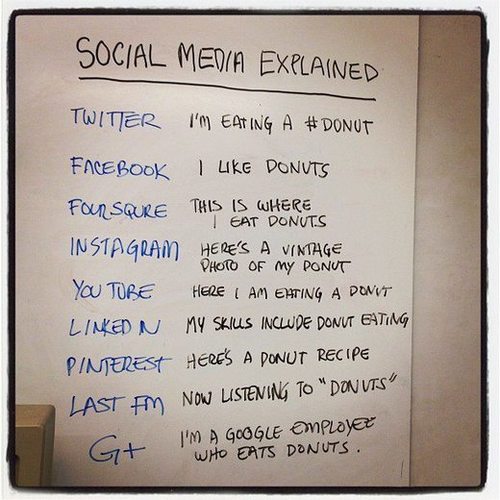
In this day and age, it’s become slightly tiresome to stay on top of all the Social Media Trends; there are just so many ways you can connect with people that websites can either become redundant, overwhelming or in the most severe cases – both. Several of my friends coyly admitted that they’ve become discouraged to use social media because it’s just “too much” for them to want to handle (their words, not mine). And to a point, I completely agree with them. How you pick and choose your social networking sites is slightly analogous to picking where to sit at lunch during your first day at a new school; your environment, the information you choose to share and the connections you cultivate are all indicative of this choice. Each Social Media site that I use has their eerie similarities, but also pronounced differences.
Everyone and their mom’s dog has a Facebook and at a very base level understands the purpose: sharing your life and ideas with a predetermined group of people and one rarely exceeds the 420 character limit of a status update. With the new “Subscribe” option, one could make their Facebook relatively public – but I know very few non-Celebrities that have ascribed to this.
A website like Path is similar to Facebook with the types of things you can share – music, links, photos – but you’re limited to engaging a group of roughly 150 people. Why this number you ask? Well, I’ll tell ya – it’s because of Dunbar’s Number, which basically states that the number of people one can maintain a social, stable relationships with is somewhere between 100 and 250, but scholars believe it’s at about 150.
And then there’s Twitter – you can elicit control over your audience by toggling whether you want your page public or private; at a basic level, hink of these two options as either the Facebook option or the Path option. When public, anyone and everyone can read, and search for, your tweets – while private, your tweets are only seen by a select audience that you allow. Twitter is wonderful for being succinct and witty, but any and all responses are limited to 140 characters.
I love examples, so let’s throw a few out:
Let’s say you want to share a link to an important cause (the upcoming election, Superstorm Sandy, adorable kittens, etc)….
- Do you have an opinion you’d like to share? If so, something like Path, a blog like WordPress or Tumblr (or Blogspot…or Xanga…or, well, you get the picture) or Facebook is your best bet. If not, you could simply post your link to Twitter with the title of the article.
- Do you have an audience that you’re trying to reach (or, avoid)? If you want the biggest reach, I’d lean towards a public Twitter profile; if you’re only interested in your pre-existing social circle, go for Facebook; and if you want your post to reach a niche crowd, go for Path.
Let’s say you’re out to eat at an amazeballs restaurant and want to share your meal with your friends…
- Do you want to post a picture of it? Then navigate towards Instagram – snap your shot and share away at your leisure.
- Are you eating with long lost friends? Check the group into Foursquare or Facebook – hell, even post that picture you took with Instagram while you’re at it.
- Did you have the best time ever and want to tell everyone how ridic the food and service were? Log into Yelp and write a formal review of your swanky time
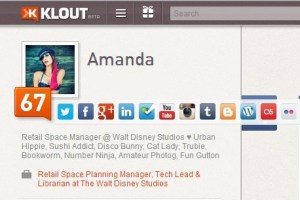
When you’re part of one or two sites – it’s fairly easy to understand the entirety of your audience: if your Twitter account is private and you don’t allow subscribers on Facebook, you have an excellent idea of who your target audience is when you post. But what if you’re playing a juggling act with social media accounts here there and everywhere? That’s when you use Klout. Klout takes someone from a Social Media Queen to the Social Media Queen Bee by aggregating data from a number of measured social networks
When I joined Klout a little over a year ago, I had no clue what I was getting myself into – and adding another social media site that was an aggregate of the others seemed more than redundant. But, what I’ve discovered over time is that Klout is to Social Media what Google Analytics is to Webpages. By factoring in multiple social networks, Klout’s goal is to discover how many other users are engaged with each and every post you make, regardless of the source. Your Klout score is between 1 and 100 and takes into consideration two factors: the topics you’re considered influential on and your social network (the people that influence you as well as the people that you influence).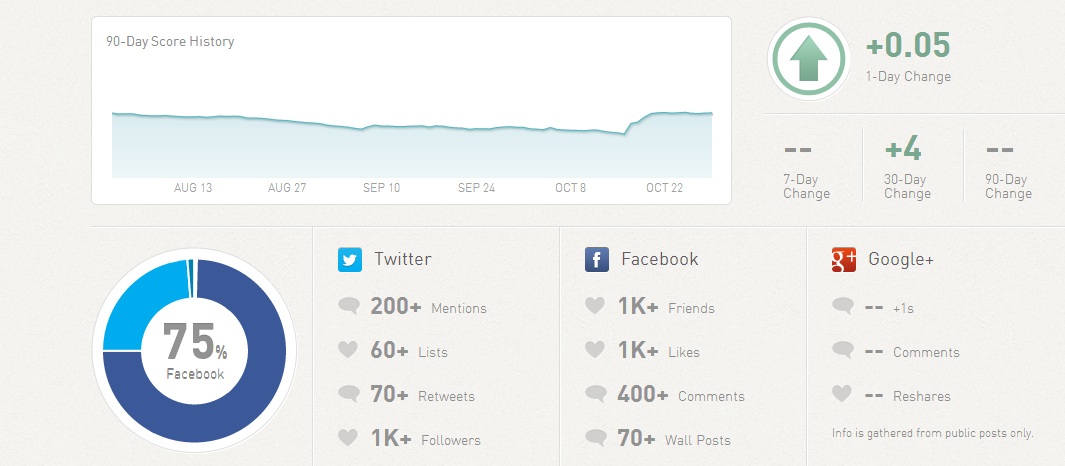
As of today, these are the Social Media Networks that Klout considers relevant (and as a sidenote, I believe because of it – these are also the most important social media sites to be involved with): Twitter, Facebook, Google+, LinkedIn, FourSquare, Youtube, Instagram, Tumblr, Blogspot, WordPress, Last FM and Flickr; however, they’re currently looking to integrate Quora, Yelp, Posterous, Livefyre, Disqus, Bit.ly and BranchOut.

Argo Premiere with treats, drinks and delectable snacks!

Fair Trade USA & Klout Perk:
Allegro Whole Coffee Beans
Alter Eco Mini Dark Noir (chocolate bar)
Choice Organic Teas Roobios
Coco Cafe Cafe Latte with Coconut Water and Espresso
Honest Tea Half and Half Organic Tea with Lemonade
Lärabar Chocolate Chip Cookie Dough food bar
Near East Quinoa Blend Rosemary and Olive Oil
Stash Roobios Tea

Klout Perk from Fit Frappe: Samples of each flavor and a huge container of my choosing. Plus, a jumprope!
 The Bouncy Kitty
You must be logged in to post a comment.