‘If you look the right way, you can see that the whole world is a garden.’ — Frances Hodgson Burnett
For as long as I can remember, I’ve had an affection for botanic gardens and the art of landscape gardening in general. For as much credit as both my mother, my step-mother – and now my mother-in-law – deserve for instilling this love inside me, there’s ample credit due to a few locations back home; from the lavish landscaping at Filoli Gardens to the expanse of parks at and around Stanford University, as well as the now defunct Roger Reynolds Nursery and school field trips to the original Sunset Gardens Headquarters in Menlo Park. I didn’t know it at the time, but my senses were spoiled rotten – and my admiration for the beauty of nature was born.
After moving to the Pacific North West, my husband and I started putting little lists together of places to explore at one time or another; swimming holes, sunset spots, and interesting hikes. Now, a few years in – we each have some excellent lists of parks, gardens, beaches and scenery to check out from the coast of Washington to the desert, the Columbia River to the Canadian Border. No matter how far away we get from home, admittedly the places I have the most fun exploring are just a hop, skip and a jump away in some hidden part of my neighborhood that’s been itching for adventurers.
Falling head over heels for both the Arboretum and the Seattle Japanese Garden, I went down the digital rabbit hole looking for other local spots worth exploring. First things first, I was pleasantly surprised and proud of myself to realize that I’d gone to most that were on the lists! I could check off the Kubota Garden, the SAG and Arboretum, Discovery Park, The Woodland Zoo’s Rose Test Garden. Immediately, the Blodel Reserve on Bainbridge Island skyrocketed to the top of my bucket list – but then another caught my eye: a garden in our zip code; the Kruckeberg Botanic Garden.
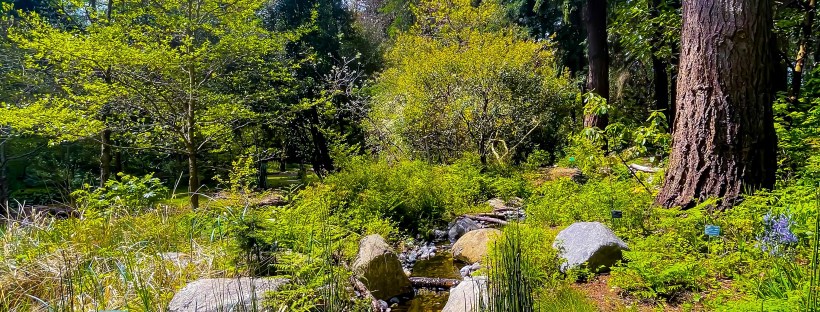
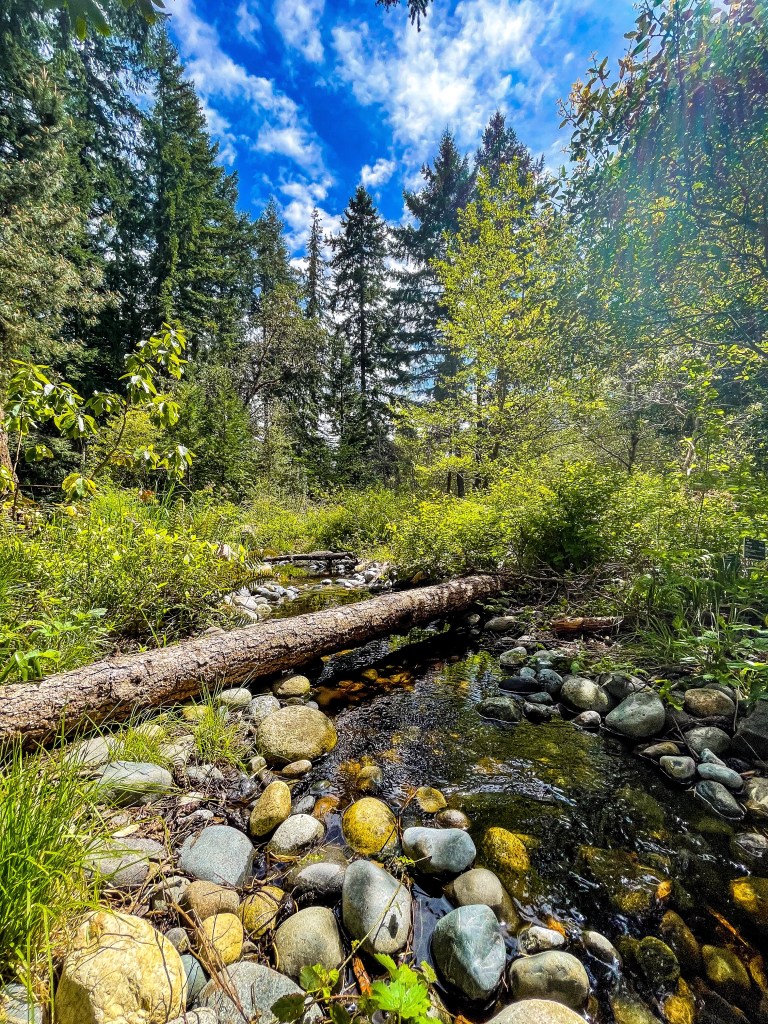
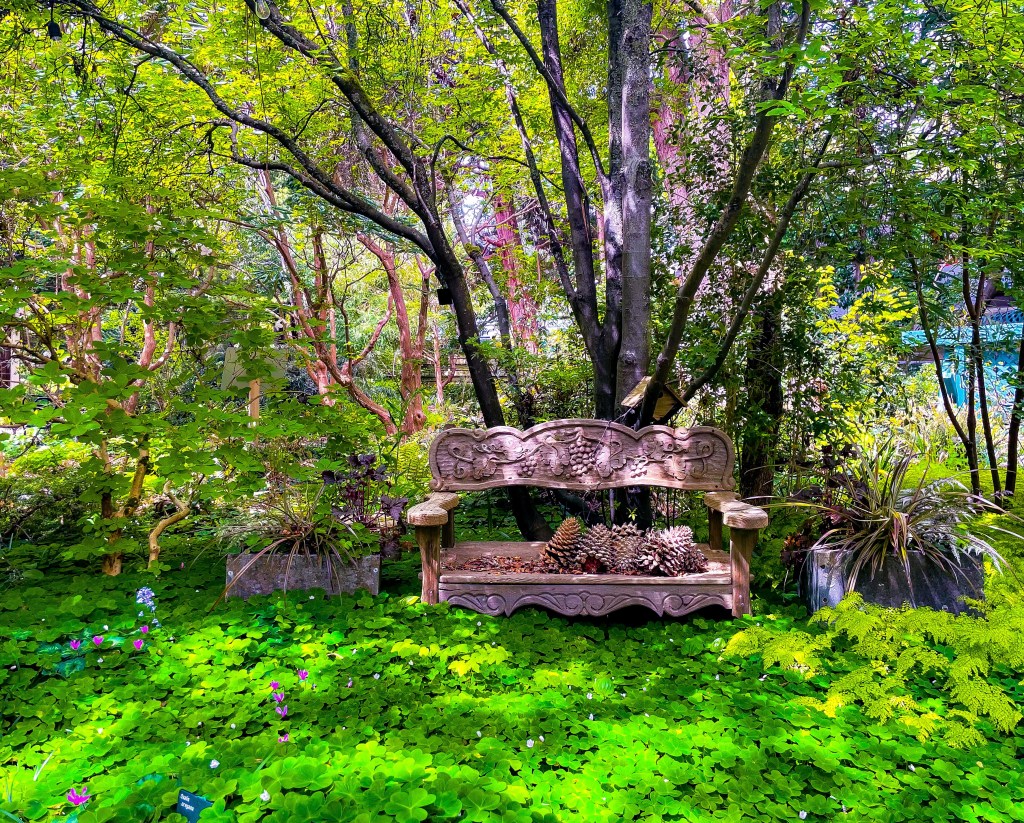
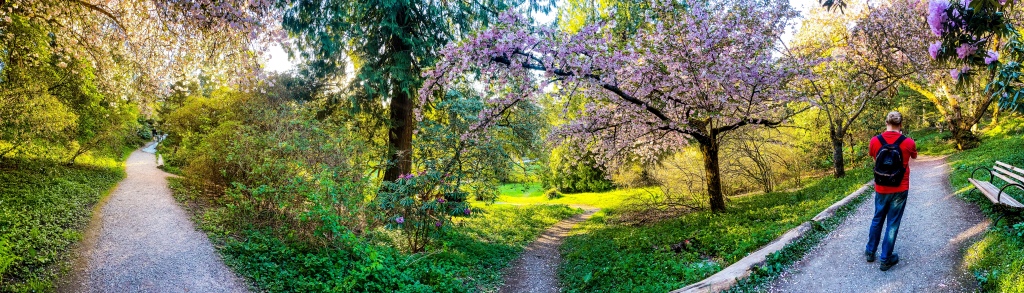
Tucked away in a small corner of Shoreline near Richmond Beach, the Kruckeberg Botanic Garden spans four acres of land, and boasts a blend of natives to the Pacific Northwest in additional to unusual exotics in a natural woodland setting. Founded in the 1950s by Dr. Arthur Kruckberg, a Professor of botany at the University of Washington, and his wife Mareen – a self taught botanist and enthusiast of all things flora and fauna. After purchasing the property in 1958, Mareen curated the first on site greenhouse for her rare plants in 1970, with a second coming just six years later. During this time of growth and evolution for the nursery, the rest of the grounds began to be expertly established. In 1998, a foundation was finally created to preserve their love of labor and just five years later, the garden was formally placed into a public trust to preserve it into perpetuity; it’s through Dr Arthur and Mareen’s love, legacy and dedication that we now can appreciate the wonderful gift of the Kruckberg Botanic Garden for generations to come.
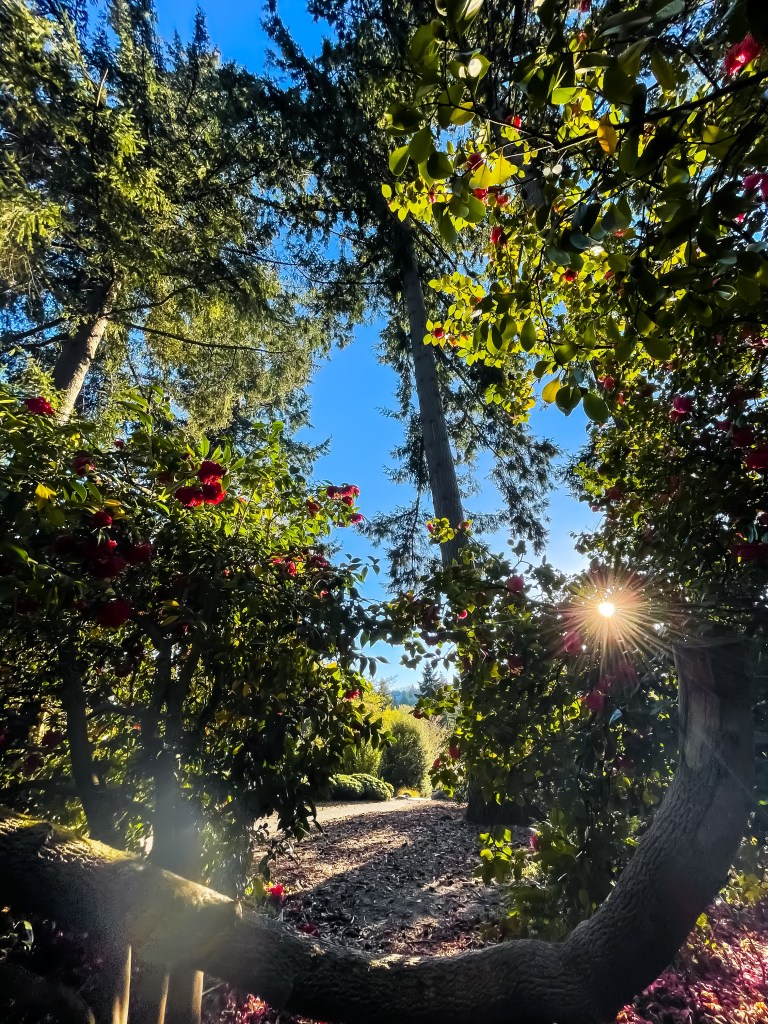
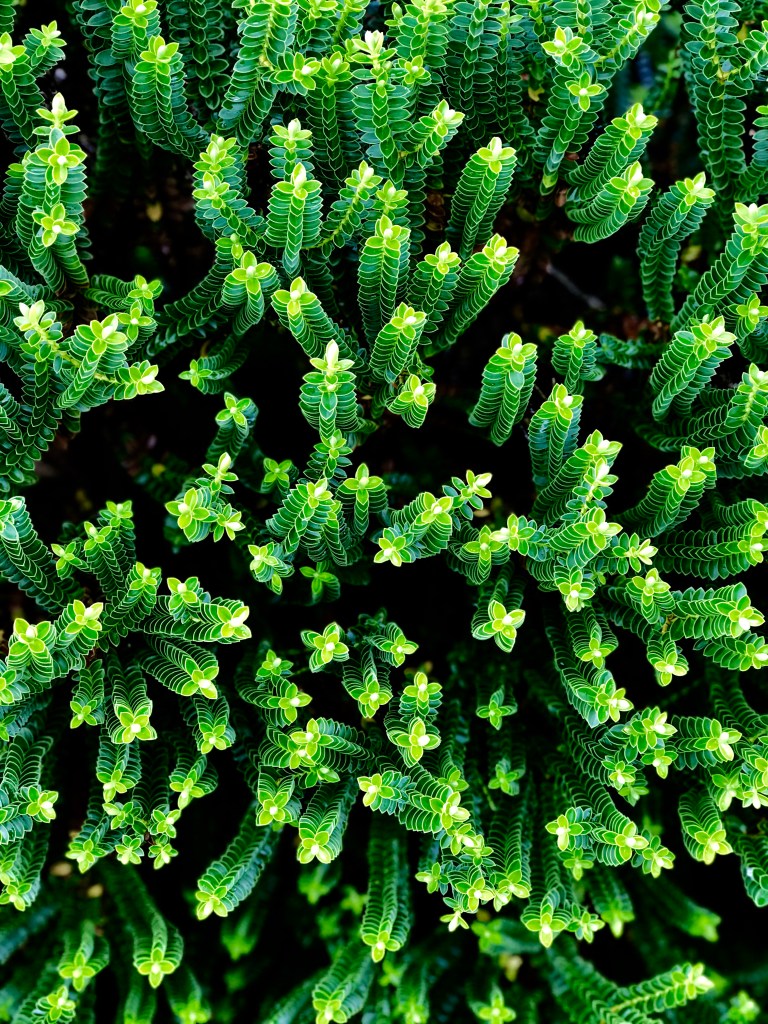
Through their own collection of specimens, as well as a rich network of locations to exchange seeds with, their collection grew to contain everything from trees like the Giant Sequoia, Hemlocks, Spruces, Larches, Pines Maples and Oaks to flowering woodland plants like magnolias and rhododendrons, and to what my husband can only describe as ‘fern envy’ with a luscious undergrowth of vegetation around every turn. To boot, the Kruckberg Garden is home to a variety of State Champion trees (raise your hand if you knew that this was even a thing!), including a Tanoak, a Chokecherry and a lovely Striped Bark Maple.
For more on the history of the Kruckeberg Botanic Garden, and insight into educational offerings through their nursery – head to their social media channels; if you’re in the area, pay them a visit and thank me later! The grounds are open Friday through Sunday from 10 to 5pm, and admission is always free; one of my favorite f-words!
When’s the last time you stumbled upon a hidden gem in your neighborhood?
I’ve said it before and I’ll say it again, one of the most phenomenal things about living in the Pacific North West is the vast variety of accessible nature. From diverse deserts and wanderlust inspiring waterfalls, to rich coastlines and island hopping through the San Juan Islands – Washington has a bit of something for everyone. Seattle and it’s surrounding areas – doubly so. From Lake Washington and Lake Sammamish to the Puget Sound, the Cascade Mountain Ranges and hidden parks in nooks and crannies all over – there’s a reason we call it the Pacific North Wonderland.
When my husband and I first moved up to Seattle, we found ourselves in an living over in the Sand Point area near the University of Washington. At the time, we didn’t know much about Washington or Seattle proper, but the area seemed a keen pivot point for getting to anywhere and everywhere throughout the Sound. Whether we ventured North and East on an adventure to dip our toes in watering holes, or South and West to Seattle proper, we could find ourselves surrounded by a symphony of succulent scenes. To me, the irony always was that our favorite park wasn’t in a far reaching corner of the state – it was actually just a hop, skip and jump around the corner at the University of Washington.
Sitting on land with a complex history, the Arboretum grounds were homebase to the Coast Salish tribes of Washington, with several villages around the area. As time, and colonialism, went on – the area shifted to ownership by the Puget Mill Company which unfortunately logged some of the largest trees in that region. As we shift into the 1900s, the land was transformed into was one of Seattle’s original city parks. In 1903, landscape architects for the region – the Olmsted Brothers – drew up a plan for the Seattle Parks and Parkways, with Lake Washington Boulevard at the crux of their idea. Fast forward to the 1930s, the incredible Washington Park Arboretum boasts an incredible variation in vegetation with one of the largest plant collections in North America.
Spanning over 230 acres of luscious vegetation, you can take the 3.5 mile walking loop around the edge of the park or you can dip the main roads, ebb and flow around the Arboretum Loop Trail and discover your own way through the heart of the park. Just like a choose your own adventure novel of eons past, each time at the Washington Park Arboretum is a unique experience featuring the mercurial nature of our weather, and the chosen blooms of the day.
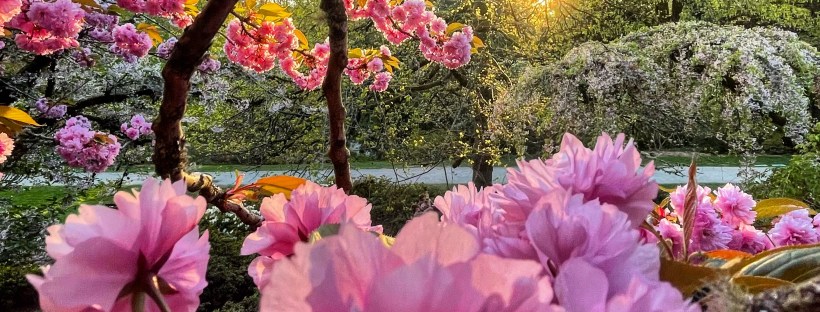
Playing host to vast collections of rhododendrons, camellias, larches and lindens, oak trees, Japanese Maples, magnolias and azaleas has earned the Arboretum international bragging rights. Open daily from dusk to dawn, the Washington Park Arboretum is workout friendly, run friendly, child friendly and dog friendly. From the northern tip of the park on Union Bay’s southern shoreline and into Foster Island on down through the incredible and everchanging landscapes of the Arboretum, every inch of the park is immaculately drawn together for an unreal experience any time of year.
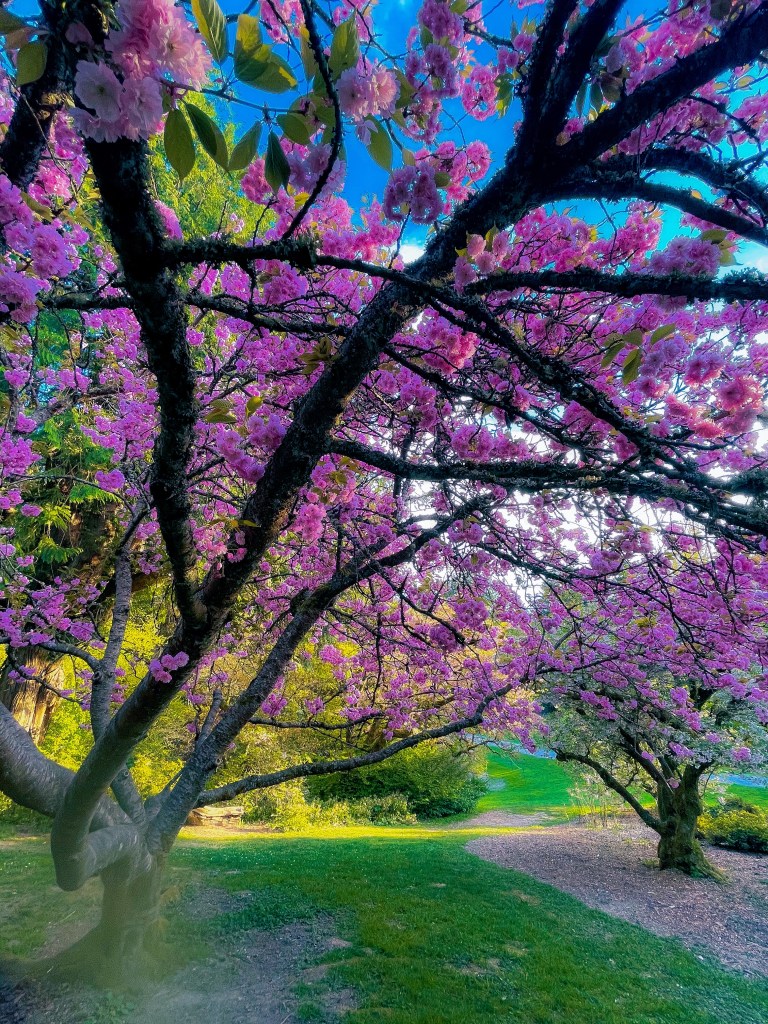
In the Summer months, bright blue skies overhead and a menagerie of birds grace the scene as the floral aroma wafts from every corner. Head there in September to watch the leaves shift their hues from vibrant greens to magnificent reds, yellows and oranges in what I consider ‘Seattle’s Second Spring.’ In the Winter, if you time your visit just right – you can see the grounds covered with a fairy dust of snow, making it seem like you just walked out of a story book. And Spring – well, Spring is a whole new shade of wonderful at the Arboretum.
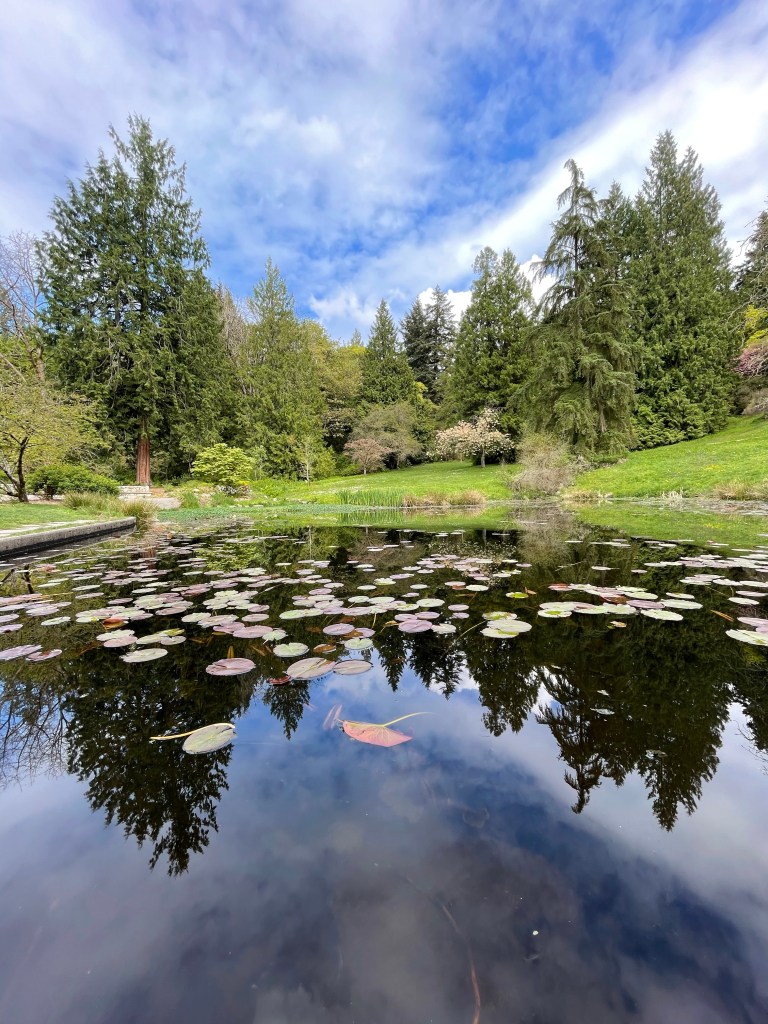
My personal favorite spots at the Arboretum are the reflecting ponds during all seasons, the Giant Sequoias and the rhododendron glen in the Springtime. But you honestly can’t go wrong no matter which turns you take. With over 10,000 trees and more than 40,000 plants, each visit truly is it’s own unique and unforgettable journey. For those that simply can’t get enough of the Washington Park Arboretum, try the Seattle Japanese Garden located just across the way for a wonderful experience – more on that in a later post!
What’s your favorite park in your neck of the woods? I’m always looking for a great adventure – and maybe I’ll pick yours next; drop them some love in the comments below and share some geographical gems of your own!
For more on the Washington Park Arboretum at the University of Washington, scope out the park with an incredible and interactive bird’s eye view, then head to their socials for the full 411.
“The clearest way into the Universe is through a forest wilderness.”
John Muir
Growing up in California, I was invariably spoiled by beach days and Summer weather seemingly all year round; but as I’ve gotten older, I’ve found myself more and more enjoying the variation in seasons that Oregon and Washington have to offer. I tend to forget how much of California is a true desert, how the Summer season reaches into the Fall and touches Winter, scorching the Earth beneath it; proof that the grass is greener where it’s simply watered.
Now that I’ve had a foothold in the Pacific North West for a few years, I’ve found that it suits me – trees as tall as skyscrapers around every corner, wildflowers ushering in the Spring and then the Autumn leaves giving us a second dose of color in the Fall – and Winter, oh -how I do love me a good snow storm (something I’m sure I would have never said in Los Angeles!). It’s inspiration to get into the great outdoors every chance we can, especially when there are so few people on the trails and in the parks compared to how densely populated literally all the things were in Southern California.
Lately, days and nights are inching longer, while the sunlight dances through trees to wake us up politely and set us to slumber sweetly; oh, yes – Spring is here, and it’s a delicate beauty all unto itself. Spring in Washington isn’t without rain, but it’s the type of rain that comes quietly in the night and leaves dew drops as it goes with the morning sun. Each day, you can see the sun maneuvering a new pathway from East to West, dipping into the Pacific Ocean in a glorious reverie of technicolor light, bouncing off of clouds and trees to illuminate the landscape. Offering a perfect invitation to get outside, and explore until your wanderlust has been quenched – at least, for the moment. For the most part, that means frequenting a park at dusk or getting in a late morning walk around Twin Ponds, but last weekend we had a chance to get out to Mount Tahoma, and let me tell you – Spring hits something different there.
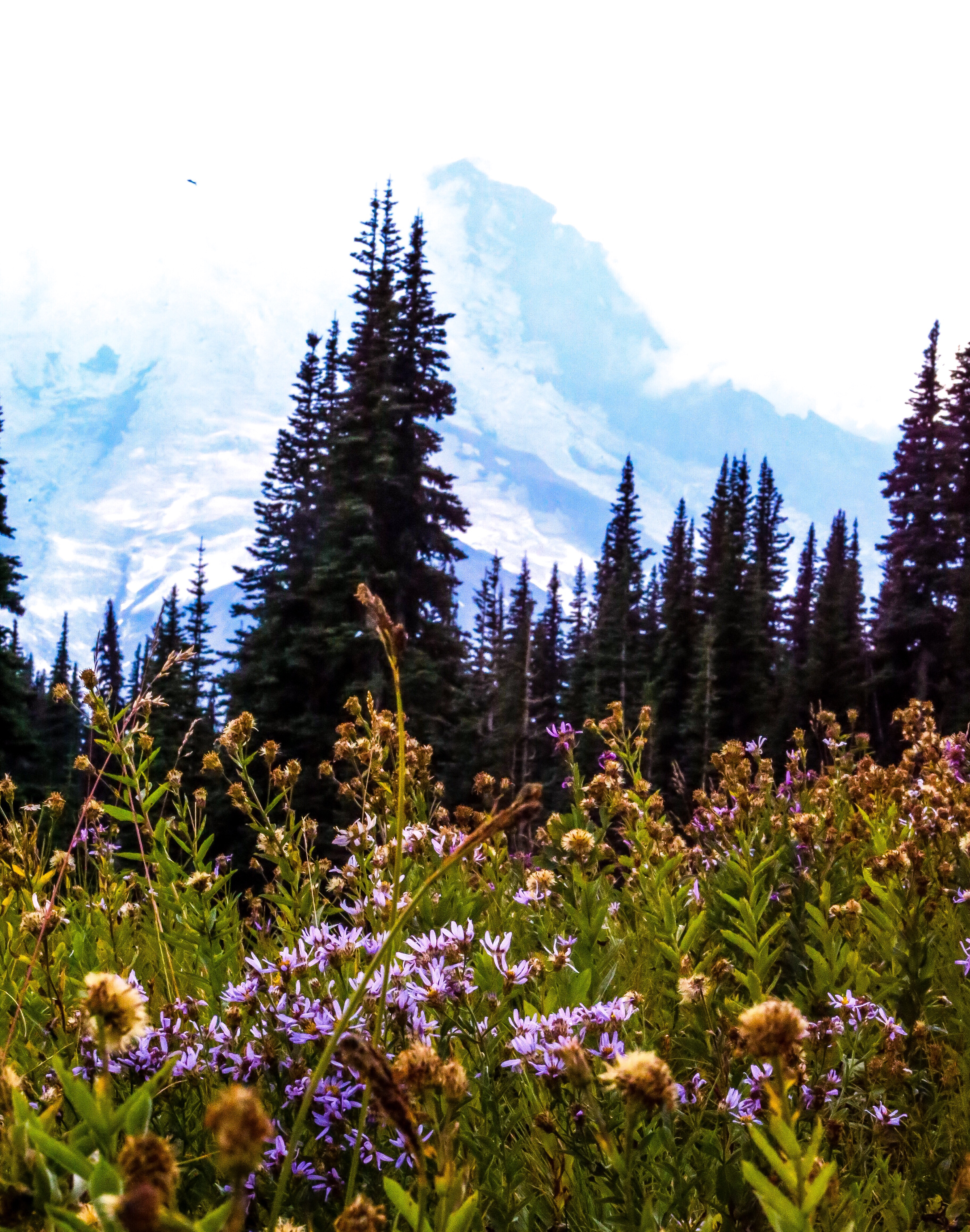
The last time I was at Mount Tahoma, it was a gloriously sunny September morning and the weather hadn’t yet kicked into Autumn. The wildflowers around Paradise were bright and vibrant, almost like a second Spring had sprung – while the fog crept in on little cat feet around the base of the mountain. As a side note, though we know it now as Mount Rainier, past indigenous tribes proudly remember and revere it as Tahoma, or Tacoma – and it’s only proper to me that we try and bring these names back into the fold. An active stratovolcano, Mount Tahoma is located about sixty miles southeast of Seattle and may as well be the unofficial mascot of the Pacific North West, right next to Sasquatch. Before we get into my latest adventures, here’s a little geology lesson on the area:
Made of alternating layers of lava, ash and pyroclastic ejecta flows, Mount Rainier effortlessly towers over the rest of the Cascade Mountain Range with 26 major glaciers and 36 square miles of permanent sparkling snowfields, earning its status as the most glaciated mountain peak in the contiguous United States. At the top of the summit, the geothermic heat spewing from a duo of volcanic craters prevents the rims from getting snowed in or iced over, forming the world’s largest glacial cave network of ice-filled craters.While the current top formation of Tahoma is estimated to be approximately 500,000 years old, the mountain and the entire Cascade Volcanic Arc is considered part of the ‘Lily Formation’ and spans from roughly 840,000 years old to a whopping 2.6 Million years old. Though small eruptions have happened since with a frequency of every few hundred years, the last major eruption of Rainier was about 1000 years ago. (for more, check out my post from a few years ago on the Magic and Majesty of the Mountain.)
Travelling definitely looks a bit different a year into quarantine and COVID, and it wasn’t lost on us how much time and effort everyone has put in to being healthy and safe in Washington. Thankfully, we had our second vaccine shot just before the weekend and it was a breath of fresh air knowing that as of April 15th, the rest of the state of Washington was finally eligible for their shots as well.
Believe you me, We still had our masks on us, and used them in areas outdoors that were too densely populated and we couldn’t keep six feet apart, or whenever we were indoors – but that was few and far between. For the most part, we were the only ones on the trails, barely even seeing a soul until we managed to find some scenic vistas and viewpoints of Tahoma; and the same went for indoors – because the weather turned lush so quickly, many people didn’t make it out to the mountain last weekend. Maybe it’s my natural personality showing, or maybe I’ve just become slightly agoraphobic over the last year but I really loved the feeling of ‘having the park for ourselves’, and it felt so good to let my face be free.
The last time I adventured around the mountain, I came with Danny and my parents; we took a day trip, and tried to see as much as we could around the Northern and Western rims of the mountain. This time, Danny and I took a different approach – staying at the base of the Cascade Mountain Range. Sitting right between Tahoma and Mount Saint Helens, and within a quick jaunt to the White Pass Ski Resort – Packwood is a tiny, 300 person town called just off the Cowlitz River – full of wildflowers, Elk and sprawling scenery.
When I booked lodging for the weekend, the weather had predicted clear skies but only at about 20-30°F; at the time, I said fuck it. If there’s one thing I’ve learned in Washington, it’s that you cannot simply stay indoors because of the weather rpoert, if you did you would miss out on SO much! That wisdom came to fruition as we pulled into Packwood; feeling incredibly grateful and lucky, because the temperatures broke clear into 80° territory and there wasn’t a cloud in sight.
After sight seeing on the way up to the mountain on Friday, we decided to stop by the local market and make our own dinner in our kitchenette at the Mountain View Lodge. Two pro tips here: firstly, if you ever have the opportunity to get a place to stay that has it’s own kitchen – do it; especially when you’re in the heart of nature as we were. The produce is local, the meat is local – the community is small, and it feels good to be part of the local economy, and food chain. Secondly, marry someone that can cook. Danny whipped up a fantastic steak dinner with a side of greens tossed in the steak sauce, and oh my wow – it was the perfect end to a long day. We made some libations and took a stroll down to the river, where we were met with an 8PM sunset that danced along the shoreline. With colder weather recently, the river had a relaxing ebb and flow to it and we were joined by a pair of geese – fun fact here: geese mate for life, and seeing one while with your significant other is a wonderful sign of things to come as a couple. A perfect sighting for Danny’s birthday weekend.
Saturday morning the sun wafted through the blinds, rousing us from a wonderful slumber – and we immediately took our coffee back to the edge of the Cowlitz River to kick the day into gear. As we reached the edge of the water, it was clear that the weather from Friday had caused quite a snowmelt as we were greeted with murmurs, gargles and bubbles from the water against the shoreline. Once we were properly caffeinated it was off, off and away into the mountains to check out Skate Creek Park. I must have sounded like the biggest city kitty in the world when I asked my husband “Wait, so there’s a skate park in the woods?” because apparently Skate is apparently a type of fish; and once upon a time, Skate Creek was actually stocked with catchable trout. With the continual steelhead and salmon reintroduction into wild waters, there are now State regulations which prevent the restocking of ‘catchable’ trout species in ‘anadromous’ waters; under this designation, this is any river, creek and waterway that fish use to come from the sea to release their eggs inland. The trail itself for Skate Creek Park is about 2 miles, and fairly easy to maneuver. For those (like moi!) that enjoy getting off the beaten path, there are ample locations to park your car next to the river, grab your gear and enjoy a private beachside picnic, or afternoon libations.
We tried to make it through the mountain pass, but sadly our little Civic wasn’t prepared to hit the bumpy roads and we turned around fairly fast so as to not get stuck there. We made a few more pit stops along the river, and just – wow. Because of the recent heat waves, the glacial ice was ripping and roaring around each turn, taking up technicolor hues of vibrant greens, teals, turquoises and blues; it looked good enough to drink! Paired with the lush vegetation on all sides, clear skies and warm sunlight on our shoulders – it truly felt like we were transported into Fern Gully or Avatar.
After heading back to the lodge and reassessing the situation, we decided on a quick lunch at White Pass Taqueria and Taproom and our stomachs couldn’t have been happier. Real good TexMex has been hard to come by outside of California, and White Pass went above and beyond; you honestly can’t go wrong with the selection of eats and treats and the outdoor seating is fantastic. Then it was off, off and away to explore new sights on the East side of Tahoma.
One thing we noticed during the journey is the optical illusion of mountain size. Maybe it’s the sheer grandiosity of it all the way from the heart of Seattle, or the University of Washington campus – maybe it was the fact we were already at an altitude of 2000 feet; but cruising along the base of the mountain, it seemed small for the very first time.
As we drove from Parkwood into Randle and Naches, Tahoma felt like a mountain out of Alice and Wonderland – eating this and drinking that, growing larger around one curve and then retreating in size the next. Beyond the popping in our ears, we could tell the elevation was increasing because there was ample snow on all sides of the mountain – an actual dream of a situation. Sunny, clear skies from above reflecting and refracting off of the snow in a cascading technicolor scheme all around us.
Winding around the 12 Highway, we slowed to a snails pace to fully take in the scenery: towering ridgelines of trees with sorted gushing waterfalls bellowing down to the next level, and the next, and another too far down to see on one side, while snow rimmed lakes danced with still reflections on the other.
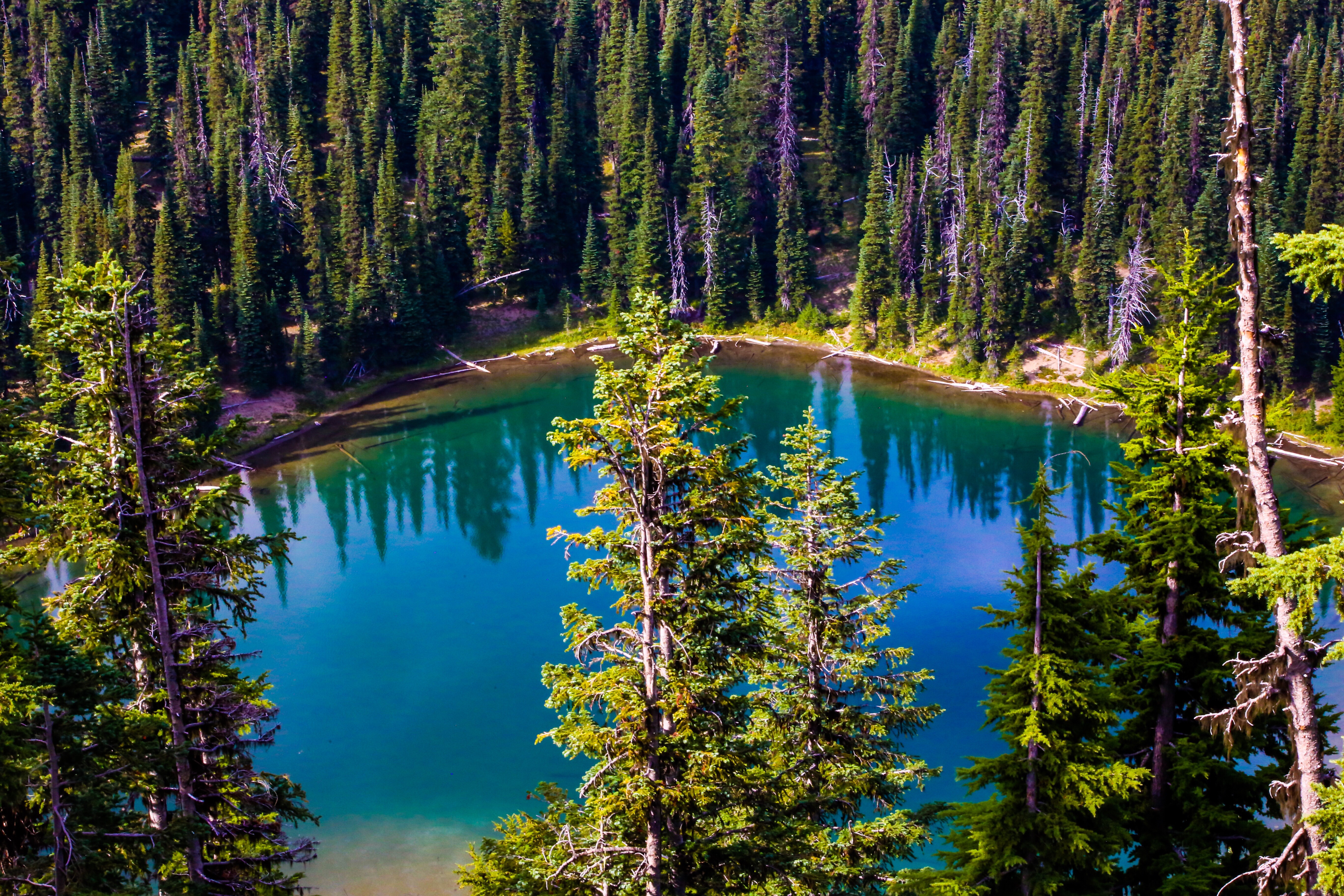
Finally, we stumbled into a doubly delicious lake situation with Clear Lake to the South and Rimrock Lake to the North of us and made an afternoon out of it. Hiking up and down the winding trails around the lakes, sitting on the shores edge and skipping stones in the crystal clear water while admiring the grandiosity all around. On the way out, we took the long way home – driving to the most northern edge of Rimrock, and soaking in sunset as we gradually descended down the mountain, admiring the view from all angles – grateful for the treasures Earth has to offer.
No matter how you get there, or which side of the mountain you choose to roam – there is something magical around every nook and cranny of Mount Rainier. For more, including current closures due to COVID, as well as Winter road closures as we head into the warmer months, head to their website or social channels – or put on your adventure pants, say “Fuck It!” – pack a bag, and plan a visit!
“Thousands of tired, nerve-shaken, over-civilized people are beginning to find out that going to the mountains is going home; that wildness is a necessity.”
Whether you’re coming into Seattle or exiting the city stage left, there’s one piece of nature that simply towers over the rest, sitting pristine and pretty at 14.1 thousand feet above sea level. We know it now as Mount Rainier, but past indigenous tribes proudly remember and revere it was Tahoma, or Tacoma.
Located about sixty miles southeast of Seattle, the spectacular – and active! – stratovolcano has become a larger than life icon of the Pacific Northwest landscape. Made of alternating layers of lava, ash and pyroclastic ejecta flows, Mount Rainier effortlessly towers over the rest of the Cascade Mountain Range with 26 major glaciers and 36 square miles of permanent sparkling snowfields, earning its status as the most glaciated mountain peak in the contiguous United States. At the top of the summit, the geothermic heat spewing from a duo of volcanic craters prevents the rims from getting snowed in or iced over, forming the world’s largest glacial cave network of ice-filled craters.
While the current top formation of Mount Rainier is estimated to be approximately 500,000 years old, the mountain and the entire Cascade Volcanic Arc is considered part of the ‘Lily Formation’ and spans from roughly 840,000 years old to a whopping 2.6 Million years old. Many eons and moons ago, it’s purported that Rainier was around 16k feet high – but with increased volcanic activity around 5,600 years ago around 3600 B.C., the volcano erupted, removing the top 2k feet and causing the northeast side of the mountain to collapse. Now known as the Osecola Lahar – or mudflow, a wall of mud, rock and debris over 100′ high cascaded over land and into the waters of the Puget Sound, nearly 50 miles away. Though small eruptions have happened since with a frequency of every few hundred years, the last major eruption of Rainier was about 1000 years ago – to which many geologists say, we could be due for a ‘big’ one, and it could be absolutely disastrous to the whole planet.
“Between every two pine trees there is a door leading to a new way of life.”
Home to dozens of roaring rivers, reflection ponds and lavish lakes, the spectacle of the park shimmers and sparkles in full color from every which direction. Boasting assorted entrances, a plethora of unique micro-climates, and dozens of viewpoints and over 130 interpretive trail descriptions – you can essentially guarantee a completely new trip with each visit. I happened to fall in love with the park in a little under six hours, but with multiple lodges and camping spots on site, not to mention the vast amount of hotels around the base of the park, you can completely make a weekend of your visit while you marinate in every last inch of wildlife.
“Of all the fire-mountains which, like beacons, once blazed along the Pacific Coast, Mount Rainier is the noblest.”
With the velocity and veracity of shifting weather patterns, not to mention changes in altitude as you traverse the mountain – it’s also entirely possible to experience every season within a full days adventure. During our stay the other weekend, we were greeted by ambient low level clouds, only to peter out into gloriously clear sunshine at Sunrise Ridge, then a hail storm as we etched our way around the mountain, followed by an intense game of hide and seek with a bog of fog, and finally one of the most glorious lightning storms I’ve ever had the pleasure of sitting under. That said – word to the wise, pack enough extra clothing that you can be warm and dry if the rain starts in, or have a tank top and shorts for when the sun finally manages to break through the day.
For more on Mount Rainier, head to their website or social channels – or simply pack a bag, and plan a visit!










 The Bouncy Kitty
You must be logged in to post a comment.